




As the significant 'water gap' between Indigenous and non-Indigenous people persists, further investment is needed from successive governments to help bridge the divide.
A 2022 report noted the significant deficit for meeting appropriate health guidelines for drinking water for hundreds of First Nations communities, and the Water Services Association of Australia (WSAA) said they remain "deeply concerned" that in 2025, there remains a gap between the level of water and wastewater services provided to First Nations communities compared to other communities across the country.
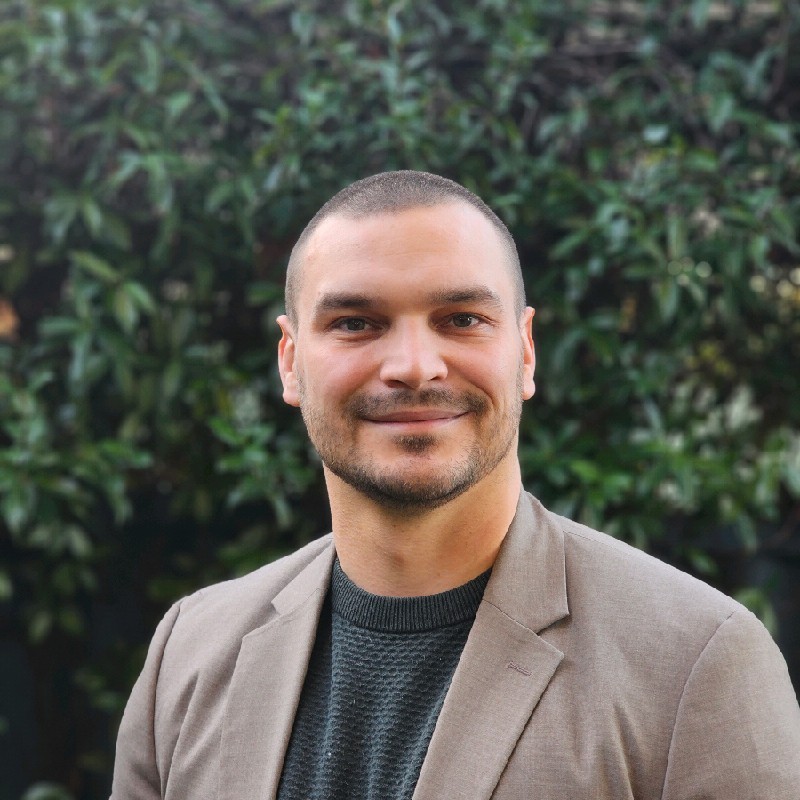
WSAA First Nations Lead and Noongar man, Taylor Hayward, told National Indigenous Times the Associations wants to highlight the continued need for funding in the space, noting, "money is not going as far as it has previously".
"Not only from a project delivery perspective but from a cost-of-living perspective as well," Mr Hayward said.
"Our ability for people…[and] water utilities that are in this space and doing good work, their ability to actually deliver and drive projects is being undermined by the cost of materials, the cost of labour."
The latest budget saw $37 million allocated to support upgrades to water supplies in the Torres Strait, as well as a redirection of $21.1 million a part of the National Water Grid to support urgent Indigenous water infrastructure projects.
There is also $270 million allocated over forward estimates from National Water Grid Funding for capital works for water services.
Across the country, water utilities, Indigenous councils and private organisations play a vital role in delivering water and sanitation services to Indigenous communities, a statement by Mr Hayward and WSAA executive director, Adam Lovell, says.
For the 460 Aboriginal and Torres Strait Islander communities nationwide serviced by water utilities, the operating cost is close to $150 million.
"Over $120 million in capital funding has been announced by the Commonwealth and state governments in the last 12 months to address recognised shortfalls in infrastructure condition and levels of service," the statement said.
Mr Hayward said there's just delivering the projects and just delivering infrastructure, and then there's "doing it really well" and "having those resources to embed community requirements".
"What are the community's future needs and aspirations? What works with them, what is their long-term economic aspirations, of what they would like to do in community?" he asked.
"Building the technical requirements of infrastructure, you need people to be doing that engagement on Country, with those stakeholders. To almost be living and breathing their life so they can act as the intermediary back into these businesses that sometimes want to treat things as quick cutter scenarios.
"We know that best outcomes occur in these projects when we are flexible; when we co-design and collaborate with communities."
The picture is also one of short-term expenditure versus to long-term gains. The health gap in remote communities too often comes as a direct result of lack of fresh water.
The prevalence of rheumatic heart disease (RHD) in remote communities at a rate not found anywhere else in the world comes from scabies, often as a result of a lack of laundries. A lack of drinking water forces people to purchase bottled water, often at exorbitant rates in remote community shops.
The cost of water, besides a human right, has long term health impacts, with large-scale financial burdens.
Mr Hayward said there needs to be a paradigm shift.
"Typically, organisations delivering projects like this trying to drive to parameters [that are] well established: lowest cost, lowest time, on scope," he said.
"We need a bit of a different mindset there…looking at a collective set of benefits, as opposed to, 'I've just completed the thing. I've achieved practical completion of this bit of infrastructure.'"
The WSAA have called for the continuation of the minimum $270 million for capital works for First Nations water services in forward estimates.
They also have pushed for a "nationally coordinated approach to focus on aesthetics in water quality" to improve home and community health, as well as investment to roll out culturally appropriate water services skills and training for First Peoples, and investment to develop guidelines for critical water assets and processes including disinfection, filtration, and water and sanitation networks.
"By taking a nationally coordinated approach, there is an opportunity to make [a] substantial difference to the public health outcomes and quality of life for Aboriginal and Torres Strait Islander peoples in remote communities," the Association said in an official statement.



