




Labor has promised more than $70 million in funding for seawall structures and waste infrastructure for the Torres Strait in a bid to help boost climate resilience.
The region is one of the most vulnerable to the growing dangers of climate change, and on Monday, the government committed $36.2 million over five years to help fund Stage 3 of the Torres Strait Seawalls Program.
It will offer additional engineering and seawall structures on five islands: Poruma, Iama, Masig, Warraber and Badu.
Furthermore, stage 7 of the Torres Strait Major Infrastructure Program will see an investment of $41.2 million over five years to build and upgrade wastewater, solid waste management and potable water supply infrastructure in remote communities.
The money, reflected in this year's budget, is part of both Outcome 8 of the Closing the Gap Agreement, which calls for "stronger economic participation and development of Aboriginal and Torres Strait Islander people and their communities", and Outcome 15, which pushes for Indigenous people to maintain a "distinctive cultural, spiritual, physical and economic relationship with their land and waters".
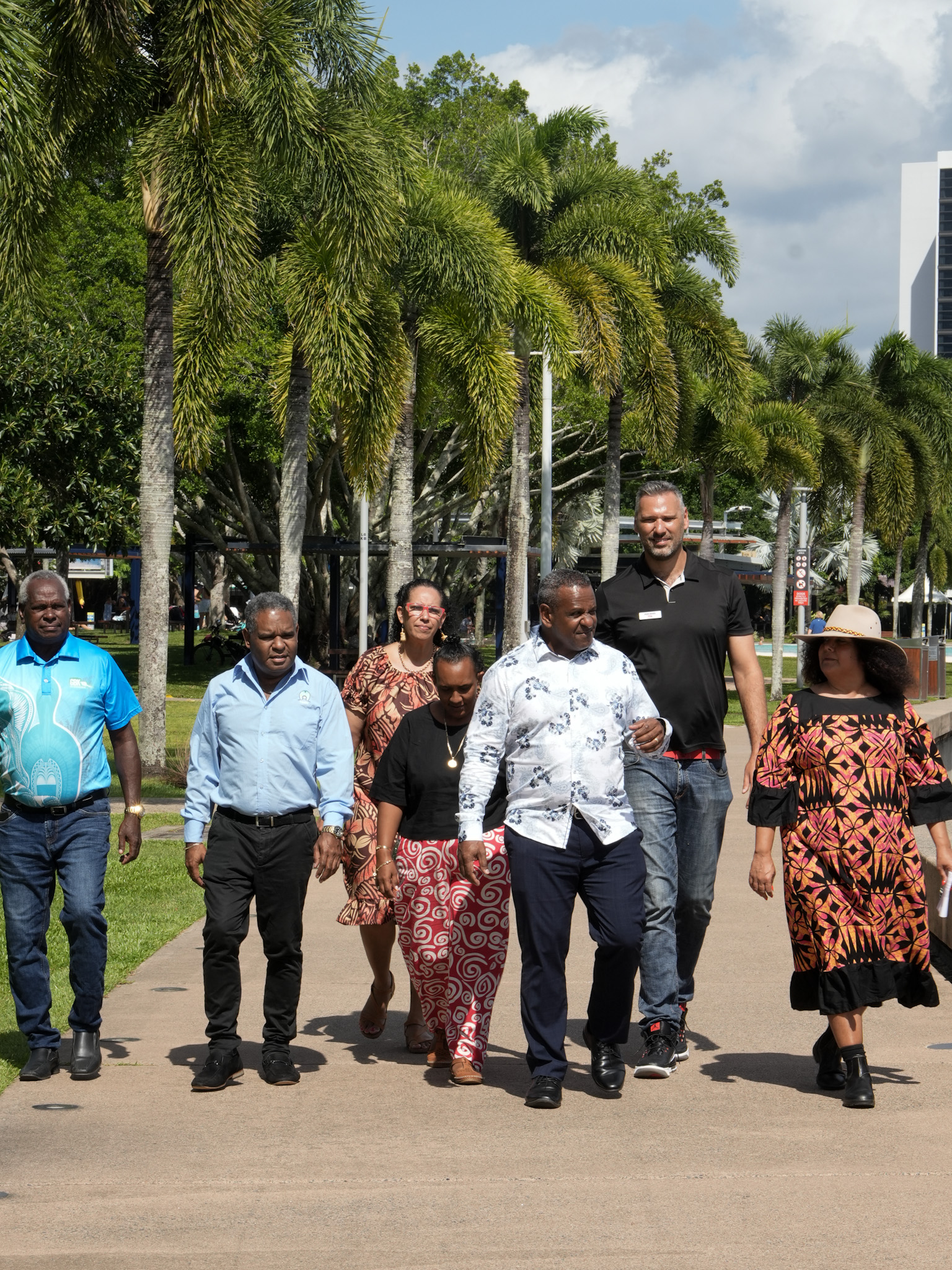
Minister for Indigenous Australians, Malarndirri McCarthy, took aim at the Coalition, arguing there was a lack of care for the impacts of climate change on some of the country's most vulnerable.
"The Coalition doesn't take climate change seriously. They brought lumps of coal into Parliament and Peter Dutton, when he was a Minister, joked about rising sea levels in the Pacific," Senator McCarthy said.
"We know that remote Aboriginal and Torres Strait Islander communities are particularly vulnerable to climate change and extreme weather conditions."
Administered by the Torres Strait Regional Authority (TSRA) - in partnership with Torres Strait local governments and the Torres Strait Island Regional Council (TSIRC) - the Senator said it was a sign Labor "takes climate change seriously and is committed to boosting climate resilience for First Nations communities and improving access to essential services".
On Monday, TSRA Chairperson George Nona said the region is at the "frontline" of climate change, arguing people in the Torres Strait "face real risks to our homes, culture and way of life".
"This critical infrastructure investment is a step towards helping protect our region and communities from the impacts of climate change and rising sea levels," he said.
"TSRA welcomes this federal funding and will continue to advocate for essential-to-life infrastructure across our region, from Bamaga and Seisia on the mainland to the inner and outer islands of the Torres Strait."
The United Nations Permanent Forum on Indigenous Issues previously recognised that "Indigenous peoples, who have the smallest ecological footprints, should not be asked to carry the heavier burden of adjusting to climate change…".
A report prepared for the Prime Minister's Science, Engineering, and Innovation Council in 2007 noted: "Torres Strait [I]slanders and remote [I]ndigenous communities have the highest risks and the lowest adaptive capacity of any in our community because of their relative isolation and limited access to support facilities. In some cases, the Torres Strait islands are already at risk from inundation."
Labor Senator Nita Green said the funding was "vital" for the region and called on the LNP state government to also invest and "give these communities the security they need".
The government says the seawalls and upgrades to infrastructure will increase the protection for communities in the Torres Strait, as well as support local jobs during the construction phase of the projects.
Last year, a new $5 million, 1 km seawall on Poruma was opened to help mitigate both erosion and coastal flooding of the low-lying coral cay island community home to only 164 residents.
At the time, TSIRC Mayor Phillemon Mosby said the seawall was already showing its benefits, arguing: "Seawalls are critical in helping safeguard not only our homes and vital infrastructure – such as roads, health and education facilities – but also our culture and livelihoods."



