



Traditional Owners and Indigenous Rangers have joined with researchers from the Australian Institute of Marine Science (AIMS) to expand coral larval restoration efforts on the Great Barrier Reef.
The training, held on Heron Island during the annual coral spawning, focused on equipping Traditional Owners with practical restoration skills to assist coral recovery.
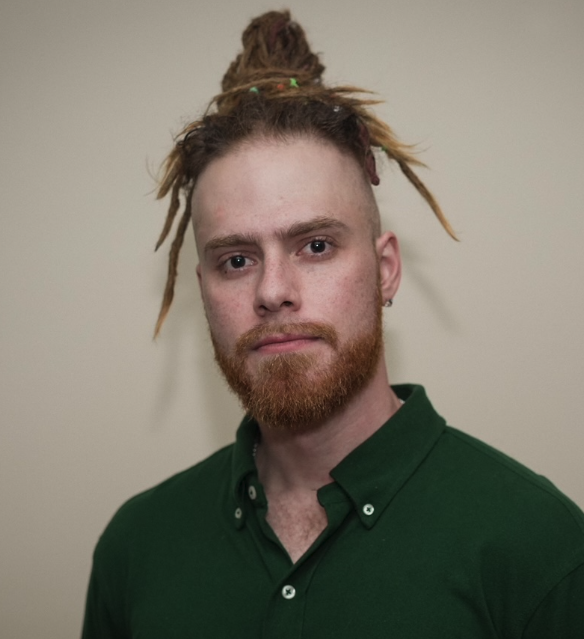
AIMS Indigenous Training and Capacity Building Officer Mr Jordan Ivey emphasised the importance of Traditional Owners' involvement in reef care.
"Traditional Owners hold important cultural and spiritual connections to Country, including sea Country on the Great Barrier Reef," he said.
"These connections power deep knowledge and care for the Reef, and inherent rights and responsibility for its future.
"It is only natural they play a key role in the delivery of the interventions AIMS scientists and their collaborators are developing across the Reef."
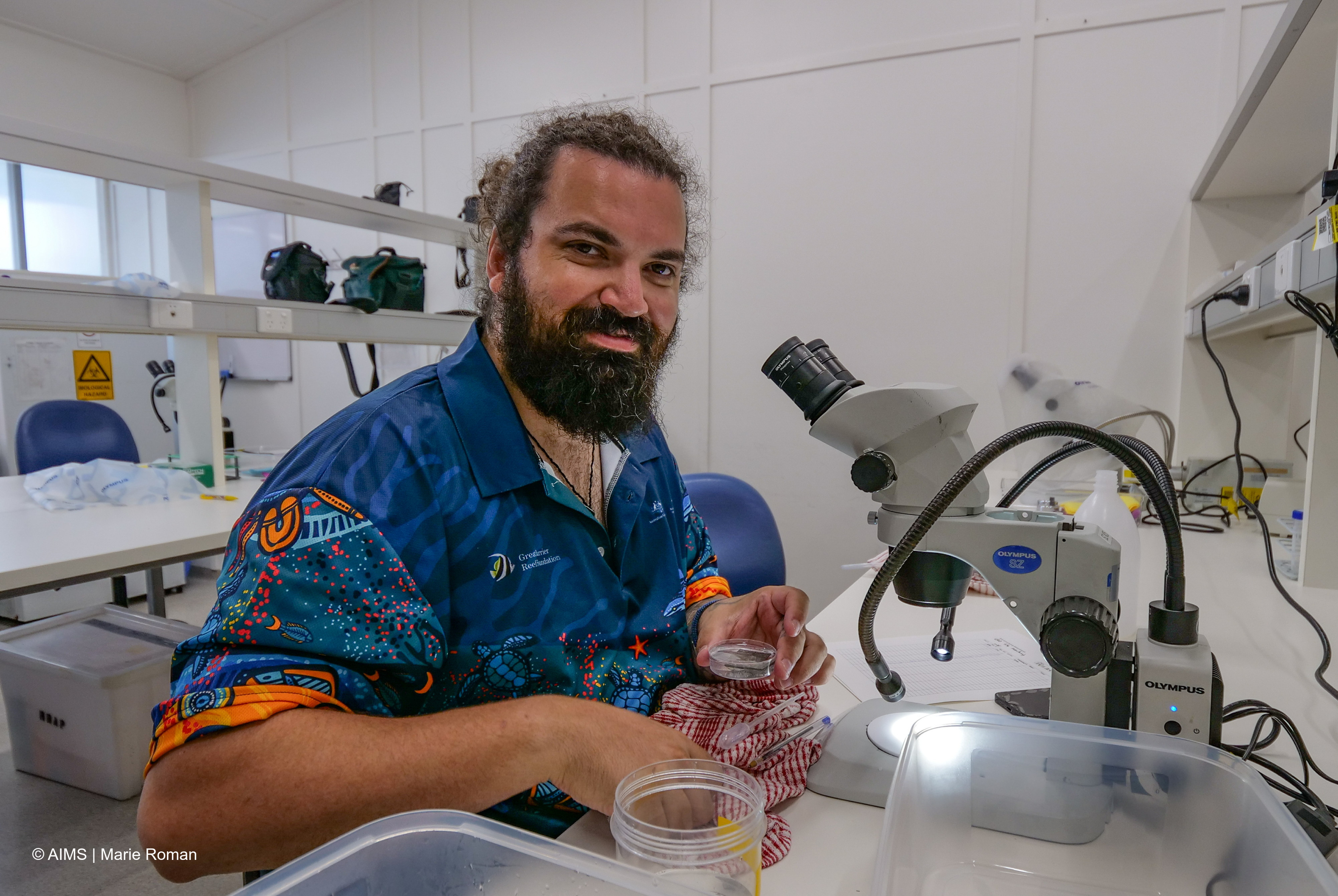
Mr Ivey explained that the training lays a foundation for scaling up restoration techniques while empowering Indigenous Rangers to lead efforts within their own communities.
The training, part of the Indigenous Futures project, involved Indigenous Rangers from six Traditional Owner groups working with AIMS scientists on activities such as coral larvae collection, aquaculture system setup, and coral monitoring.
AIMS coral reproduction and aquaculture scientist Dr Muhammad Azmi Abdul Wahab said this year's efforts were particularly significant due to recent mass coral bleaching and cyclone damage.
"Coral spawning is a crucial time on the Great Barrier Reef, especially because this year's event came after the summer's serious and extensive mass coral bleaching and two cyclones which caused coral cover losses in some parts of the Reef," he said.
"It has been inspiring to share learnings and experiences with these engaged and passionate Indigenous Rangers and Traditional Owners, all of whome are contributing to the continuous improvement of the new methods coming out of our research, and their delivery."
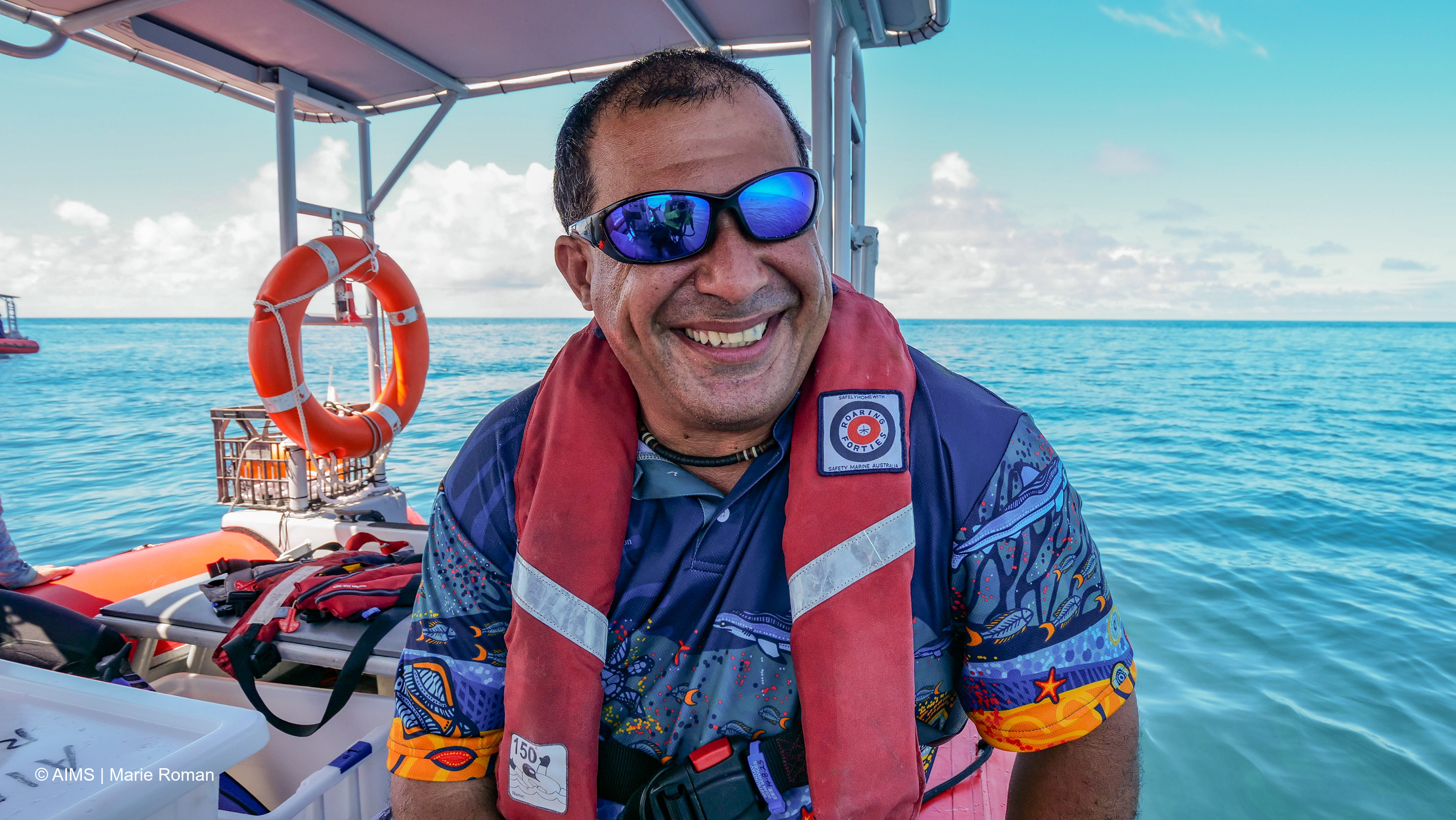
Gidarjil Ranger Coordinator and Port Curtis Coral Coast Traditional Owner, Kelvin Rowe, said the ranger groups were eager to learn and share their knowledge with their communities.
"Our ranger groups have been working together, wanting to learn and asking questions to learn so we can show everybody in our own communities," he said.
"AIMS has given us a huge opportunity, especially on the learning side, making it hands on, which is good."
He added that AIMS also respected cultural knowledge, learning about Traditional Owners' connections to the ocean and their stories.
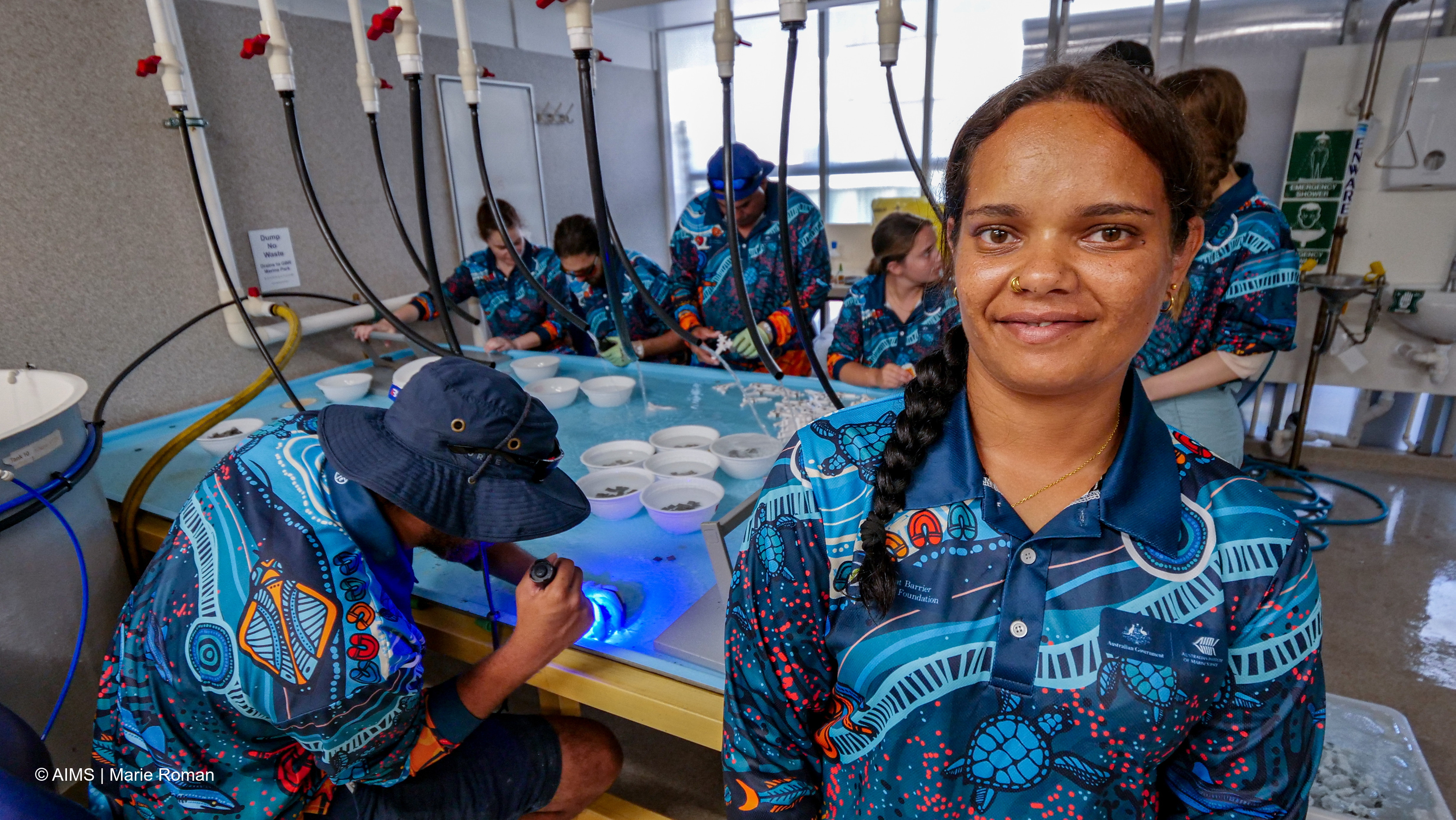
Woppaburra Land and Sea Ranger Tshinta Barney said the training offered valuable insights into reef restoration.
"It's astounding. When you see it up close like we have, you realise that a lot of work goes into this," she said.
"The Woppaburra people have been working with AIMS scientists around the Keppels.
"This made me feel more comfortable to come here and work with them. They're hoping that we can take some of this knowledge back and help to restore some more of the reef there."
Great Barrier Reef Foundation Managing Director Anna Marsden highlighted the significance of blending Traditional Knowledge with western science.
"Australia's Traditional Owners are the first scientists, farmers, engineers, innovators and conservationists," she said.
"They have successfully nurtured and protected their environment through changing seasons and climates, guided by Traditional Knowledge and customs passed down through generations.
"The Great Barrier Reef Foundation is proud to co-design impactful projects such as this that weave this knowledge with western science to help overcome a key challenge to protecting our Reef – scaling reef restoration efforts."
The Indigenous Futures project, which began in 2023, provides accredited training through a Certificate III in Conservation and Ecosystem Management.
It is supported by AIMS, the federal government's Reef Trust, the Great Barrier Reef Foundation, and the Reef Restoration and Adaptation Program.



