




More than 120 representatives have met in Canberra to reinforce the urgent need for youth justice reform to be made a national priority.
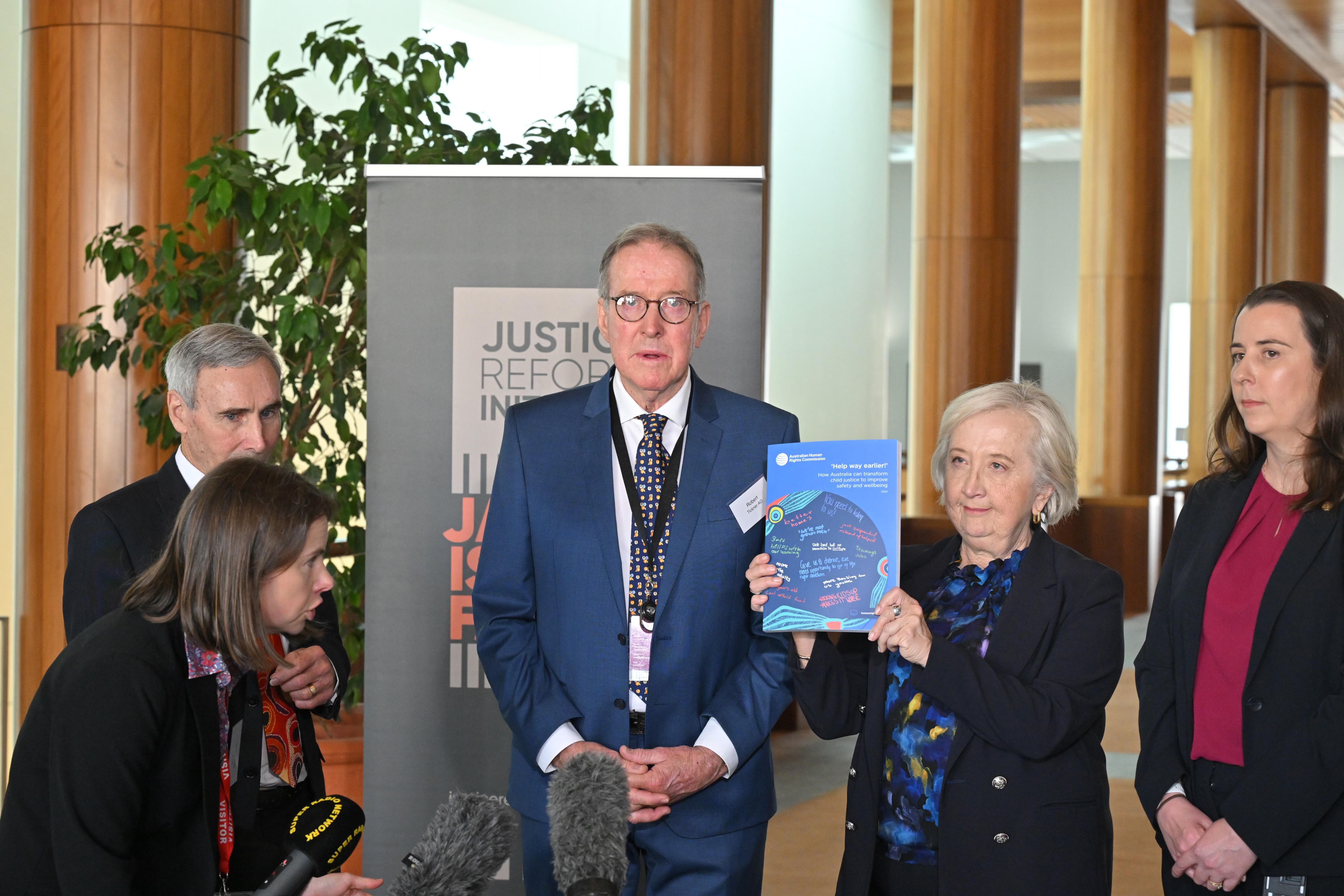
Co-hosted by the National Children's Commissioner, Anne Hollands, and the Justice Reform Initiative, the event saw people with experience of child imprisonment, as well as law and justice leaders, parliamentarians, and First Nations leaders gather to discuss a way forward.
It comes on the back of Commissioner Hollonds' report, Help way earlier!': How Australia can transform child justice to improve safety and wellbeing, which was tabled in Parliament and argues the treatment of children as young as 10-years-old in the criminal justice system is one of the most urgent human rights issues facing Australia today.
It finds there is a misunderstanding in Australia about the problems we are trying to solve, which is that the criminal justice system is not reducing offending and making the community safer, Commissioner Hollonds said.
"The evidence shows that the younger you lock up children, the more likely it is that they will go on to commit more serious and violent crimes. Making the justice system more punitive through longer sentences, tougher bail laws, and building more children's prisons is the wrong approach."
She said this was because offending by children was related to underlying causes, which the systems across the country are failing to address, and a pivot towards solutions-based responses is urgently needed.
Among its 24 recommendations, the Help way earlier! calls for a National Taskforce for Child Justice Reform; a National Cabinet Minister for Children; a Ministerial Council for Child Wellbeing reporting to the National Cabinet; legislation to protect the human rights of children; banning the use of solitary confinement; and raising the age of criminal responsibility.
The event on Thursday saw a panel discussion between Commissioner Hollonds, Commissioner for the Queensland Family and Child Commission, Natalie Lewis, and four speakers who experienced incarceration as children.
Tyson, who was involved in the criminal justice system from the age of 11 to 17, said the psychological damage and the trauma that his time as a ward of the state caused him meant it was "very hard to come back into the mainstream".
"They kept locking me up. That's the answer to why I kept reoffending," he said.
"I believe no 11-year-old should be locked up.
"We keep locking kids up, we're going to get the same results we've been getting for the past 15 years or longer.
"We need to make change. You need the right support, a place of belonging, a place where you can feel loved."
Speaking to National Indigenous Times earlier this year, Commissioner Lewis argued any system focusing on punitive rather than preventative measures would see an increase in children in detention.
"It perpetuates inequalities, including lack of consistent access to quality health, education and therapeutic programs, and can continue the cycle of intergenerational trauma," she said.
Justice Reform Initiative chair Robert Tickner said Australia was failing its children with its approach to youth justice and that the Commissioner's report makes clear the Commonwealth needs to "step up and show national leadership".
While the federal government has expressed dismay at youth deaths in custody, they have largely argued criminal justice is a state responsibility, pushing back on calls for them to apply greater pressure.
Last month, Independent Senator Lidia Thorpe saw a motion for greater accountability for deaths in custody pass the Senate, but with opposition from Labor who argued it was a state responsibility.
Mr Tickner said societal factors which drive offending have been allowed to worsen over time without either side of politics intervening, referencing the unanimous support for the Senate Inquiry into Australia's child justice system examining federal responsibility for youth justice.
The inquiry was called after Western Australia has seen two Indigenous young people die in the youth justice system in less than a year.
"Too many children around Australia are managed in prisons, rather than receiving the support and care and opportunity they need in the community," Mr Tickner said.
He highlighted the recidivism rate, where almost 70 per cent of youth detainees received another supervised sentence within six months, and 85 per cent within a year.
"As a cross party national organisation, the Justice Reform Initiative is calling for youth justice to be taken out of the hothouse war zone of party politics and for our political leaders to come together to support evidence-based policy which reduces crime and makes our communities safer," Mr Tickner said.



