




Gough Whitlam pouring sand into Vincent Lingiari's hands in 1975.
Bob Hawke at the Barunga Festival in 1988.
Paul Keating's Redfern speech.
Kevin Rudd's apology to the Stolen Generations in 2008.
Uncle Andrew Gardiner invoked these defining moments in the relationship between governments and First Peoples on the steps of Victoria's Parliament House on Tuesday morning.
To that list, he said, must now be added: Jacinta Allan, 2025.
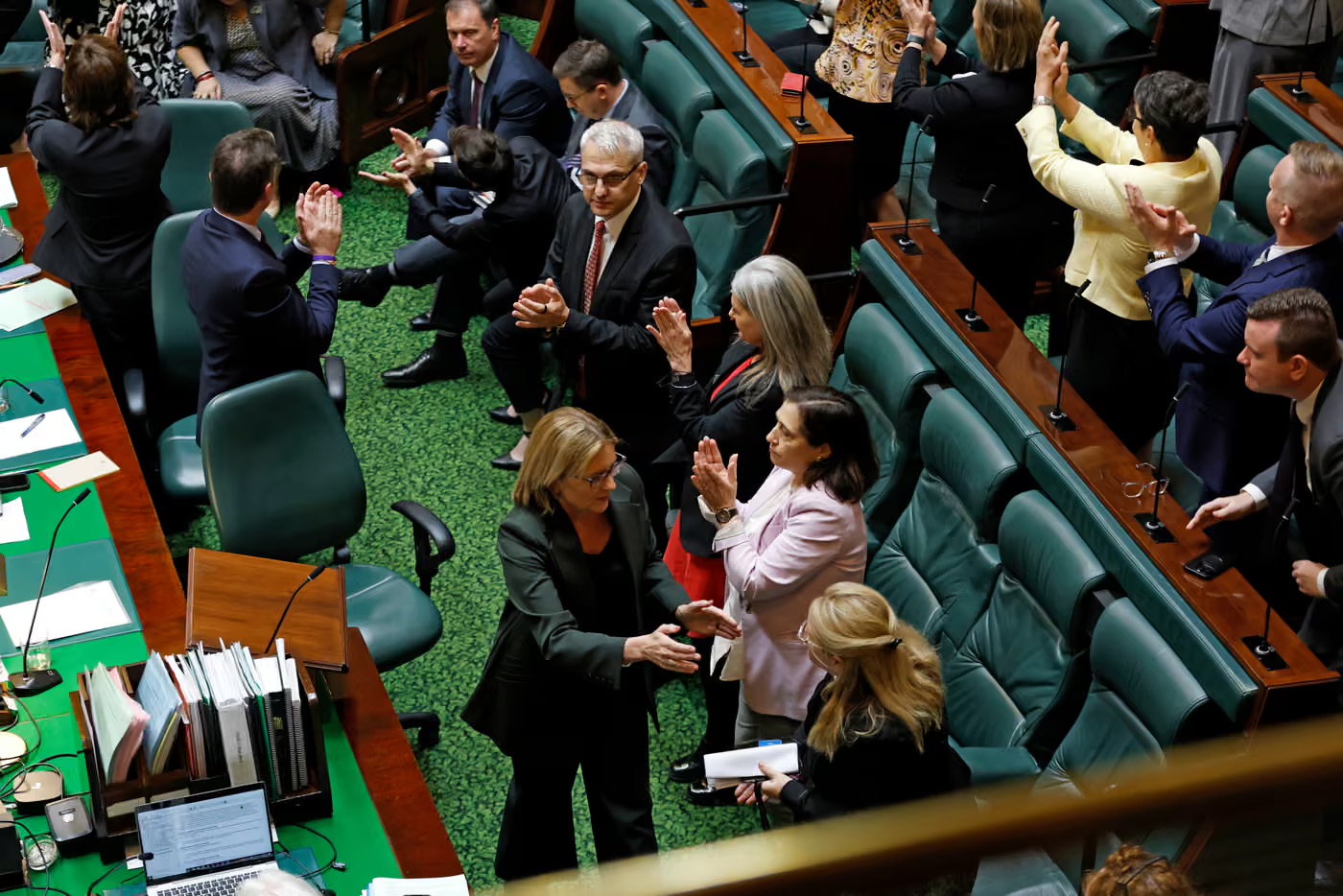
Just after 11 am, the joint sitting of Parliament that followed carried the weight of injustice. The press gallery watched from its ageing ledges as First Peoples from across the state filled the viewing area, witnessing a moment which felt historic less for its grandeur than for how long it had taken to arrive: an official government apology for 191 years of harm.
Among those in the gallery was Travis Lovett, 6ft 5, towering above the small Aunties who smiled with warmth to everyone they saw. His great-uncles — five Aboriginal brothers — survived the First World War only to return to land loss and discrimination.
"I keep thinking of the Elders, I keep thinking of the ancestors that we lost," he says, reflecting on the mix of grief and healing.
"This is an important step for our people. Because it legitimises and solidifies that our people have told the truth over the last 191 years about the continual, ongoing harm of government policy and government failures on our people."
Nearby sat Rodney Carter, soft-spoken and reflective. His mother, Aunty Fay Carter OAM, helped establish the Victorian Aboriginal Child Care Agency, spending her life devoted to others after being born on a hospital porch because Aboriginal women were barred from the maternity ward.
"This is not just the newest apology," Mr Carter said out in the bright light on the steps of Parliament. "I think it's the most personal, intimate, measured description of the treatment of us as First Peoples....it's an amazing day."
Ngarra Murray, Co-Chair of the First Peoples' Assembly and a descendant of seven generations of activism from the 1881 Maloga Petition to today's Treaty process, sat with fellow Co-Chair Reuben Berg.
Together with Elders, community members and advocates, they listened as the Premier apologised for the "harm inflicted upon them through the actions and inactions of the State, and the colony that came before it".
As the opposition — which has often made Indigenous affairs a proxy battleground — sat uncomfortably through an apology it would ultimately reject because it referenced Treaty, Ms Allan addressed Aboriginal Victorians directly. Many filled the chamber; many more watched from an adjacent overflow room.
"We acknowledge the harm inflicted on generations of First Peoples — and mark the beginning of a new era, one that embraces truth, honours justice, and creates space for a shared future built in full view of the past," she said.
"The actions and inactions of the State — and the colony that came before it — carried out through words spoken and laws passed in the chambers of Parliament, resulted in profound and undeniable harms — the effects of which we are still grappling with today."
Sheena Watt, who at times reached for the Premier's hand during the parliamentary address, appeared visibly emotional when speaking to reporters earlier on Tuesday.
The Yorta Yorta woman described feeling an "interesting mix" of pride and sorrow, but said she was certain the apology would help ensure a fairer future for everyone. She spoke of her experience hearing people in her community speaking in language as they walk down the street.
"I can't do that," Ms Watt said.
"I have stories of heartbreak: From hospitals, from my grandmother; of loss and sorrow that weren't captured — but will be captured today."
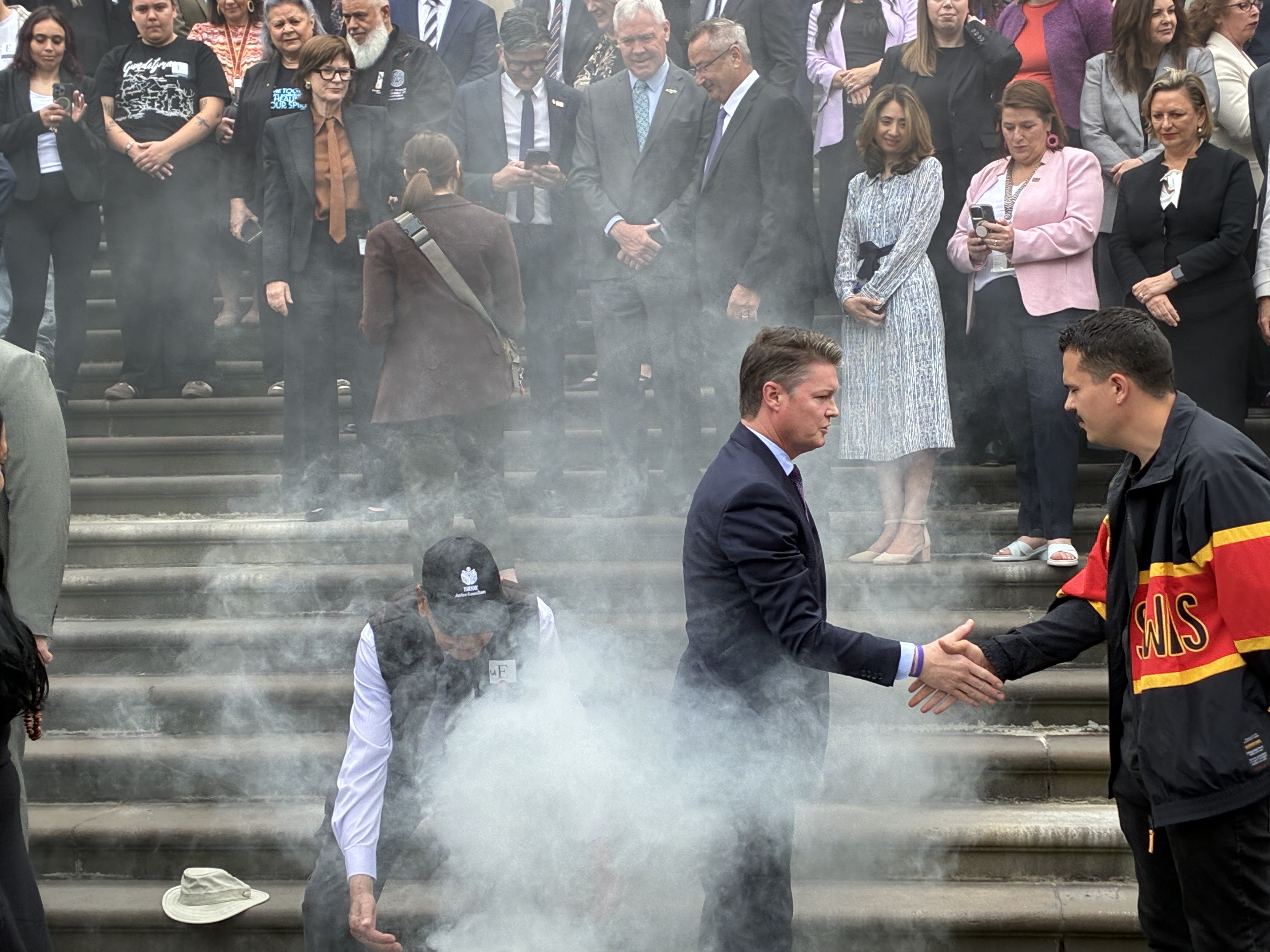
The importance, of course, was tempered somewhat — as it so often is in politics — by the contradictions of some current policies. Greens leader Ellen Sandell praised the apology while pointing out that, only a week earlier, the government had passed laws expected to increase the number of First Nations children in prison.
"I think it's important to remember, though, that this apology today comes at a really difficult time for many First Nations communities," she said, warning that future leaders might one day deliver yet another apology for the predictable consequences of today's decisions.
Despite all the goodwill the government has rightly got from the apology and the Treaty legislation, Ms Allan was still forced to defend the laws to journalists earlier in the day. She argued many Indigenous Victorians are victims of crime — a point accurate, yet disconnected from the criticisms that the reforms will widen inequality and breach the state's Human Rights Charter.
Yet the government's discomfort paled beside the opposition's decision to force a vote on the apology — one they were certain to lose — rather than accept it on the floor with the numbers stacked against them.
Shouts of "shame" echoed through the chamber as the bells rang, and the motion for an apology was forced to wait a little bit longer.
It was, as one Assembly member remarked in the corridors afterwards, a reminder that in Aboriginal affairs, "the more things change, the more they stay the same". Regardless of the opposition's stance, it is up to both sides of politics — not just now, but in the future — to make that aphorism a false prophecy.
Speaking in the chamber, Minister for First Peoples, Natalie Hutchins, said the apology "is a line in the sand". Victoria faced its past on Tuesday, but the future will test whether this apology means more than words.



