


Australian Prime Minister Anthony Albanese says he's had "nothing but positive feedback" about his country's climate change policies at a Pacific Islands Forum expected to test his government's resolve on climate issues.
Mr Albanese has joined Pacific leaders in the Cook Islands this week for the annual meeting of regional powerbrokers.
He has held formal bilateral talks with Tuvalu, Kiribati and the Cook Islands on the sidelines of the Pacific Islands Forum (PIF) leaders meeting, and informal discussions with other leaders from Nauru, Samoa, Tonga and the Federated States of Micronesia.
All nations are threatened by climate change, but Tuvalu particularly so, given no part of its territory rises more than five metres above sea level.
While environmental NGOs and climate activists have scorned Australia's expansion of fossil fuel extraction, Mr Albanese said Pacific leaders had not done similarly during their meetings.
"They've been very positive about Australia's position when it comes to climate change," Mr Albanese said.
"There's a recognition that since the change of government, there's been a change in Australia's position, and that we are taking the challenge of climate change seriously, not only domestically, but also helping in the Pacific."
The Pacific is our home and our relationships with our neighbours matter to Australia.
This afternoon I met with Prime Minister Natano of Tuvalu, President Maamau of Kiribati, and Prime Minister Brown of Cook Islands, the host of this year's Pacific Islands Forum. pic.twitter.com/G4AvSlMzh4
— Anthony Albanese (@AlboMP) November 8, 2023
The PIF summit is Mr Albanese's second as prime minister.
On Thursday afternoon (AEDT), he will board a flight to the idyllic island of Aitutaki, sailing around the picturesque turquoise lagoon as the group thrashes out the region's top issues at the leaders' retreat.
Joining climate as one of the top issues at the gathering are nuclear concerns, with Pacific leaders showing their resolve to keep the region nuclear-free.
The Pacific is stridently nuclear-free, a legacy of the region's painful history with testing of nuclear weapons by the United States, United Kingdom and France.
Australia's AUKUS deal to obtain nuclear-powered submarines raises concern among many, given the sensitivity of nuclear issues.
Leaders in Kiribati, Tuvalu, Solomon Islands and Fiji have previously expressed reservations on different fronts, including the extravagant cost, which exceeds the entire annual GDP of PIF members excepting Australia and New Zealand.
PIF chair and Cook Islands Prime Minister Mark Brown has suggested the time could have come to "reinvigorate" the Treaty of Rarotonga, the nuclear weapons-free pact signed during the Cold War.
Mr Albanese was less forthcoming on whether reform was needed, declining to respond to questions on whether he supported Mr Brown's calls.
"We support the Treaty of Rarotonga. It is a good document. It has stood the test of time, all of the arrangements that have been in place, we've been consistent with that, and it retains our support," he said.
The legacy of another nuclear incident - the 2011 Fukushima power plant disaster - also hangs over the Pacific.
Japan is releasing treated wastewater from the power plant, insisting it is safe to do so, with an International Atomic Energy Agency report as proof.
Australia and New Zealand accept those guarantees, but a growing number of Pacific nations hold concerns, including Polynesian and Melanesian blocs.
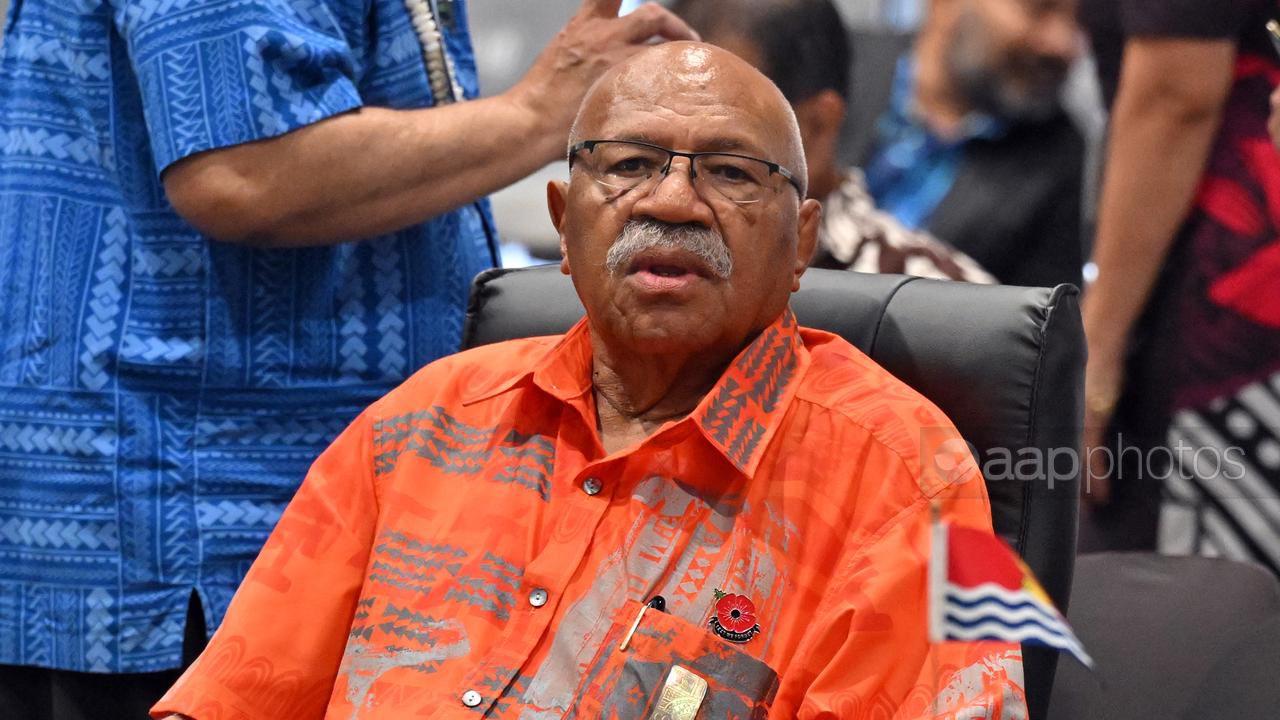
At the PIF summit, Fiji Prime Minister Sitiveni Rabuka is championing another initiative: declaring the Pacific an "ocean of peace".
That proposal, the nuclear concerns and the Suva Agreement regional unity pact are late inclusions onto the agenda of the leaders retreat.



