




In 2016, Nicole Appleton applied for finance to buy her first truck. The lender asked her to submit a video of herself driving it and changing gears.
"They didn't believe the finance was for me, so we complied," Ms Appleton said.
"They'd presumed it was a phoenix application for my bankrupt husband, except I didn't have a husband, I was single.
"Then they questioned what would happen if I decided to get married and have kids, who would drive the truck? That's when Kathryn told them that they'd crossed a line. You see, she was one of the first women to work as a finance broker, so she empathised with my situation, and my finance was approved the following day."
The truck, a custom-built pink rigid, arrived that year, and NLA Trucking was born. A decade on, the proud Ngarrindjeri woman's company puts up to 120 trucks a day on Victorian roads, predominantly servicing the construction industry, and turns over more than $20 million a year. NLA owns 30 pieces of equipment, including 11 trucks, utes and trailers, and describes itself as Victoria's only transport and plant hire company that is 100 per cent female and Indigenous owned.
The rest of the fleet belongs to owner-operator sub-contractors, many of whom struggled to find work anywhere else.
"Our sub-contractors include Indigenous people, some who have their own trucks, people with disabilities, veterans, refugees, and even those who have been to jail," Ms Appleton said.
"One time, these two men showed up together, in their truck that they had bought together, which is highly unusual in itself, but even more unusual was that they still had their ankle monitors on.
"They were determined to turn their lives around and didn't want to go back to jail, so I gave them a chance, and they have both done so well, each buying their own trucks separately, married with kids."
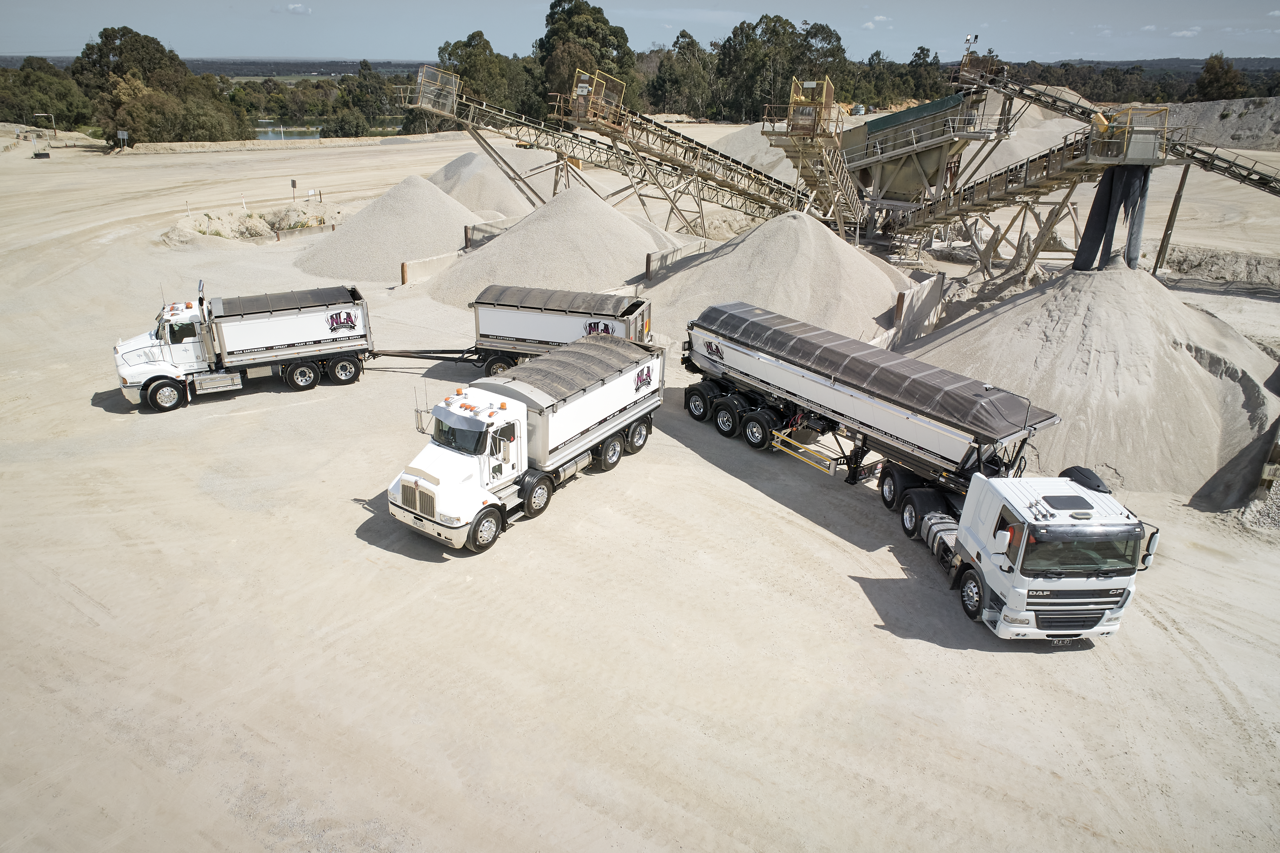
Last year the company formalised that approach, launching the Path to Business Ownership pilot, a six to twelve month program that takes Indigenous drivers from employment to truck ownership. Participants start as NLA employees, build driving hours and business skills under mentorship, then get support to finance their own vehicle and secure steady contracts. The goal is a generation of Indigenous owner-operators with assets, income and independence.
It is the pathway Ms Appleton had to build for herself, starting from a childhood where an asset of any kind was unimaginable.
Her mother had her at 17, in Adelaide, with her father out of the picture. The first ten years of Ms Appleton's life were spent in commission housing with her mother and grandmother, then in Melbourne in a series of rentals her mother could rarely afford, moving 12 times in the space of six years, one eviction after the next.
Her grandmother had been taken from her own family as a child, part of the Stolen Generations, and raised without a loving family environment to pass on.
"My mum was a child herself when she had me, trying to figure things out, it wasn't easy," Ms Appleton said.
"It wasn't until I was born that my grandmother's maternal instinct came to life, and when I found that out, it all made sense and I understood intergenerational trauma."
She is direct about what she took from watching her mother struggle.
"To be honest, seeing mum and her life was like seeing what not to do, so that's what I did," she said.
"Having a mother who always struggled, always in the shadows, I learned that you need to take what you've got and use it to do better, to be better, not blame it on parents, or go through life with a victim mentality, which just makes you miserable and everyone around you miserable."
When her grandmother died at 52, Ms Appleton and her mother moved to Melbourne to live with her grandfather's brother, sharing a bedroom while she finished primary school and started high school. She finished Year 12 at 17 with a dream of studying law, but instead, went into the workforce to support her mother.
"I knew I had to contribute and help mum out, she wasn't any good at managing money, always broke, so when I was still at school, I got a job in hospitality, and then when I was 18, as security at a nightclub, and then a plain-clothed security catching shoplifters," she said.
Security work meant facing down aggressive drunks and drug users, including one who threatened her with a dirty syringe. It also turned her off the partying scene for good. When a chance came to drive a small truck, she took it, enjoyed it, and upgraded to an HC licence so she could tow a trailer.
Job hunting as a 19-year-old woman with a truck licence produced its own absurdities. Transport companies assumed she was there to ask about a job for her husband. She found work with an international tier one asphalting company, where the workforce of Maltese, Italian and Greek men seemingly had never seen a woman truck driver before.
"They didn't talk to me for six months, but they finally accepted me and we became like family," she said.
"When my mother died from a rare form of cervical cancer, she was just 42, they shut down the asphalt plant, and all came to her funeral."
It was her boss at the asphalt company, an Italian named Rino, who planted the idea of buying her own truck.
"To be honest, I'd never even considered it, but I thought, why not? So, Rino helped me find a finance broker, a supportive woman, Kathryn, another Italian, and she's still my finance broker today," said the mother of two.
The finance battle came next, then the pink truck, then building a client base while established competitors tried to squeeze her out. She recounts rivals undercutting her quotes at a loss, following her sales rep to appointments to pitch for the same contract, and sending four sales representatives to lean on one of her clients.
"They were prepared to do jobs at a loss to see me out of business. They didn't like that I was a woman and that I was doing things a bit differently," Ms Appleton said.
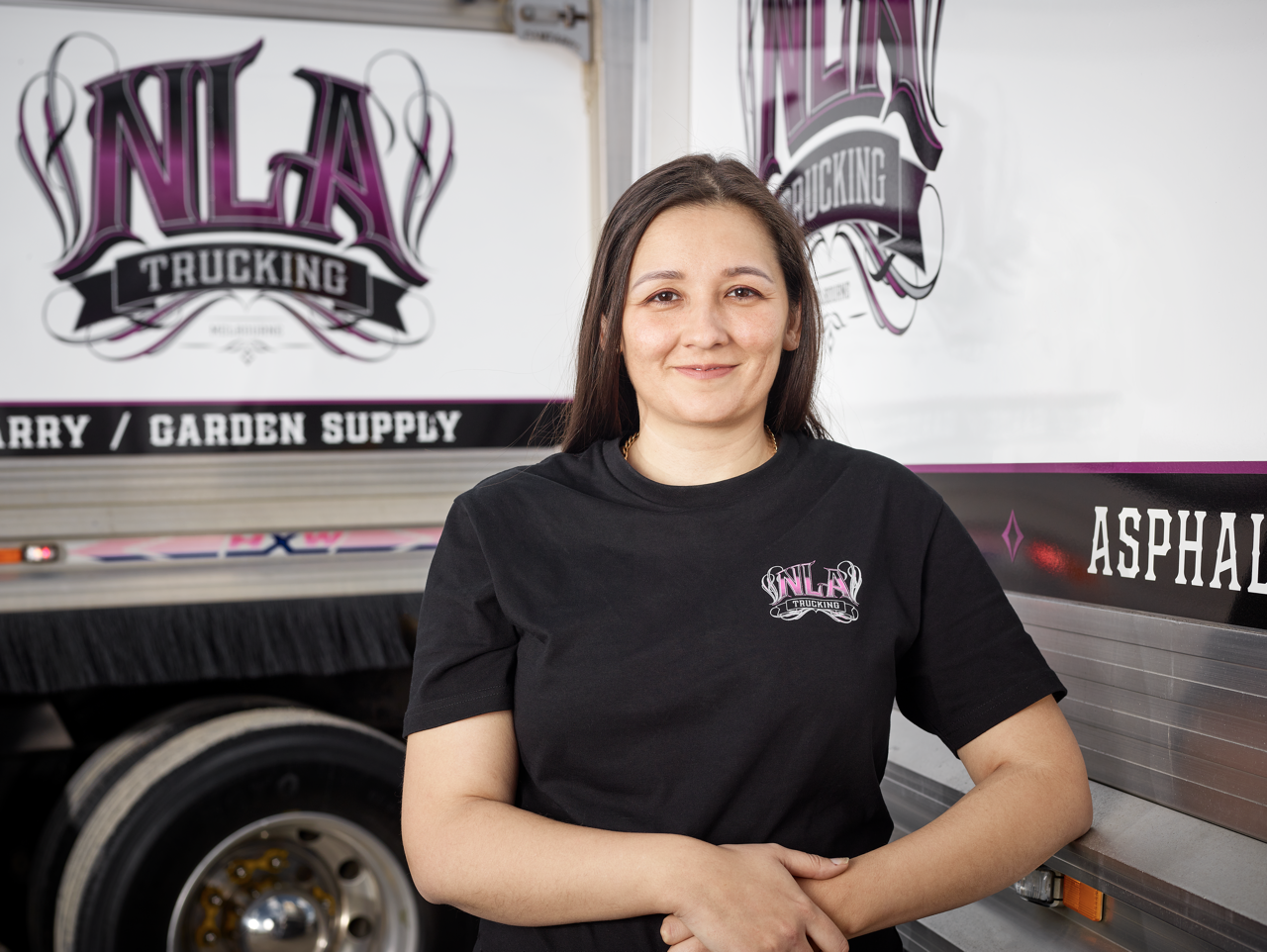
As an owner-operator she turned over $200,000 in her first year. NLA Trucking now turns over more than $20 million, employs a growing team, and recently purchased its own warehouse.
The recognition has followed. NLA Trucking won the Kinaway Sistas in Business Award in 2023, was a 2025 Supply Nation finalist for Indigenous Business Woman of the Year, and in 2026 collected the Women in Business Award at the Victorian Small Business Awards and the honour Ms Appleton values most, Indigenous Business of the Year at the 36th Ethnic Business Awards. The awards were founded in 1988 to celebrate migrant enterprise and added an Indigenous category in 2010.
"I was so impressed with the process for the Ethnic Business Award. Attending is by invitation only, it's not a popularity contest or based on who sells the most tickets, the winners are chosen genuinely," she said.
Self-taught in every aspect of business, Ms Appleton runs the company on family values and grit, and measures success by the culture as much as the fleet.
"We treat each other well, there are no dramas, we give people a chance.
"I'm really proud to be a role model to our kids to show them that women can do anything, that Indigenous people can do anything."



