




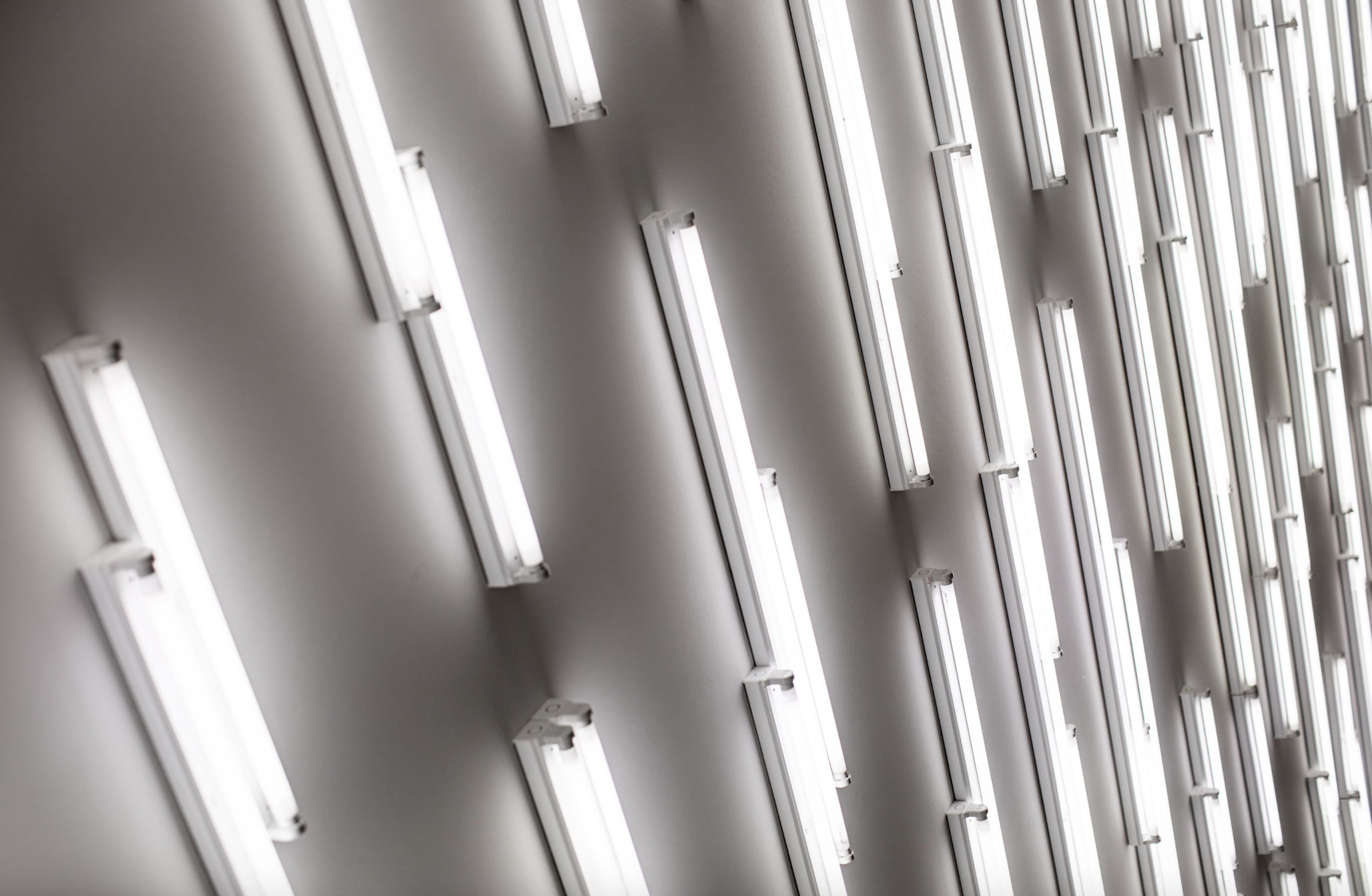
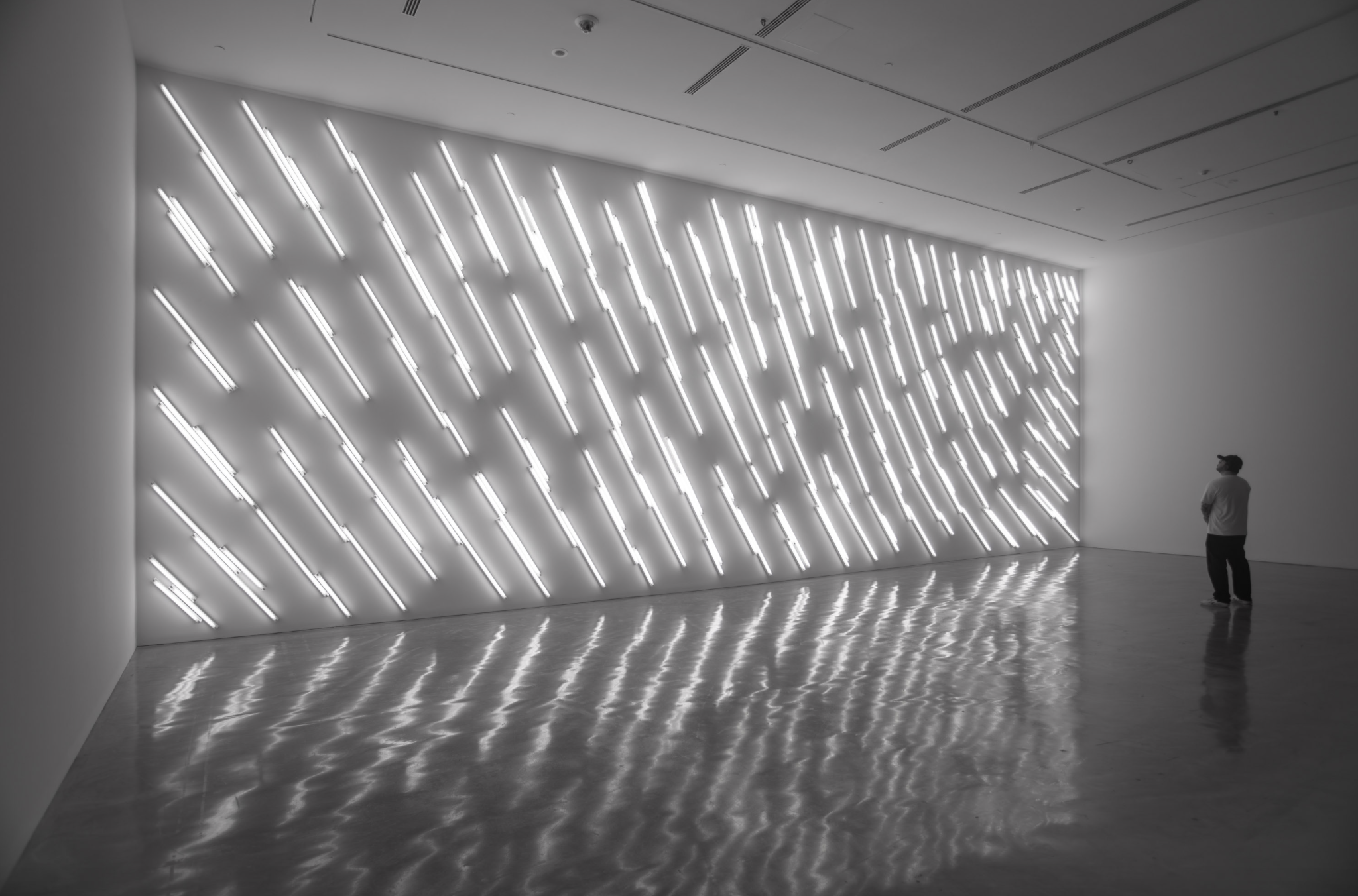
Described as a light installation that evokes the stars above Gadigal Country, Jonathan Jones' engaging light exhibition naa (to see or look), 2015, wowed visitors for four weeks at the Sydney Museum of Contemporary Art.
Featuring fluorescent tubes, fittings and electrical cable the intricate body of work was shown at the Museum of Contemporary Art Australia from July 11 to September 8.
The installation draws on the life of Lieutenant William Dawes (1762–1836), a First Fleet astronomer who built an observatory at Tarra/Dawes Point in Warrane/Sydney Cove.
Dawes' meticulous records reveal his deep engagement with the Aboriginal people of the Eora Nation. They capture conversations with several Eora people, including Patyegarang, a young woman who was vital in helping Dawes understand and document the local language.
"The sky, as an extension of country, embodies knowledge. Starlight and the dark spaces around them are like words on a page, recalling culture, memorising and marking the way forward. In this way culture is never lost; country will always remind us," said Jones.
"The shift between light and dark in naa (to see or look) is a metaphor for the friendship between Patyegarang and Dawes. Each fluorescent tube is both a star and a word, and their arrangement on the wall a representation of the words spoken; in its entirety, the installation is an embodiment of Dawes' charting of the night sky and of the Eora language."
Born in 1978 in Sydney, New South Wales, Jones is a member of the Wiradjuri and Kamilaroi peoples of south-east Australia.
Working across a range of mediums - from printmaking and drawing to sculpture and film – Jones utilises everyday materials in minimal repeated forms to explore and interrogate cultural and historical relationships and ideas from Indigenous perspectives and traditions.
Known for his evocative installations and interventions into space that use fluorescent light tubes, Jones' light works further express his interest in the idea of positive contact and connection, illuminating a bridge between cultures and the spaces of exchange.
Having exhibited both nationally and internationally since the late 1990s, including exhibitions at Sherman Contemporary Art Foundation, Sydney; National Gallery of Victoria, Melbourne; Art Gallery of New South Wales, Sydney; Art Gallery of South Australia, Adelaide; Queensland Art Gallery, Brisbane; National Gallery of Australia, Canberra; National Gallery of Canada, Ontario; Palazzo delle Papesse Contemporary Art Centre, Siena, Italy; and more, Jones work is represented in major public collections throughout Australia and in a number of public collections overseas.
Senior Curator at the Museum of Contemporary Art Australia, Sydney, Natasha Bullock shared her thoughts on Jones' work noting that it is far beyond just an engaging light exhibition.
"Jonathan Jones' drawings, sculptures and installations evolve from a desire to remember the past in the present. Similar to the idea that the sky and earth are visually equivalent, his black-and-white drawings of patterns drawn from his Wiradjuri/Kamilaroi ancestry achieve a synthesis of opposites – between the soft, densely applied graphite and the white strips torn from the surface of the paper. His light installations transpose this idea into a three-dimensional experience that inverts the traditional hierarchy of figure over ground, implicating the viewer in a conversation about black and white. In this sense, Jones' work creates a space of sensation," she said.
"Light is integral to Jones' work, functioning as a structuring device that relates to forms of late modernist art, and as a reference to his childhood experience of being taught by his grandfather how to wire light fittings.The light emitted by his work encourages viewer participation – it urges us to engage with it closely, and, as in the case of naa (to see or look) (2015), to traverse the space and length of the work. This exchange between artwork and viewer is important to Jones, because at the heart of his concerns is the notion of communal relations – or, as he explains, 'the operations of the community and the individual, in the interests of a national community'."
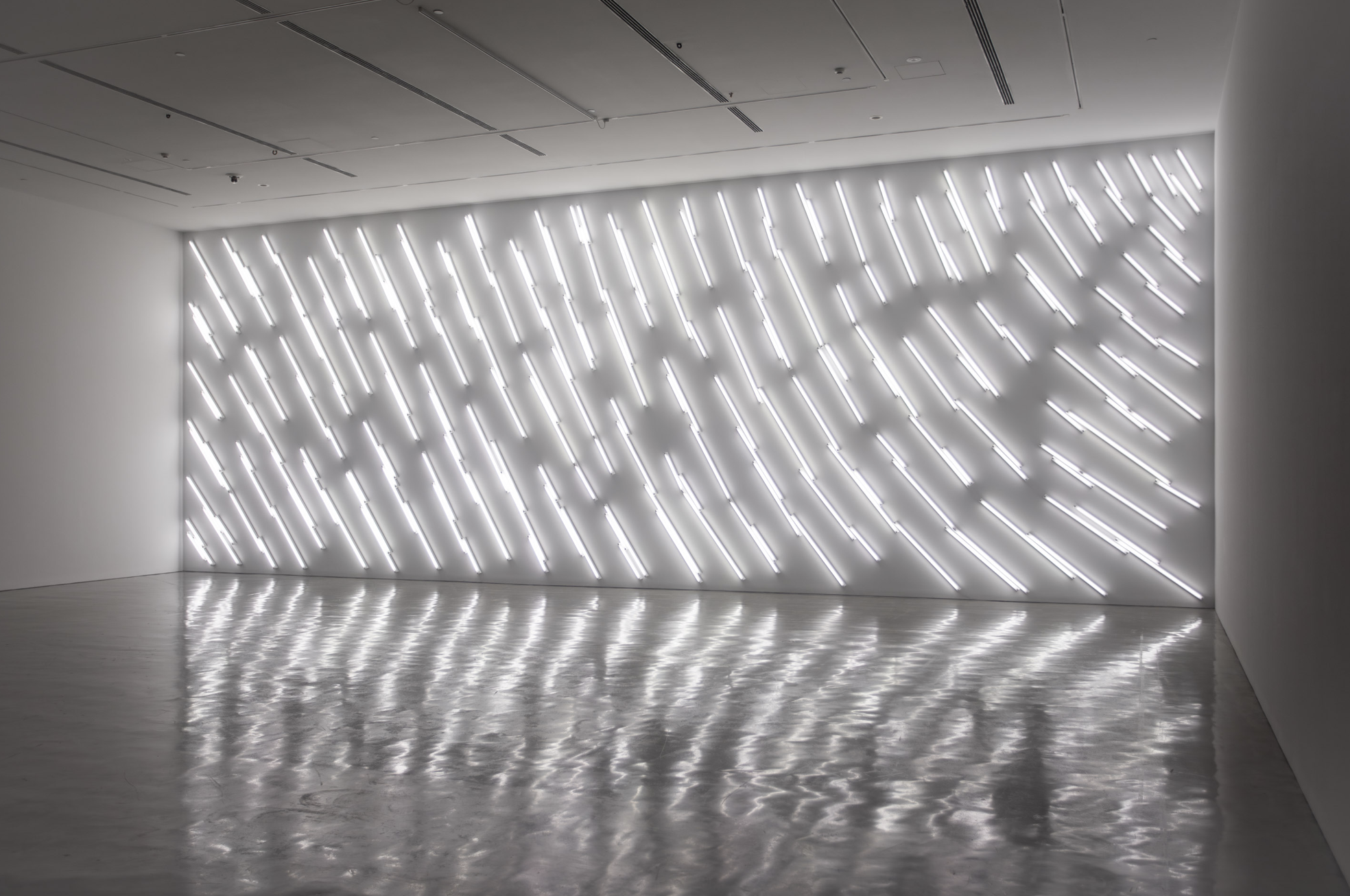
Lighting up the museum with as much vibrancy as the artist behind it, naa (to see or look) is an intricate piece of work that encourages viewers to engage numerous senses and truly gauge the deeper meaning of the piece.
For more fashion, beauty and lifestyle news subscribe for free to the Style Up newsletter.



