




In the wake of the coronial findings into the 2019 police shooting of 19-year-old Kumanjayi Walker, calls are intensifying for greater accountability in the Northern Territory Police Force, with critics arguing the coroner's recommendations do not go far enough.
Delivering her findings in the remote community of Yuendumu on Monday, Judge Elisabeth Armitage found Mr Walker's death was "avoidable" and criticised both the conduct of former NT Police officer Zachary Rolfe and the culture within the force.
She found that Mr Rolfe, who shot Mr Walker three times during a failed arrest attempt, was racist and worked within an organisation exhibiting "hallmarks of institutional racism".
However, the coroner stopped short of recommending a new independent oversight body for NT Police — a long-standing demand of Aboriginal legal services, justice advocates, and the Walker family.
Speaking on Tuesday, Mr Walker's cousin, Samara Fernandez-Brown, said while there was "relief" the inquest had ended, the fight for change continues.
"When we heard the coroner say that there was structural and entrenched racism in the NT police we felt validated; as a family, to us, we felt racism killed Kumanjayi," she said.
As part of its submission to the inquest, the North Australian Aboriginal Justice Agency (NAAJA) called for stronger independent police accountability. In a statement following the findings, they expressed disappointment that no such oversight mechanism was recommended.
They said the absence of an independent body undermines the potential for "true accountability and transparency in cases of police misconduct towards Aboriginal people".
Writing in The Conversation, legal academics Professor Thalia Anthony and Eddie Cubillo criticised the coroner's failure to recommend disciplinary action or broader structural reforms to policing in the Territory.
"The coroner also did not recommend consequences for police with a history of using force against Aboriginal people, or those who have expressed racist attitudes or behaved in racist ways," they wrote.
They noted that neither Mr Rolfe nor the officer who restrained Mr Walker during the arrest, Adam Erbel, had apologised.
"The coroner also did not set down recommendations that had consequence for NT Police. These might have included reconstituting the force to make it community-oriented, relying less on force and not carrying firearms in remote communities, or redirecting funds to NT Aboriginal remote community-controlled law and justice groups," Professor Anthony and Mr Cubillo wrote.
They also highlighted the irony that it was Mr Rolfe — a non-Indigenous officer — whose exposure of racist messages helped validate concerns long raised by Aboriginal communities.
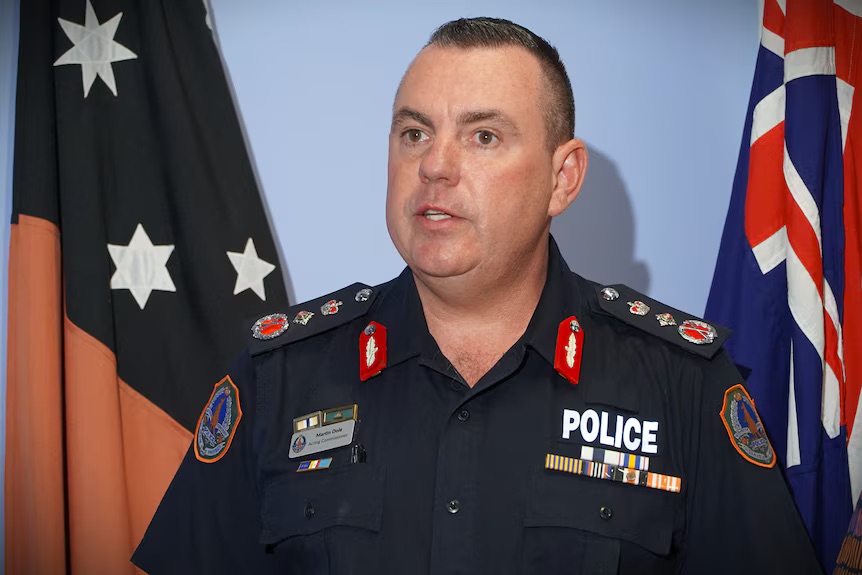
Speaking to media on Tuesday, Acting NT Police Commissioner Martin Dole acknowledged the deep cultural issues highlighted during the inquest.
"I acknowledge that all forms of racism have existed within the NT Police Force at various times, and that this was borne out in the evidence received during this inquest," he said.
"What was tolerated in the past will no longer be acceptable. We are committed to stamping out racism in all its forms and making this a safer, fairer organisation for everybody."
On Wednesday, Amnesty International said it "shares the family's disappointment that the coroner's recommendations did not go far enough," arguing internal investigations are not credible in a force found to be institutionally racist.
"Police should not investigate themselves and internal accountability mechanisms will never deliver just and transparent outcomes," the human rights group said.
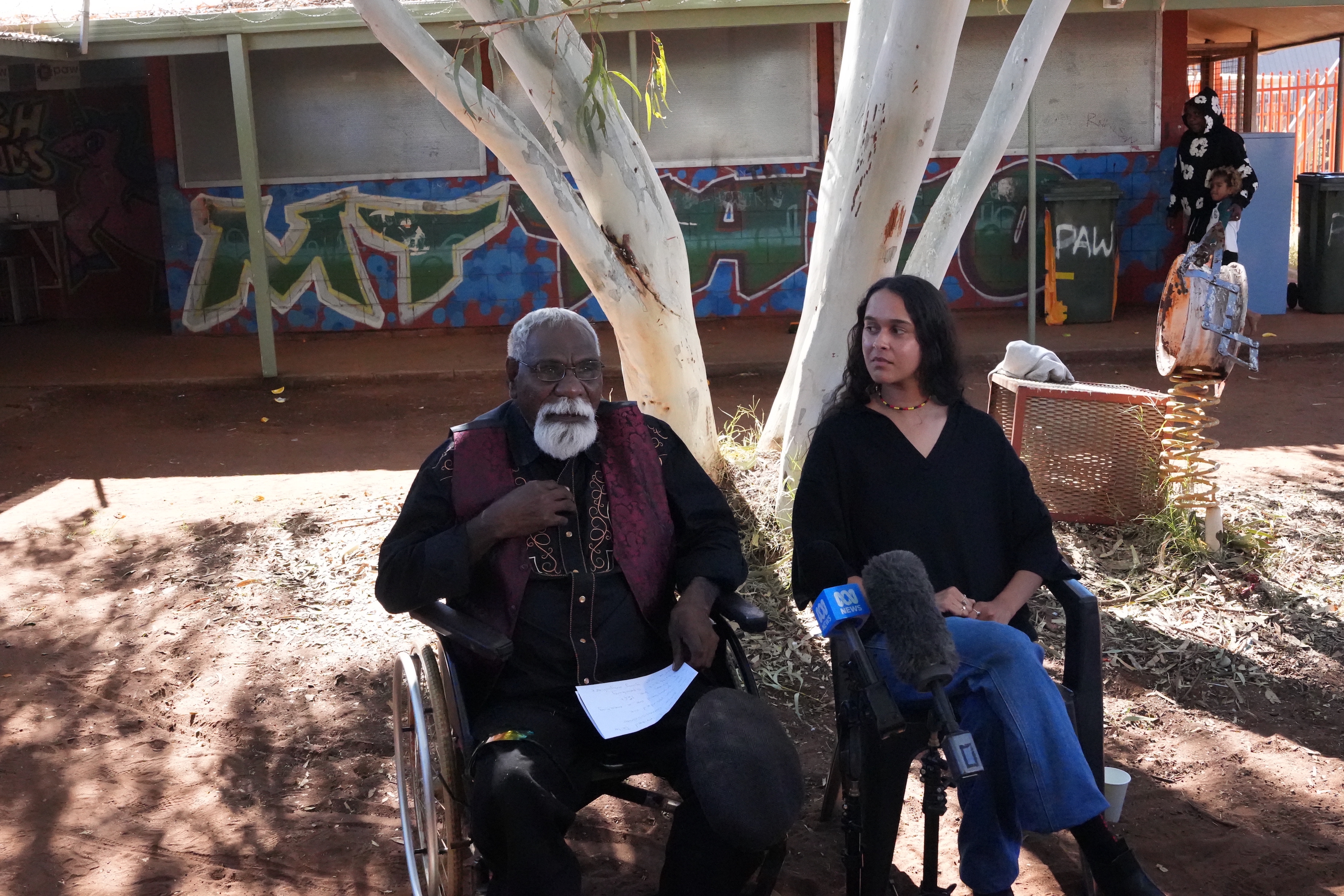
Warlpiri Elder Ned Jampijinpa Hargraves, speaking in both Warlpiri and English, also called for deeper change, noting the community continues to mourn yet another death in custody: 24-year-old Warlpiri man Kumanjayi White, whose death is now under internal investigation by NT Police.
"We were this close to end it, but again something happens, and another one gets killed," Mr Hargraves said on Tuesday. "In future, when we welcome the police, it needs to be two ways of working and understanding."
In her findings, the coroner made clear that Mr Rolfe's behaviour — including sending racist messages to colleagues and sharing body-worn footage of violent arrests — was not an isolated case.
"His racist messages were not mere aberrations. They were at least in part reflective of a work culture that tolerated racism," she said.
"Having considered all the evidence, including Mr Rolfe's explanations and justifications, I found that Mr Rolfe was racist and that he worked in, and was the beneficiary of, an organisation with hallmarks of institutional racism."
Victorian Senator Lidia Thorpe said the findings confirmed what Aboriginal communities have known for decades.
"It's trauma after trauma for our families, with no one ever held accountable. It's time for a complete overhaul of the NT police to once and for all to eradicate the institutional racism within it," she said.



