




Former Northern Territory police officer Zachary Rolfe has rejected key findings from the coronial inquest into the 2019 death of Kumanjayi Walker, claiming Coroner Elisabeth Armitage went "far beyond her remit".
On Monday, Judge Armitage delivered the findings of Australia's longest-running coronial inquest, concluding Mr Walker's death was "avoidable" and that Mr Rolfe's attitudes may have contributed to the fatal outcome.
Mr Walker, a 19-year-old Warlpiri-Luritja man, was shot three times during a failed arrest attempt in the remote community of Yuendumu, 300 kilometres northwest of Alice Springs. Mr Rolfe was later acquitted of murder and manslaughter in a high-profile 2022 Supreme Court trial.
In a statement issued by his lawyer Luke Officer on Tuesday, Mr Rolfe said he rejected many of the coroner's findings, especially those relating to his actions on the night of the shooting.
"In these circumstances he does not accept any findings that are inconsistent with his rightful acquittal. In particular, he does not accept many of the findings in relation to his conduct on 9 November 2019," the statement said.
Judge Armitage had said she could not rule out the role Mr Rolfe's "racist" attitudes played in the shooting.
"That I cannot exclude that possibility is a tragedy for Kumanjayi's family and community, who will always believe that racism played an integral part in his death, and is a taint that may stain the NT Police," she said.
"I am satisfied that there is a significant risk that his racism, in combination with some of his other attitudes and values, affected his interactions with the community of Yuendumu on 9 November 2019, his entry into their houses and his perception of in response to the young Aboriginal man he shot and killed in a way that increased the likelihood of a fatal outcome."
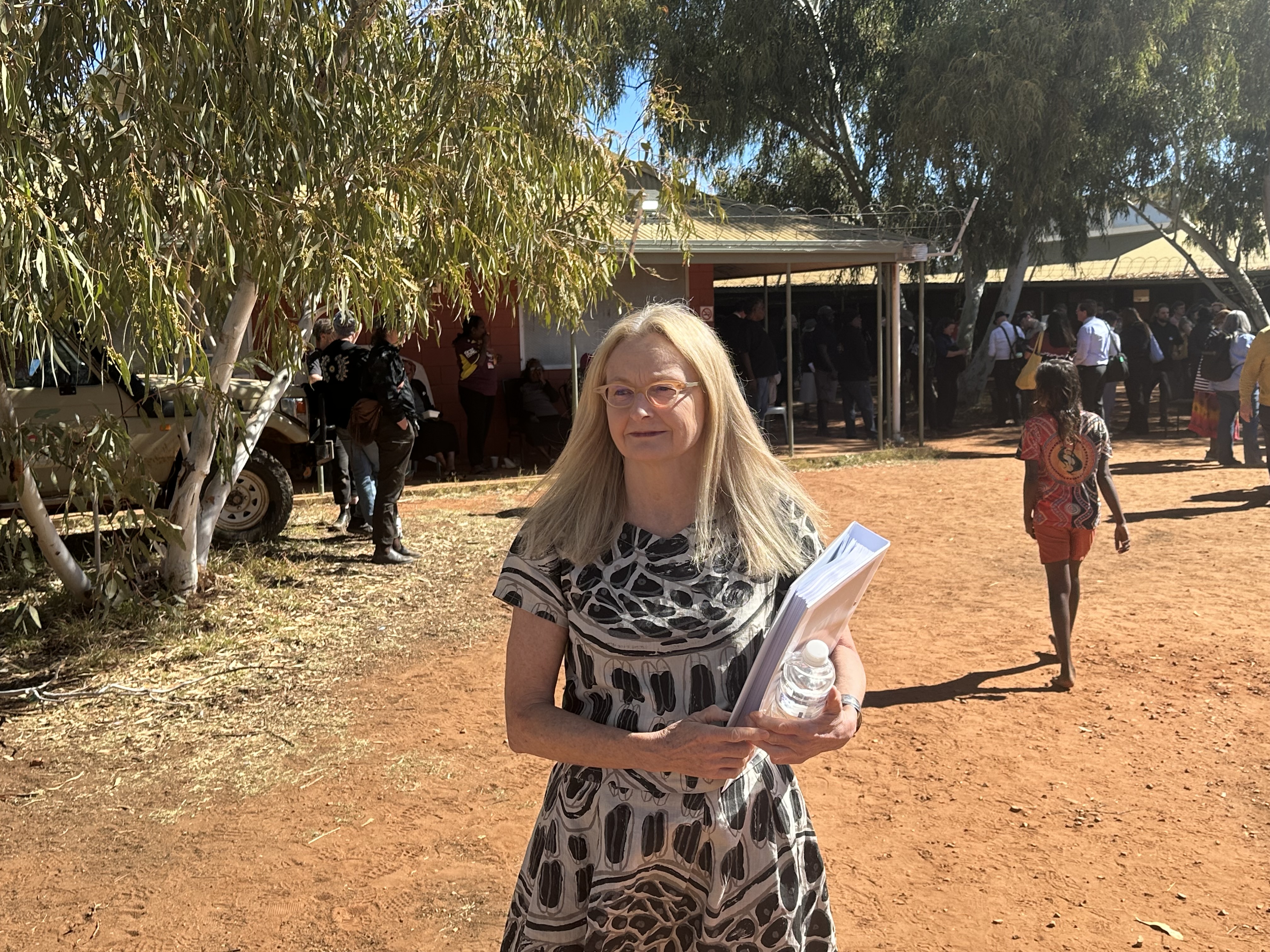
The coroner was also critical of Mr Rolfe's behavioural history, noting he had filmed and shared body-worn camera footage of at least five violent arrests involving Aboriginal men and sent them to friends and family.
"He thought that using force against arrest targets, and causing them serious injury, was funny," she said.
"That he videoed, shared and derived enjoyment from his use of force is evidence of the extent of his dehumanisation of suspects, which may have led him into error on 9 November 2019.
"An officer who dehumanises and devalues the lives of arrestees may be less inclined to do everything necessary to avoid injuring them. He may be more inclined to rush in without regard for subjects', his, or others' safety. He might be insufficiently risk-averse."
Judge Armitage also pointed to Mr Rolfe's "contempt" for women, senior officers and regional police — as well as his desire for "high adrenaline policing" — as factors that contributed to a higher risk of a fatal outcome.
His disregard for the official arrest plan, which was drawn up by Sergeant Julie Frost and recommended a safer morning operation to arrest Mr Walker, rather than the night one, which led to his death, was also scrutinised.
"The real failures on 9 November 2019 occurred in the lead-up to Mr Rolfe's entry into house 511 and in the way he approached Kumanjayi once inside the house," she said.
"Mr Rolfe's conduct was in keeping with what I have found to be his tendencies — to rush into situations without regard for the consequences of his actions, to prioritise getting his man above other considerations like safety, and his attraction to adrenaline-style policing.
"In addition, his interactions with Sergeant Frost and his disregard for the arrest plan, are in keeping with his demonstrated lack of discipline and his contempt for authority, bush cops, and women."
View this post on Instagram
In response, Mr Rolfe said he "does not accept a finding that he subverted Sergeant Frost and instituted his own plan".
"He does not accept the criticisms that he failed to adhere to operational safety training, or that he ignored his training at all," the statement read.
"He does not accept there was any dishonesty at all associated with these events. Insofar as some may hold a view to the contrary, this was never about race."
Judge Armitage acknowledged that the inquest did not set out to investigate racism broadly, but it became part of the inquiry due to the evidence presented.
"Despite the focus on issues of race and racism in media reporting of the inquest, the inquest did not conduct a wide-ranging inquiry into racism," she said.
"Instead, it received a modest amount of evidence about racism while investigating the potential causes, and relevant circumstances, of Kumanjayi's death."
Nonetheless, she concluded: "Mr Rolfe was racist, and he worked in and benefited from an organisation with the hallmarks of institutional racism."
Mr Rolfe's statement also questioned the scope of the coronial process, claiming it had strayed from its purpose.
"There is a real risk that a coronial inquest will become a roving royal commission which is not the true purpose of a coronial inquest," the statement claimed.
"The true purpose of a coronial inquest is to establish the cause and circumstance of death, and in this case the coroner went far beyond her remit."



