


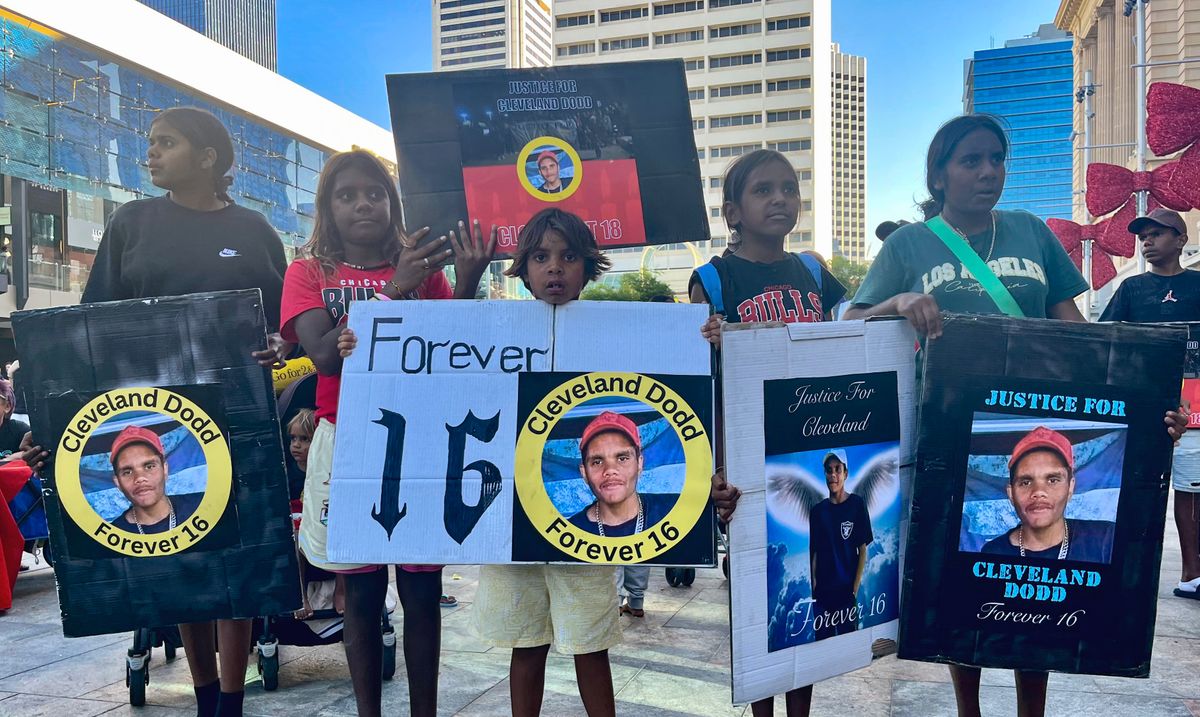
The image of Cleveland Dodd — a smiling, 16-year-old Yamatji boy who died in custody — is etched into the national consciousness.
When Cleveland died after one week on life support following a self-harm incident in Unit 18, the youth detention facility inside Perth's maximum-security Casuarina Prison, his passing marked a shameful milestone: Western Australia's first recorded death in youth detention.
Under state care, the vulnerable child who first entered detention at 12 and was later diagnosed with a major depressive disorder should have been protected. Instead, on 74 of the 86 days he was in custody he was kept in his cell, alone, for almost the entire day and night.
Just after midnight on 12 October 2023, Cleveland told staff over the intercom eight times that he intended to take his own life. Earlier that day, he had been denied bail. Officers told the 16-year-old not to speak that way.
About 13 minutes later, he was found unresponsive and taken to the hospital, where he spent a week on life support before dying on October 19.
His death has become a stark symbol of the failure of the WA Government and its justice system to protect children.
View this post on Instagram
A "war zone"
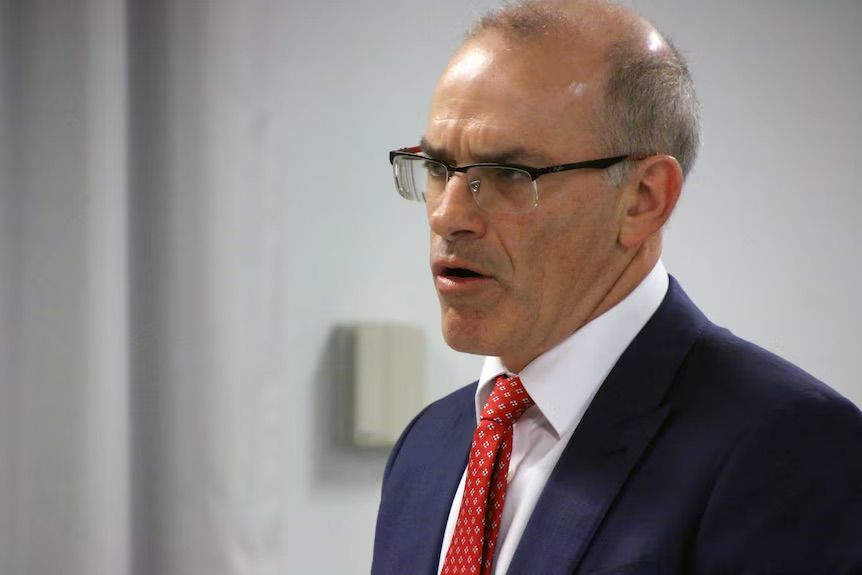
On Monday, after more than 40 days of hearings, thousands of pages of evidence and an unsuccessful attempt by a senior Corrective Services official to have him removed for alleged bias, Coroner Philip Urquhart will hand down his findings; and answer the question that has haunted many: how can a child die in custody?
In his preliminary findings, Mr Urquhart described Unit 18 as a "war zone", a facility so dysfunctional it lacked even the basics needed to keep children safe: adequate supervision, access to water, safe cells, and mental health support.
"There can be no doubt the evidence from the inquest revealed that youth justice had been a crisis at the time of Cleveland's death and had been for some time," he told the Coroners Court in July.
"Everything must be done to minimise the risk of another death of a child in youth detention."
Recapping the evidence earlier this year, Mr Urquhart did not mince words.
"They described the soul-destroying daily confinement orders which kept detainees in their cells, sometimes for 24 hours a day," he said. "They described the lack of support and training given to them to do their jobs and they described the chronic shortage of staff."
Political will for change non-existent
Twice in the year before Cleveland died, the Supreme Court ruled that the WA government had broken its own laws by subjecting children at Unit 18 and Banksia Hill to unlawful solitary confinement.
Nonetheless, in 2022, then Corrective Services Minister Bill Johnston said his priorities were "community safety first", "safety of the staff second" and "then the third element is to keep the young offenders safe".
In the same year, when asked about children being unable to leave their cells, then Premier Mark McGowan claimed some detainees choose not to leave their cells because "they will stay up at night watching telly or playing computer games or PlayStation or what have you and sleep in the day".
Former Justice Department head Adam Tomison broke down as he acknowledged the treatment of children in detention amounted to "institutional abuse". After a career devoted to welfare, he conceded he had become the man "hurting kids".
Dr Tomison told the inquest Mr Johnston approved Unit 18 based on "a series of grievous lies", including promises of therapeutic programs, cultural support, and dedicated spaces for education, health and recreation.
In reality, the inquest heard of severe staff shortages, policy failures and chaotic operations that produced "inhumane" conditions, with cells lacking running water and some smelling of urine, faeces and sweat.
%20(1).jpeg)
Beyond the horrors faced by Cleveland and countless other children — many of whom are some of the most disadvantaged and traumatised in the state — the inquest revealed what Judge Denis Reynolds, WA's longest-serving President of the Children's Court, called a lack of political will.
Judge Reynolds labelled the Department of Justice "incompetent" and said it had "no will" to change harmful practices. He condemned Mr McGowan and Mr Johnston for their approach, arguing they operated on a "false premise" that children in detention were "inherently bad".
"The former Minister and Premier were to the detriment of community safety; they were pushing the demonisation of the children. They thought it would be favourably received by the public. There was no will," he said.
He criticised the department's media team, arguing they helped shape a public narrative that portrayed the highly traumatised children held in horrific conditions as dangerous offenders rather than vulnerable young people.
"There was so much spin and misinformation, to the point where the truth was lost," he told the inquest.
Pointing to the images released of Unit 18, he noted: "When [the media unit] released a photo of the common area in Unit 18...[it] looked really lovely. Then they released photos of the damage and said, 'look what these children did'."
"What they didn't show was 17 children shackled, 12 of them Aboriginal. That would've given the community a different idea. It was appalling."
Change needs to happen
Mr Urquhart has flagged 33 recommendations he is considering, including shutting Unit 18 "as a matter of urgency" and launching an investigation under the Public Sector Management Act into how the unit was established.
Last week, Cleveland's mother, Nadine Dodd, spoke about the pain she has carried since her son's death. Sitting through the coronial process — hearing in harrowing detail the conditions he endured — she called for the "truth of how a boy ends up spending almost all day in a cell for months".
"I want the end of keeping children in concrete boxes. I want investment in supports, in real help, in keeping our kids alive and well — not locked away," she told National Indigenous Times.
Calling for Unit 18 to be closed immediately, Nadine added: "My son is dead, and everyone at fault needs to admit their wrong. I need the Premier to admit the cruel system killed my boy."
The government has acknowledged failings and says conditions have improved since Cleveland's death, but it has resisted calls to immediately close Unit 18, arguing it is still needed until a new facility opens.
As the Coroner prepares to deliver his findings at 9.15am on Monday, one question looms: if the death of a child is not enough to close a facility — and change how the state treats its most vulnerable young people — what will be?



