



The Australian government is facing international criticism for its refusal to accept a ruling by the UN Human Rights Committee in relation to a Native Title case.
The Committee found the judgment in a land rights case involving the Wunna Nyiyaparli people had violated parts of the International Covenant on Civil and Political Rights. However, the federal government rejected the UNHRC's ruling, claiming no violations of the treaty have occurred.
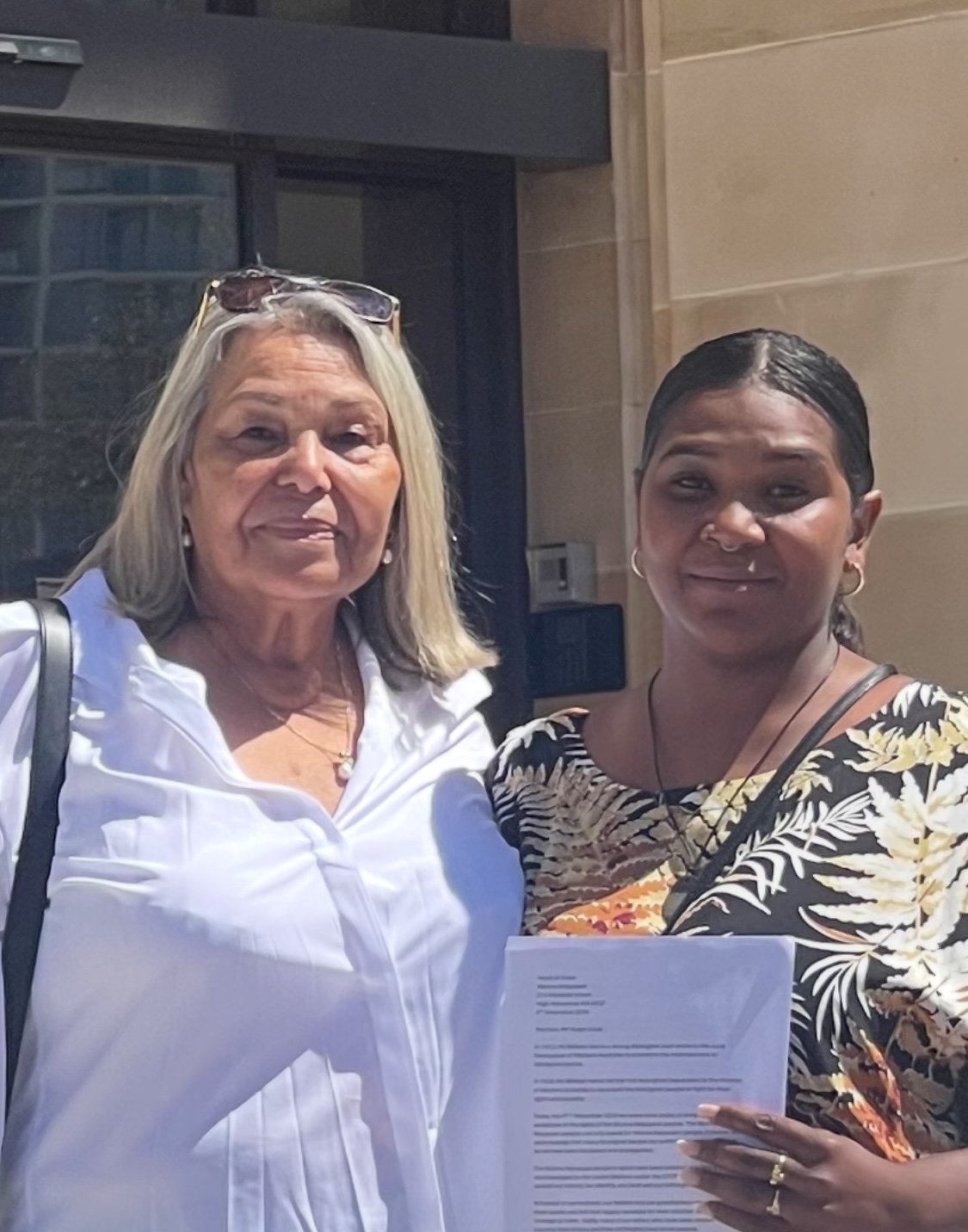
Elder Ailsa Roy told National Indigenous Times the Wunna Nyiyaparli "are heartened by the support they have received from around Australia and the world and hope that the Australian government will listen to this criticism of its actions and change its position so that the Wunna Nyiyaparli can have access to a fair court process in relation to our traditional lands".
In a joint statement, the Wunna Nyiyaparli people said they "continue to be dismayed by the rejection by the Australian government of the ruling of the UN Human Rights Committee in their favour".
"The UN Human Rights Committee ruled that Australia should provide the Wunna Nyiyaparli with access to the Australian courts and a fair process for determining their native title rights to their traditional lands," the statement said.
"The continued rejection of the UN Human Rights Committee decision by Australia threatens the very existence of the Wunna Nyiyaparli as a people because it has deprived them of the access to their traditional lands that they require to teach and pass on their culture."
A recent piece for the International Bar Association by Neil Hodge laid out the detailed context of the matter.
In 2012 around 200 members of the Wunna Nyiyaparli people filed a native title claim in Western Australia's Pilbara region to an area in which their ancestors lived, fished and hunted.
The claim overlapped a wider Nyiyaparli people's claim to the area that had been filed in 1998, from which the Wunna Nyiyaparli had been excluded in 2010 after anthropological research determined they were not part of the wider Western Desert society.
The Federal Court ordered a separate question proceeding in 2015 to determine whether the Wunna Nyiyaparli people should be classed as part of the broader Nyiyaparli native title claim group. From 2016 onwards, the Wunna Nyiyaparli people had no legal representation for the process, and ultimately did not attend some of the hearings.
The 2018 the Court determination on the broader Nyiyaparli native title claim effectively eliminated any future opportunity for the Wunna Nyiyaparli people to claim native title rights and interests in the subject area of their own claim, and in 2019 the Wunna Nyiyaparli people filed a complaint to the UNHRC, arguing that the Court had, in its ruling, violated the rights of the complainant by not affording them the opportunity to effectively participate in proceedings and by consequently making a ruling in the broader Nyiyaparli native title proceeding that deprived them of the enjoyment of rights and interests to their traditional territory.
The Wunna Nyiyaparli people argued that, due to the lack of resources for legal advice and reliable access to information, they were not able to understand the nature and implications of the court proceedings and were further denied the opportunity to give evidence on their rights to Country.
Without legal recognition, there is no official avenue for the Wunna Nyiyaparli to engage with governments or mining companies and they cannot, therefore, be part of decision-making when it comes to the land's significant mining tenements or receive any royalties from such activity. The lack of legal recognition may also make it more difficult for them to access the territory due to the mining operations.
The UNHRC ruled in 2023 that Australia had violated Article 14(1) and Article 27 of the International Covenant on Civil and Political Rights, provisions that focus on appropriate access to justice and legal remedy, and on the rights of minority groups respectively. It found that the Federal Court should reconsider the Wunna Nyiyaparli's claim.
Scott Calnan, Counsel for the Wunna Nyiyaparli, told Mr Hodge, writing for the International Bar Association (IBA), that he government's response was "without basis in international law", and that much of the Australian government's reply "was either illogical – in that it dealt with matters that were irrelevant – or simply contradicted findings of the UNHRC as to the facts or the law".
David Paterson KC, a former Chair of the IBA Indigenous Peoples Committee, said the federal government's decision to reject the UNHRC's findings is "a missed opportunity for Australia to move forward in reconciliation with its Indigenous Peoples".
A spokesperson for the federal Attorney-General's Department told the International Bar Association, that the Australian government "takes its obligations under the ICCPR very seriously" and gives "careful consideration, in good faith, to the Committee's Views".
The spokesperson said the government does not agree that any violations of the ICCPR occurred, and that the native title process "adequately accounts for the obligations" under Article 14(1) and Article 27.
The Wunna Nyiyaparli have urged the Australian government to reverse its position and abide by the decision of the UN Human Rights Committee.



