


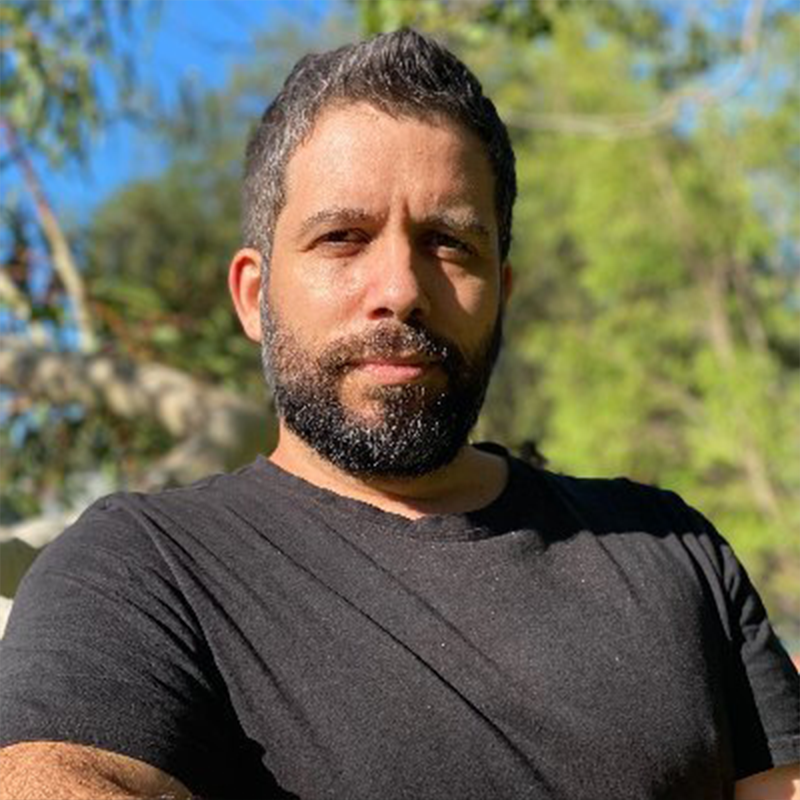

Proud Nyangbul woman Kylie Jacky will be among the guest speakers at the First Nations UNLIMITED Summit 2025 in Sydney, on Gadigal Country on October 29-30.
Ms Jacky, the NSW Environment Protection Authority Lead for Aboriginal Initiatives, spoke with National Indigenous Times about the importance of First Nations leadership at the highest levels.
She hails from Ballina on the far north coast of New South Wales, about one hour south of the Queensland-New South Wales border.
"I was really quite fortunate to grow up and work for most of my career on my father's country, Nyangbul country. He comes from a community called Cabbage Tree Island, which is in the Lower Richmond River of New South Wales, which is probably more recent times better known for significant flooding," she said.
"Leadership is a funny term for me, it's more about a kind of a mixture of feeling obligated, but also having a fire in your belly to want to do things for your people, your family."
Ms Jacky said experiencing poverty in her youth was also a driving motivation for building a better future for all.
"You know, we all grew up in poverty. That's my parents background, very poor. We grew up on missions and my mum comes from a very poor background too, with a history of indentured labour, slavery through the black birding of her people over to the east coast of Australia, from Vanuatu," she said.
"So there is a very deep desire to want to work together, really, and that was very much instilled in me."
At a young age, Ms Jacky became acutely aware of the "social, cultural justice work that particularly women in my family were doing at the time", and learned much "through spaces and forums where myself and others, cousins and other people of my age were encouraged to be in spaces where conversations and dialogues were happening around things like better education, better health services".
"So, leadership very much for me started out in my own community, involved in very local grassroots initiatives and spaces and forums," she told National Indigenous Times.
"Everything from education for our kids through to being quite heavily involved in local youth services, being involved in initiating the street beat days with getting on the night patrol buses, all the way through to, being encouraged to sit on boards and committees to establish our medical service, and then getting involved in our land council through our land rights… Leadership very much started out as community driven, very grassroots driven."
Ms Jacky made her way "over the years into senior executive roles in government purely by grit and determination and just a very strong desire that I have to pursue transformative outcomes for our people".
"I've just been fortunate as well to really value relationships and networks along the way and have had the opportunity to be involved in a few initiatives that have actually opened the doors to substantial change in those areas, such as the development of purpose built Aboriginal Child and Family centres across New South Wales, the independent review of Aboriginal children and young people out of home care in New South Wales, and at the moment, we're looking at legislation reform in the NSW protection of environment laws to include and acknowledge Aboriginal cultural values and the protection of our cultures," she said.
Culture in decision-making
On the importance of including cultural knowledge in decision-making, Ms Jacky said that one important first step is acknowledging that the systems in which we work are "mostly rooted in colonialism".
She said recognising that context helps to "respectfully include our mobs' values" into systems and decision making.
"What we are trying to do is not replace, but add value. A lot of the time, we bring evidence-based approaches to a lot of the work that we're doing. There is untapped knowledge that Aboriginal people and cultures hold, and if we get it right with Aboriginal peoples, we're more likely to get it right for everyone," she said.
"There are two things. One is that it's an imperfect system and at times it feels like there's an inherent tension to say we're embedding and including our culture into these systems, because it means that we're still working within the dominant frameworks. But secondly, it is important to start that work, and get some traction and some confidence and momentum."
Ms Jacky said embedding First Nations values and leadership is "front and centre of the work of the New South Wales Environment Protection Authority".
"The New South Wales Environment Protection Authority is the primary regulator to protect the environment. Through very early conversations in me taking up this lead role - frank conversations - with the leadership in the in the New South Wales Environment Protection Authority, it was clear we've got so much in common with Aboriginal cultural values at that very macro level in relation to protecting country, protecting environment at the core of what we do. However, there is the recognition as well that the EPA needed to start recognising that Aboriginal peoples were the first and are the enduring custodians of country, and that as a regulatory body, the EPA did not recognise that," she said.
"And therefore, it was really critical to start acknowledging that and to work out ways to bring weight and importance into having relationships with many Aboriginal peoples across New South Wales, and also how we go about respectfully bringing that knowledge and those values into our organisation to strengthen the work we do to protect the environment."
Leadership matters
Ms Jacky said mentorship and leadership events like the First Nations UNLIMITED Summit are "really, really important".
"I think these forums play a very large part in in enabling many Aboriginal and Torres Strait Islander peoples across our nation to come and hear from other Aboriginal and Torres Strait Islander peoples that have come from different pathways, achieving different things, but in their own right, having a remarkable contribution to the nation," she said.
"I'm really a strong believer that you can't be what you can't see. I think that's the value that these forums bring to that - inspiring, but also providing very distinct, clear messages to the upcoming young leadership cohorts.
"We can set a benchmark even above the bar that's been achieved today. It's always absolutely delightful to see younger people coming in, with such talent and such ambition and drive, but still underpinned by the really old values that our cultures bring, such as that collective obligation to our mob, and those social justice values that underpin a lot of the passion that we bring."
Ms Jacky also stressed the importance of having Aboriginal and Torres Strait Islander women in visible positions of leadership "because of the intersectional barriers that as Black women we face distinctly in our careers".
"It's very important that these forums have a very good representation of Aboriginal and Torres Strait Islander women," she said.
If there was one message people take away from what Ms Jacky will have to say at the UNLIMITED Summit, she hopes it's that "we're stronger as a collective and that our culture is based on us being as a collective".
"When we are referred to as leaders or leadership, or we have these conversations, what ties us in these spaces is that we belong to our people," she said.
"That is very distinct from the Western concept of being a leader or leadership. That is one of the unique strengths that we bring to all the areas that we work in, regardless of what it is.
"We are innately brought into this world and we have been nurtured, most of us, to be responsible and accountable back to our mob. And we need to use that as our comfort and strength, even though it's difficult at times, because that's what sets us apart."
The importance of connections
In terms of what she would like to see happen in the future, Ms Jacky said it is important to remember "transformative change comes through relationships".
"I think as Aboriginal, Torres Strait Islander people, we peoples, we are the best at connections and relationships. Our cultures and kinship systems are based around sorting each other out from the very first time we meet each other.
"That's got to be an enduring feature of our First Nations leadership moving forward; that continuous focus on connection and collective benefit."
Ms Jacky described this focus as being strongly connected to "traditional core values that our grandparents handed down, and that we will hand down to our grandchildren".
"We need to keep that at the real core of the work that we do, regardless of the spaces that we walk into and some of the spaces our young, Aboriginal, Torres Strait Islander people are walking into are remarkable - spaces you would not have thought a decade ago," she said.
"We've got some magnificent young people doing some brilliant work. What I'd love to see is that they take some of their mob's values - some of the old values - and still have that as very present. That is what keeps them anchored in being real strong Blackfellas in those spaces, leading those spaces."



