



On the tourist-focused Darling Harbour foreshore a series of digital artworks pointing to landmarks and basins once within earshot and eyesight show how the land was once lived on by Gadigal people.
It's a reconstruction of culture not a presentation for Kooma man and virtual reality artist Brett Leavy.
As founder of Bilbie Virtual Studios, Mr Leavy wants to strip back the land to what it once was.
On ICC Sydney's seven-metre high screens dotted along Tumbalong Boulevard, from sunset the virtual songlines of his project Gadigal Dreaming cut through the urban setting with scenes of gathering, fishing, corroboree, crafting, hunting, camp life and the stars.
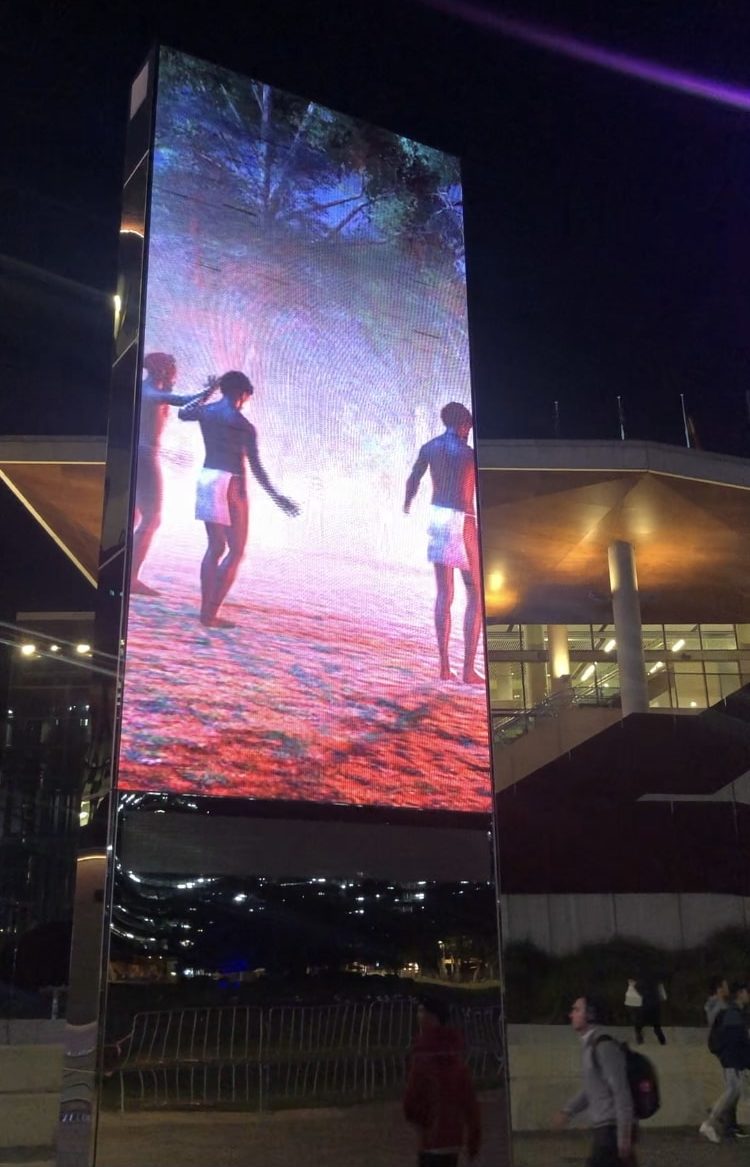 Gadigal Dreaming on display outside ICC Sydney. image: National Indigenous Times
Smartphone users can scan QR codes at each point to view extra material.
"The whole project originates from a connection to country for the Gadigal people," Mr Leavy said.
"We tend to forget that First Nations people have a connection to their country and their history, that's what we're trying to reflect here.
"I want to tell the truth of how First Nations people existed prior to the European settlers.
"We're a disrupting organisation."
While conceding there is a need to be entertaining, Mr Leavy goes about his art with cultural authenticity in focus, wanting to challenge viewers into questioning modern settings and forego superficial responses to the work.
The aim is to create a "virtual time machine".
"We want to show where the supermarkets were for First Nations people, where the law courts were, where the roads were, where the suburbs were," Mr Leavy said.
"I don't think what was back then was any different what we've got today, just in a different context.
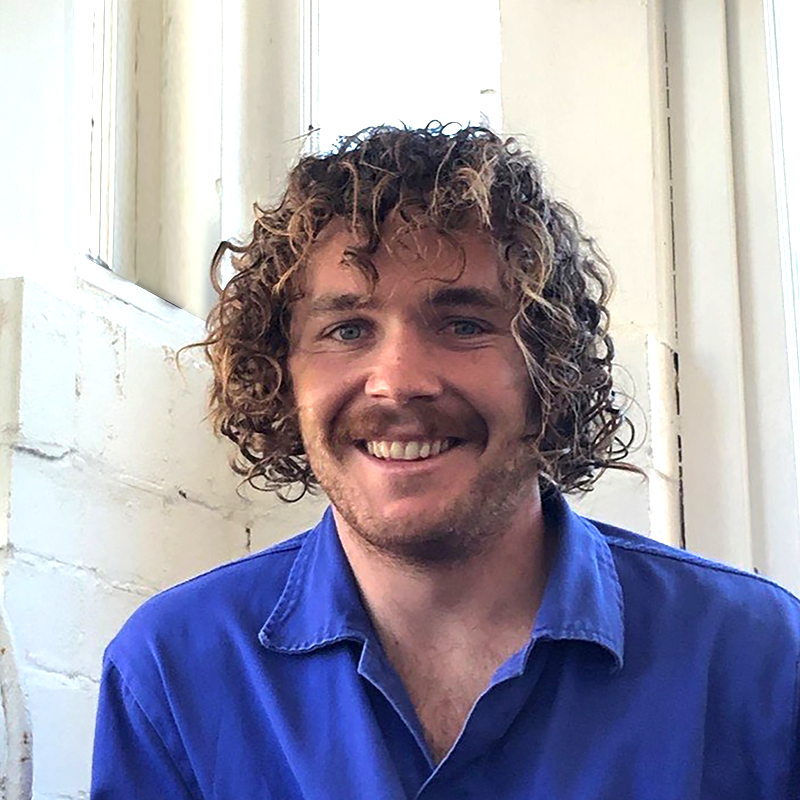
 Brett Leavy at ICC Gadigal Dreaming Launch. image: Joseph Mayers
It's been a decades-long endeavour, designing immersive virtual heritage simulations all across the country.
"Ultimately, that's what we're trying to reflect, that deep under the bricks and mortar First Nations people have a connection to their land and culture and they haven't gone away."
It's particularly poignant in the inner-suburbs of Australia's largest city.
Sydney's Metropolitan Local Aboriginal Land Council chief executive Nathan Moran said the council is in a unique position, where almost all the all the land they cover sits under a layer of concrete.
The land council worked in partnership with Bilbie XR, ICC Sydney and Investment NSW to develop Gadigal Dreaming.
Mr Moran said the project "filled a gap" in knowledge, doing justice and honour to the old people's wisdom, retaining storytelling and cultural narrative and possibly laying the foundations to avoid misnaming, misuse and maintain historical record going forward.
"I personally was very much challenged by wondering if non Aboriginal people could understand or picture what we do in terms of the understanding of the knowledge, the information, but more importantly how country was prior to contact," Mr Moran said.
"The use of technology is a way to lift those layers of concreting, and or sandstoning or just covering up.
"The use of visual technology, let alone the fact that it's 100%, owned, controlled and designed by an Aboriginal person in Brett, I can't think of a better project in terms of doing justice to the culture and heritage of this place.
Gadigal Dreaming displays outside Sydney ICC at the top of each hour after sunset until 11pm until October 31.



