



Traditional Owners are awaiting the outcome of an investigation into human remains found on Wadjemup / Rottnest Island in Western Australia.
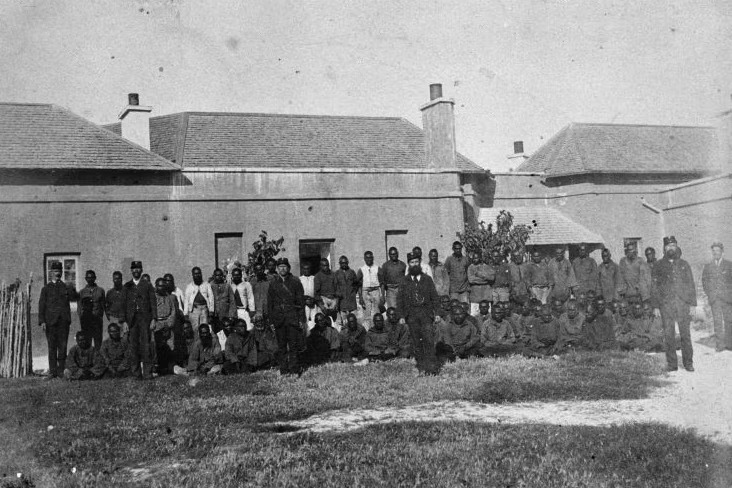
Wadjemup was used by colonial authorities for decades as a prison for Aboriginal men and boys. Between 1838 and 1931 close to 4,000 men and boys were held in appalling conditions on the island and hundreds died there.
Multiple human bones were discovered on Wednesday morning during construction works on church grounds.
A police spokesperson said several bones had been located.
"Police will arrange forensic assessment of the bones to determine their age," she said.
"Inquiries are continuing."
Police have not said whether the bones were located on the grounds of the Catholic or Anglican church on the Island.
It is unknown as to whether the remains found on Wadjemup on Wednesday are of an Aboriginal person.
In November, Whadjuk Aboriginal Corporation reached an historic agreement with Rottnest Island Authority which sees the Corporation provide the Whadjuk Noongar heritage monitoring services on the island.
WAC chief executive Leon Ruri noted that findings of this nature are initially "immediately a police matter".
"For us, we're going to await the findings from DNA testing, or whatever testing it is that has to take place to determine whether the remains are of an Aboriginal or non-Aboriginal person. That'll determine some of the outcome," he told National Indigenous Times on Wednesday.
"One of the great learnings out of this is the importance of having heritage monitors on site with situations and circumstances like this.
"It's something that RIA (Rottnest Island Authority) are really supportive in. They're always working with us and we have a great working relationship. They've got a real commitment to ensuring that every process that takes place out there is followed, so that culture is preserved."
Mr Ruri said the remains were found "near where the main bus stop area is", and away from the known burial sites on the island.
"What's unique about this is ... from what I know and understand, it wasn't an area where they were expecting to find any human remains at all, given the location of it... it's away from a burial ground where it's traditionally thought that mob were buried. So, that is why they're not sure about whether it could be a non-Indigenous or Indigenous person, because it's buried away from where all the other remains are," he said.
"We'll wait to see what's come next. RIA have been in contact with me this afternoon and spoken to me and informed me about the process that's taking place. One of our monitors was present for that too, as well. We've spoken to him to make sure that he's alright and we had one of our Elders reach out and talk to him about that.
"Like everybody, we will have to wait for the process to take place, and then we'll manage it as we go forward from there. The relationship with Whadjuk Aboriginal Corporation and Rottnest Island Authority is a strong one, and it'll continue to be, moving forward.
"We want to make sure that whoever's remains it is that are there are honoured in the most appropriate way possible."
Mr Ruri said if the remains are of an Indigenous person the WAC will work with relevant parties and families, as well as the authorities, to determine an outcome.
"With the works that are continuing out there on site - which will continue for years to come - I don't think that this is going to be the last time that we have a situation or circumstance like this," he said.



