



International Women's Day - March 8 - often sparks conversations about leadership, equality and opportunity.
For many Aboriginal women, those ideas have always existed in practice. Our grandmothers, aunties and mothers have long carried the responsibility of caring for Country, family and culture. What is changing now is that those responsibilities are finally being recognised as skilled work and leadership in their own right.
Across Australia, the expansion of the Indigenous Rangers Program is creating new opportunities for Aboriginal people to care for land and sea Country while building meaningful careers grounded in culture. The federal government has committed to doubling the number of Indigenous Rangers across the country from 1,900 to 3,800 by the end of the decade. Last year alone, an extra 900 First Nations people stepped into ranger roles as part of the program's growth.
Women are playing an increasingly important role in that workforce, with 42 per cent of Indigenous Rangers now women. Minister for Indigenous Australians Senator Malarndirri McCarthy said the leadership of Indigenous women continues to strengthen communities and Country.
"Indigenous women rangers and the cultural knowledge they carry play an important role in caring for land and sea Country," Senator McCarthy said.
"Their work safeguards culture, protects the environment and inspires the next generation of women in their communities."
One of the strongest examples of this leadership can be found in the Wagyl Kaip region of Western Australia, where the Yorkas Women Rangers are creating culturally grounded pathways for Noongar women in the small town of Tambellup.
The Yorkas Rangers were one of more than 110 ranger projects created last year after Binalup Aboriginal Corporation successfully applied through the Indigenous Rangers Program round one expansion. It was the first expansion of the Commonwealth program in more than a decade and opened the door for new ranger teams across the country.
For communities like Tambellup, where employment opportunities can be limited, the program is creating real change on the ground. Seven local Noongar women are now employed as rangers, building careers while strengthening their connection to Country.
Coordinator Karessa Pickett says the work has transformed her understanding of land, culture and responsibility.
"This job has transformed me, once I was just in a classroom, but now every part of the land is my teacher," she said.
"I feel a deep responsibility to care for Country and to ensure that our Elders' stories are never lost but passed on strong for the future generations.
"Tambellup is a very small town and there isn't much employment opportunities but with this program it not only has employed seven local Noongar women, it's created a space that was never there."
The Yorkas Women Rangers are caring for Country while creating culturally grounded career pathways for local Noongar women. Their work includes seed collection of threatened flora species, cultural burning, fauna management and a range of on Country restoration practices.
Team Leader Susan Shaw, who grew up in Tambellup, says the program is reconnecting people with the land while creating meaningful employment.
"I grew up in Tambellup. This work is bringing real job opportunities to our community and helping us reconnect with our land," she said.
"It fills me with pride for my culture, and it gives us all a chance to care for our Country, while also building stronger ties with our partners."
Beyond environmental outcomes, the program is strengthening cultural knowledge systems. Elders spend time on Country with the rangers, sharing language, stories and cultural authority, ensuring that knowledge continues to flow between generations.
For ranger Monique Farmer, the role has opened doors that once seemed out of reach.
"Working as a Tambellup ranger is a privilege for me. I've learned so many things I never expected," she said.
"It's given me opportunities I never had before, and it's really opened my eyes, especially coming from a small town where there was nothing to do.
"The positive impact we've made in the Noongar community, as young rangers getting out there and having a go it does make you feel proud and gives you the urge to want to do more for the community and the team."
Education and training are also central to the program. Rangers are completing a Certificate IV in Conservation and Ecosystem Management, building formal qualifications that support long term careers in land management and conservation.
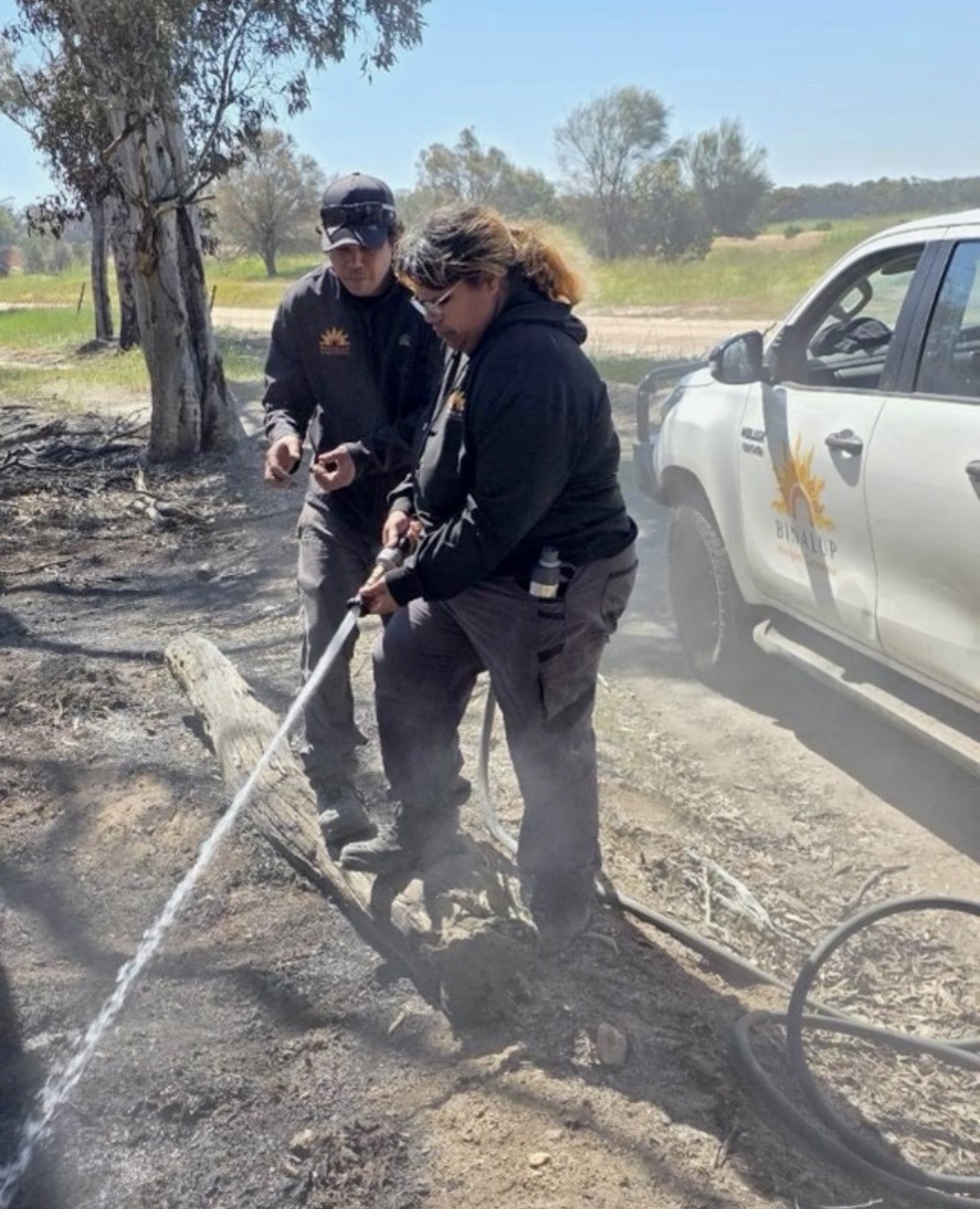
Ranger Lillian Penny says those opportunities have been life changing.
"This job has given me so many opportunities, I've been able to travel and earn certificates I never thought possible. I've learned about dieback, feral cats, and so many animals I didn't know before," she said.
"I love this job, going on Country with Elders, travelling, and meeting new people, because before, I just didn't have those chances. My family are all very proud of what I have done and where this job has taken me."
The Yorkas Rangers work is also supporting key Closing the Gap outcomes by creating jobs, strengthening cultural leadership, improving access to training and supporting healthier Country.
Across the Wagyl Kaip region, the work of these women highlights the vital role Aboriginal women continue to play in caring for Country and passing knowledge to future generations. It shows that when women are supported to lead on their own land, the benefits flow through culture, community and the environment for years to come.



