


Our new Remote Jobs and Economic Development (RJED) Program is changing lives in remote First Nations communities.
Delivering the dignity of work with decent pay and conditions.
The conditions and respect that every Australian worker deserves.
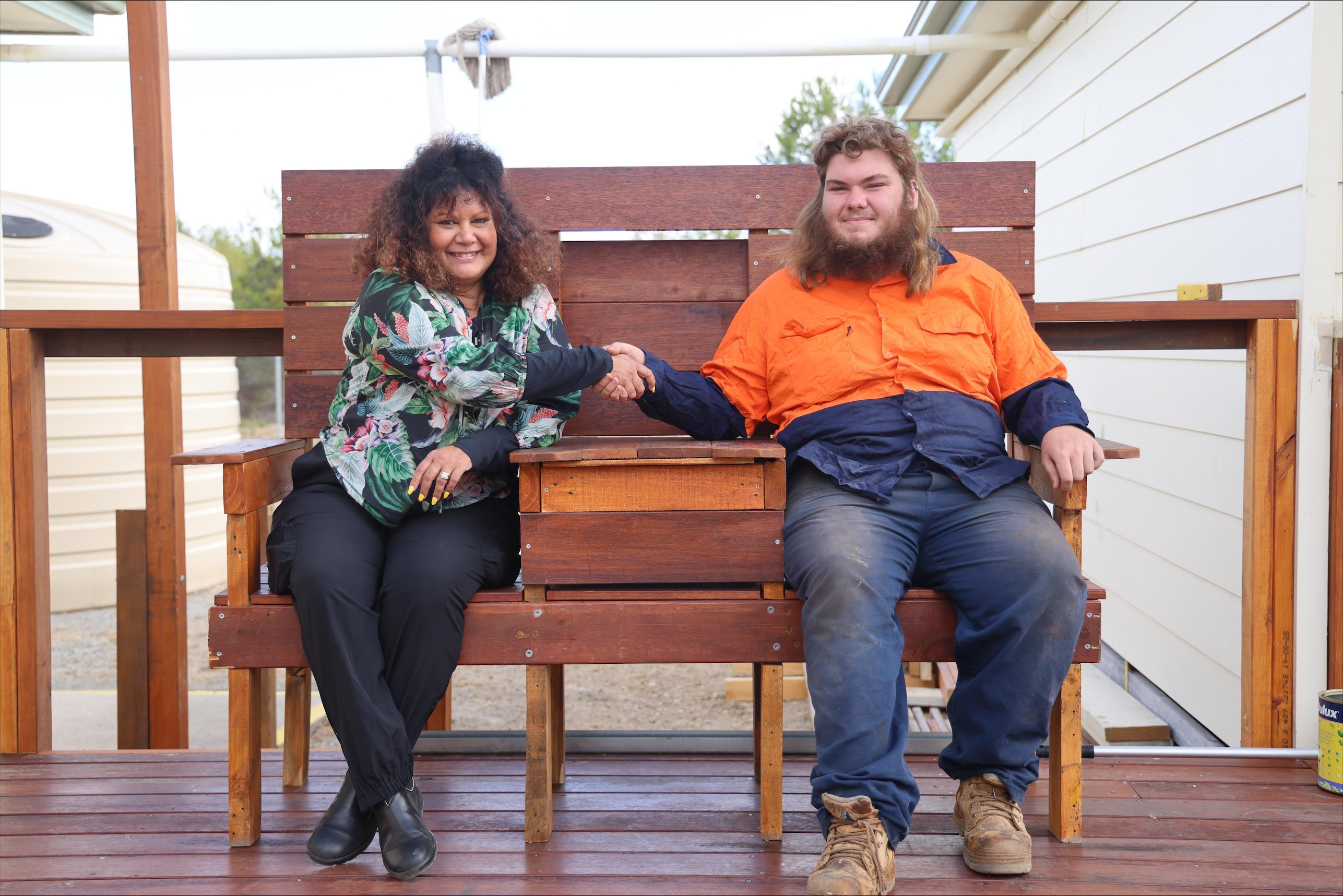
In February this year, I travelled to the outskirts of Port Lincoln on South Australia's Eyre Peninsula and met with a group of young men working in jobs created through RJED.
Some were in their first ever job.
At Wanilla Forest I met Marcus, Jack and Alex who were employed in maintenance and construction jobs.
They were hard at work refurbishing buildings and learning new skills including roofing, decking and furniture building.
The pride they took in their work was unmistakable.
They told me how proud they were to be working, providing a positive example for their friends and families, as well as giving back to their community.
On Palm Island in Queensland, I've met with some of the new night patrollers employed through RJED, who go out seven nights a week.
They told me how proud they were to be a positive presence for young people in their community.
These aren't just jobs. They are a source of dignity and purpose.
The RJED program shows what's possible when governments genuinely listen to communities and back that up with action.
People living in remote communities across the country told us clearly what they wanted: real jobs with real wages, that would make a difference for themselves, their families and their communities.
Real jobs, with proper pay and conditions like superannuation and leave.
Something that has been denied to many in our remote communities.
Employment and economic empowerment are central to self-determination.
That's why my focus as Minister has been steadfast on jobs, jobs, jobs in our remote areas.
And our government is delivering.
Already, more than 1,700 jobs have been created in remote communities across Australia, from the Kimberley across to the Torres Strait.
More than 250 employers have created these jobs including local community organisations and businesses.
And many more jobs are on the way.
The success of the RJED program is why in February, the week before I visited Wanilla Forest, the Prime Minister announced we would double the program from an initial 3,000 jobs to 6,000 jobs.
RJED is focused on sustainable job creation for the long-term. It is a job creation program, not a wage subsidy program.
Creating jobs in some of the country's most remote areas can be complex and challenging. Labour markets are different to those in urban areas.
RJED has been designed to provide support to businesses and organisations to help them create these new jobs while building capacity to set them up for long-term success.
The results speak for themselves.
At Yirrkala Farm in East Arnhem, four new horticultural roles have been created.
I met Buywarri and Djulamarr, who proudly showed me the fresh produce they are growing.
The farm is supplying local stores and a school nutrition program, strengthening food security.
This is economic development that is community driven and meeting the needs of community.
This is not Canberra dictating what works for communities; it is communities telling us what they need and us backing them.
A secure job with decent wages does more than support an individual.
It strengthens families, strengthens communities and creates pathways and possibilities for the next generation.
Employment - and the dignity that comes with it - is central to Closing the Gap.
Across remote Australia, RJED workers are supporting essential services, contributing to local enterprises and communities, and learning skills that will last a lifetime.
RJED workers will also benefit from this week's Annual Wage Decision by the Fair Work Commission.
The Albanese Government advocated for an economically sustainable increase and we welcome the Commission's decision.
It means a real wage increase to support workers with the cost of living.
Our government is committed to real jobs, economic empowerment and building a stronger future for all Australians, including those living in remote communities.
Because when we invest in our people, our communities thrive.
Senator Malarndirri McCarthy is the federal Minister for Indigenous Australians.



