




Australia is failing to reduce the rate of Aboriginal and Torres Strait Islander adults being incarcerated according to the latest data from the Productivity Commission.
The report also revealed the heartbreaking reality that suicide remained the number one cause of death for First Nations people aged 15 to 44 years in 2022.
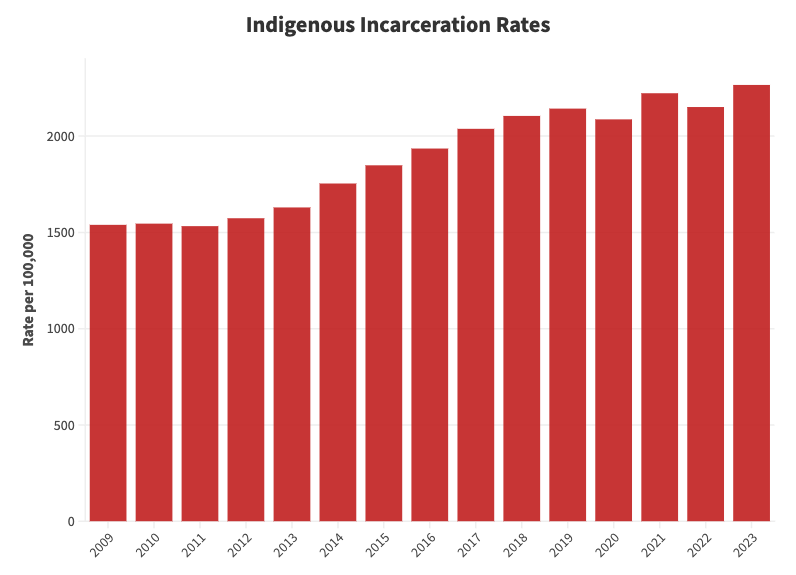
In the wake of the government acknowledging the failings on Closing the Gap targets last month, the latest statistics show Indigenous people account for nearly one-third of all incarcerated people, despite constituting three per cent of the population, and continue to die from suicide at alarmingly disproportionate rates in remote areas.
Nationally, as of 30 June 2023, the rate of Indigenous incarceration was 2265.8 per 100,000 adults, a 5.3 per cent increase on the June 2022 rate. As the Closing the Gap metrics feature a guideline of where numbers ideally each year should be to meet the target, this rate is significantly higher than the trajectory rate of 2,035.8 adults per 100,000.
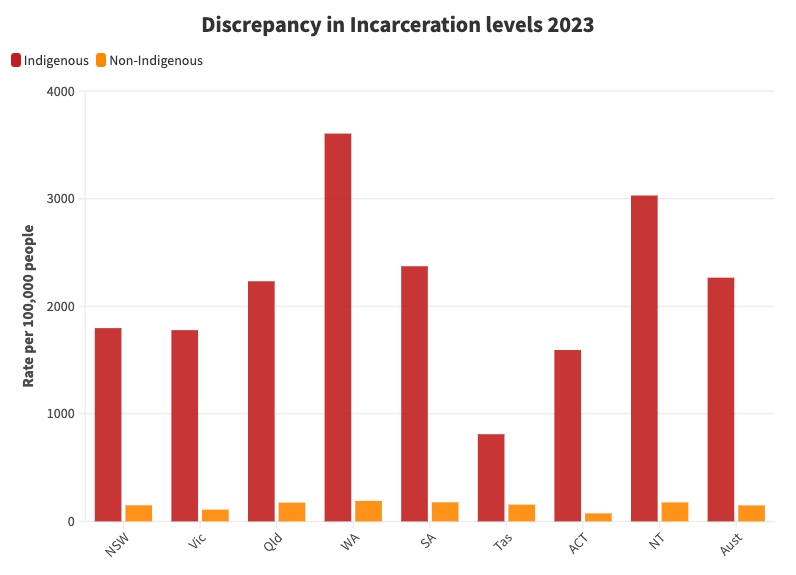
In comparison, the 2023 date shows non-Indigenous adults were incarcerated at an age-standardised rate of 149 per 100,000.
The statistics are in stark contrast to the Closing the Gap target, which aims to reduce the rate of Aboriginal and Torres Strait Islander adults held in incarceration by at least 15 per cent by 2031.
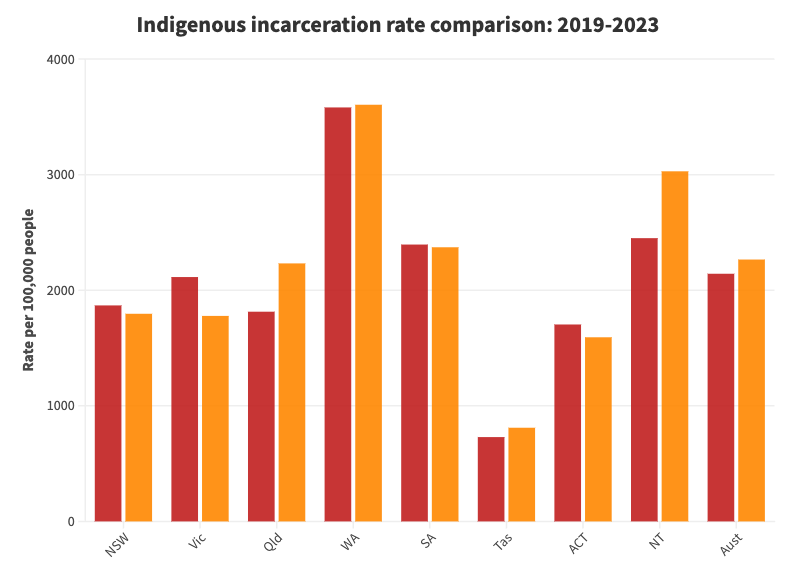
The National Agreement uses reporting from 2019 as the baseline for measurement comparisons. Australia-wide, several jurisdictions have seen significant rises in incarceration levels since 2019.
The Northern Territory, Queensland, Tasmania and Western Australia all saw increases in Indigenous incarceration, with both the NT and Queensland seeing a 23 per cent rise from 2019 to 2023.
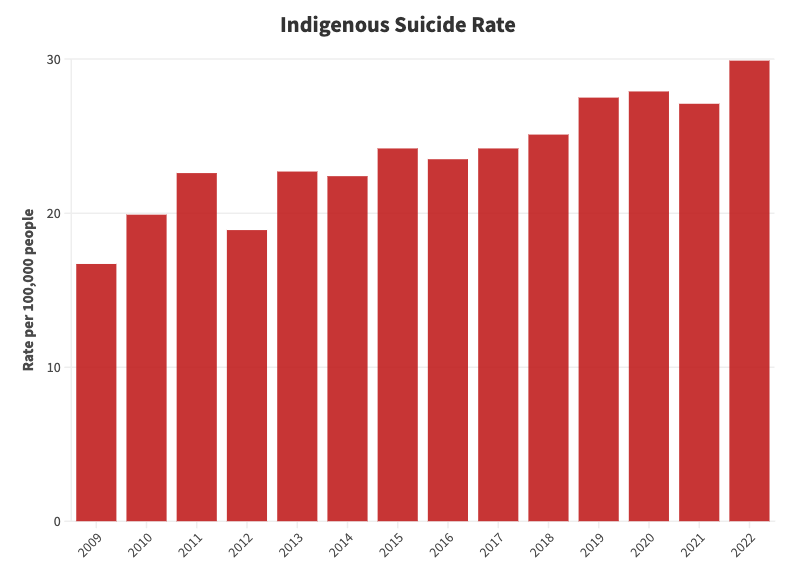
Disturbingly the suicide level for Aboriginal and Torres Strait Island people also continues to rise, with 212 people dying by suicide in 2022 in NSW, Queensland, WA, SA and the NT - a ten per cent increase on the previous year.
Across the country, reports have highlighted the vast discrepancy in suicide rates, brought on by factors including trauma, poverty, and a lack of adequate access to healthcare.
In the major cities, Aboriginal and Torres Strait Island people were almost two-and-a-half times more likely to die by suicide than non-Indigenous people. In very remote areas, 30.8 Indigenous people per 100,000 took their own lives in 2022.
The measurements taken from some jurisdictions makes for heartbreaking reading. In the NT and WA, between 2018 and 2022, at least 176 Indigenous people in remote and very remote areas died by suicide. Between the ages of 0 and 24, suicide accounted for 22 per cent of all Indigenous deaths nationwide.
The AIHW has previously stated the First Nation rate is more than double that of non-Indigenous people. For Indigenous males, the discrepancy is 2.6 times greater, for females, it is 2.5 times greater.
13YARN 13 92 76
Aboriginal Counselling Services 0410 539 905



