



Four of Australia's leading health organisations recently joined forces with the federal government to ensure no one is left behind in the drive to eliminate cervical cancer in Australia.
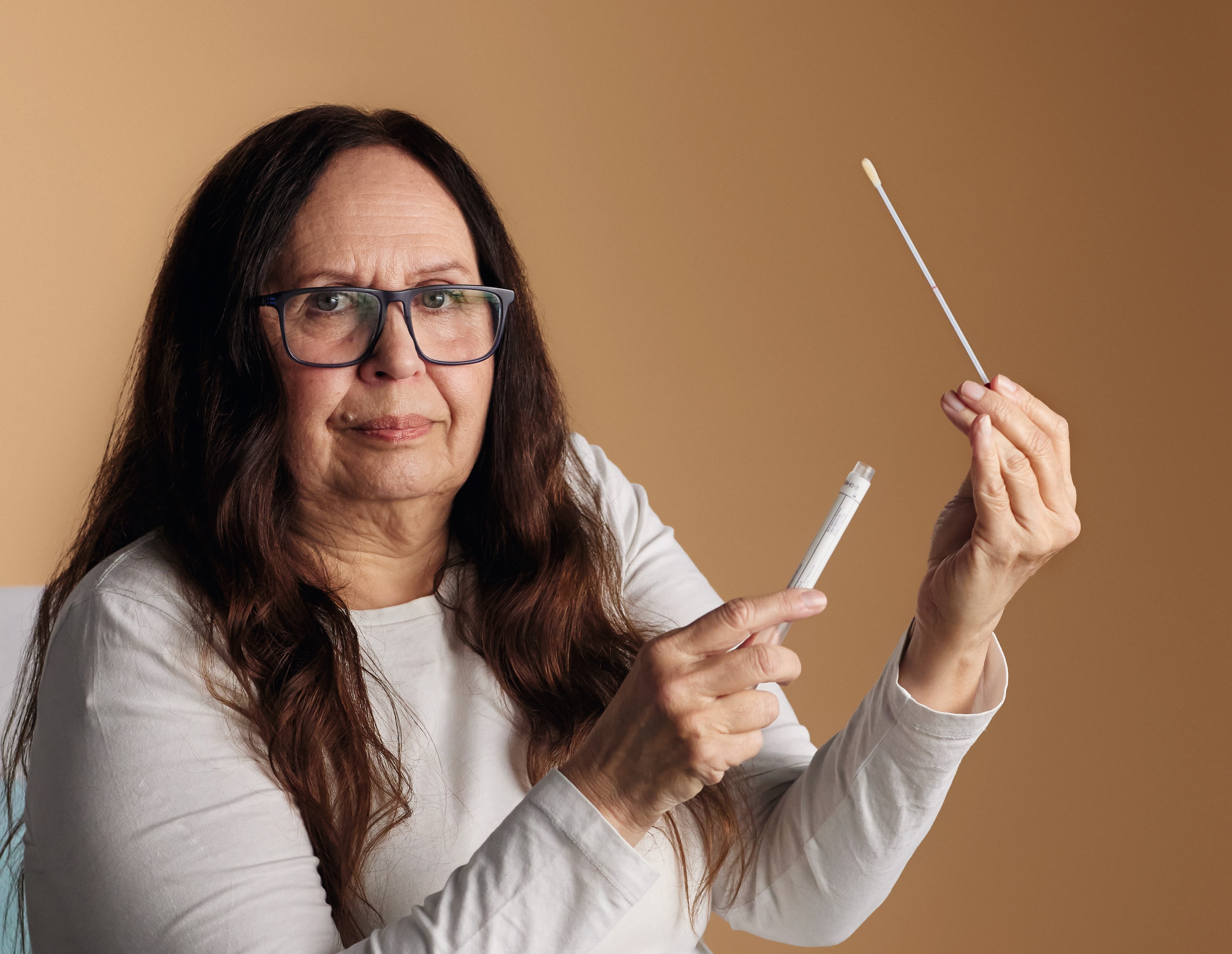
The Australian Centre for the Prevention of Cervical Cancer (ACPCC), the National Aboriginal Community Controlled Health Organisation (NACCHO), ACON and the Australian Multicultural Health Collaborative have united in a new federally funded campaign - the Own It campaign - to improve cervical screening rates by highlighting Australia's world-leading HPV self-collect test.
Australia is set to be the first country in the world to eliminate cervical cancer in 2035, but some groups in the community are screening at lower rates than others. Data shows that members of First Nations, multicultural and LGBTQ+ communities and people with a disability are less likely to do their potentially life-saving cervical screening test.
Cervical cancer diagnosis is twice as likely for First Nations women than non-Indigenous women.
More than 70 per cent of cervical cancers occur in people who have never screened or aren't up to date with their screening. Routine screening every five years is crucial for early detection and prevention from age 25 to 74.
The self-collect test is helping overcome previous barriers to screening. In the first half of 2024 alone, nearly 20,000 first time screeners opted to self-collect. At the same time, 37,500 over-due screeners did a self-collected test.
The Own It campaign draws on the expertise of the four organisations to focus on these under-screened communities, and the healthcare providers who serve them, to raise awareness of the self-collect option to get more people screening.
The campaign tells real-life stories and experiences and campaign materials have been translated into four languages; Arabic, Cantonese, Mandarin, and Vietnamese. The Australian government has provided $10.2 million to implement the campaign.
National Aboriginal Community Controlled Health Organisation (NACCHO) deputy chief executive Dr Dawn Casey said the new national campaign is "a significant step forward in raising awareness about cervical screening within Aboriginal and Torres Strait Islander communities".
"It builds on the successful implementation of human papillomavirus (HPV) self-collection already taking place in Aboriginal Community Controlled Health Organisations," she said.
Samantha Martin, an Indigenous woman from the east Kimberley, now living in Queensland, lost a friend to cervical cancer and wants to ensure such tragedies are prevented in the future.
She told National Indigenous Times "a lack of awareness" remained a hurdle to getting screening rates to the right levels.
"I think it's also shame that comes with this whole, women's business, but I would definitely say it comes right down to the fact that we're not aware that this is something that we have to get done and that it's very important to get it done.
"It's the early detection of things that are of not normal within our bodies, right, it's learning to catch things before it develops into something."
Ms Martin said early detection and prevention was vital.
"It's a very daunting thing for all of us women to go through. So, if we understand that there's a bigger picture behind it, we can manage it a bit better within our emotional and mental wellbeing as well," she said.
"I think the most important thing that I would pass on is that us women, and especially as First Nations women, we need to learn to respect our bodies a bit better, to understand our bodies a bit better, and we need to remove the stereotype and that shame factor that goes on with women's business.
"Growing up, I was always told it was like, 'You don't talk about that sort of stuff'. I didn't learn about my period from my mother or aunties, for example, I learned about it at school. I think it needs to be a place of understanding that it's okay to learn more about our body functioning, and especially the functions of our body and how it operates.
"And we understand our bodies on a surface level, but we never go deeper. We never go to the deeper spiritual connection to ourselves. I think personally, that's what's helped me cope with losing one of my friends through cervical cancer. But the attitude that 'she'll be right, or I'll be okay', or because I can't see it's not an issue… We should always be talking about how we heal our bodies from the inside out."
Executive Director and Public Officer of the Australian Centre for the Prevention of Cervical Cancer, Professor Marion Saville AM, said that through the focus on Aboriginal and Torres Strait Islander and multicultural communities, the campaign is "vital in achieving the aims of the National Elimination Strategy, which identified the need to place a greater focus and more effort to achieve equity of access to culturally safe and inclusive cervical cancer prevention services".
"We've already seen a massive change in the past few months in the confidence of healthcare providers to offer the self-collection option," she said.
"Before learning about self-collection, 47 per cent of healthcare providers did not think the option was as accurate as a clinician-collected test, but following education from ACPCC, approximately 80 per cent now understand that it is accurate and 82 per cent said they would offer it to more eligible patients."
The Australian Multicultural Health Collaborative said it "knows how important it is for everyone to feel empowered and informed about their health choices".
"The Own It cervical screening campaign is a vital initiative that brings much-needed attention to self-collection as a safe and effective choice for women from all backgrounds. By making cervical screening more accessible and culturally sensitive, this campaign will help ensure that more women, especially those from our diverse communities, take control of their health and wellbeing," the Collaborative said in a formal statement.
A federal government spokesperson said the Commonwealth is "determined to be the first in the world to eliminate cervical cancer, we'll get there by making sure no one is left being".
More information about the National Cervical Screening Program is available online.



