




The Northern Territory's Child Protection Minister is being urged to work more closely with frontline organisations and her own department to prioritise young people, after a coalition of legal and community groups argued she has misinterpreted the legislation under her portfolio.
In a profile published in The Australian last week, Minister Robyn Cahill questioned the Aboriginal and Torres Strait Islander Child Placement Principle (ATSICPP) — which is designed to protect Indigenous children in care by prioritising placement with family or kin and maintaining connection to Country — along with legislation in the Territory.
"The safety and wellbeing of the child must be the first consideration,'' Ms Cahill told the newspaper.
"Without doubt, our legislation doesn't provide for that, and it needs to. The principles in the legislation single out Aboriginal children to be dealt with differently to any other child in the system. So we're looking at that, looking at whether this works."
Her comments appear to contradict the Care and Protection of Children Act NT, which states: "When a decision involving a child is made, the best interests of the child are the paramount concern."
It also requires decision-makers to consider protection from harm and exploitation, the capacity of family to care for the child, the child's views and wishes, their emotional and developmental needs, and the importance of stability and continuity of care.
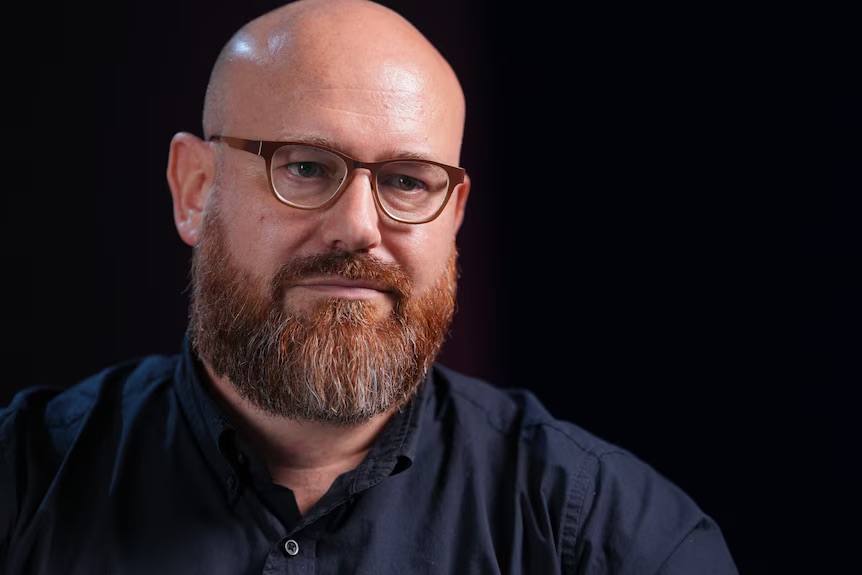
"This is not aspirational language; it is a binding legal standard that governs investigations, removals, placements, court orders, reunification planning and service responses," North Australia Aboriginal Justice Agency (NAAJA) chief executive Ben Grimes said.
"Decision-makers are required to actively apply this principle, with a clear statutory focus on a child's safety and protection from harm as the primary concern."
Aboriginal children account for almost 90 per cent of all children in out-of-home care (OOHC). Despite the ATSICPP, only 16.7 per cent are placed with family, according to the 2025 Family Matters report.
In response to Ms Cahill's remarks, a coalition of organisations — NAAJA, Central Australian Women's Legal Service (CAWLS), Darwin Community Legal Services (DCLS), Katherine Women's Legal Service (KWILS), Top End Women's Legal Service (TEWLS) and the North Australian Aboriginal Family Legal Service (NAAFLS) — said the Minister "fundamentally misunderstands the operation of the legislation she administers and the realities of the child protection system in the Northern Territory".
"The Minister clearly misunderstands how the ATSICPP operates under the Act," they wrote in an open letter. "The ATSICPP does not compete with, nor dilute, the best interests principle. Rather, it defines how best interests must be understood and applied for Aboriginal children."
The coalition said the child's best interests are "always the paramount consideration", and that while the ATSICPP promotes placements with family, kin or culture, it applies "only so far as is practicable".
"Placement instability, lack of cultural and family connection, and poor support on leaving care significantly increase long-term harm and inter-generational vulnerability," they said.
.jpg)
The Territory government has faced sustained criticism from First Nations organisations — including legal services, Land Councils, human rights groups and Traditional Owners — who say Aboriginal voices are often sidelined, despite First Nations people making up around 30 per cent of the population.
Critics have argued legislation is frequently passed with limited scrutiny in the unicameral parliament.
Ms Cahill also criticised findings from Coroner Elisabeth Armitage's 2024 inquest into the violent killings of Kumarn Rubuntja, Kumanjayi Haywood, Ngeygo Ragurrk and Miss Yunupingu — four of at least 85 Indigenous women killed by partners in the NT since 2000.
Although the findings were welcomed by advocates, Ms Cahill described the response as uninspiring, telling The Australian: "She [Coroner Armitage] didn't make a single recommendation about how we need to be actually working and empowering those communities to stand up to the weaponisation of culture."
"To get a solution, we really have to call it out and say to communities, 'we'll stand with you, but you have to stand up to this behaviour'."
The NT Government said it would fully support 21 of the coroner's recommendations, accept 11 in principle and reject three, including the creation of a dedicated DFSV peak body. The Territory remains the only jurisdiction without one.
A post shared by National Indigenous Times (@natindigtimes)
Ms Cahill also referenced a recent NT Supreme Court case involving a 28-year-old man who was jailed for assaulting, raping and impregnating a 13-year-old girl. The man received a two-year sentence and told the court he believed the girl was 16 and that the "relationship" began as part of a family arrangement.
The Australian claimed that the Minister "knows she will be called racist and 'be accused of doing terrible things to Aboriginal people', but this will not shift her focus on child safety and wellbeing", and said it "became clear" to Ms Cahill that "the twin priorities of children's safety and wellbeing were being forgotten".
Principal Legal Officer at CAAFLU Aboriginal Corporation, Carol Smith, said decisions in child protection are rarely straightforward.
"It is easy for the Minister to cherry-pick specific examples of where things have gone wrong," she said.
"The problem is not the legislation, which has been carefully reformed over decades, including in response to the Royal Commission into the Protection and Detention of Children in the Northern Territory."
The coalition has called on Ms Cahill to work with the Department of Children and Families to strengthen existing systems and properly resource frontline services.
"Research consistently shows that Aboriginal children experience better outcomes when families and communities are empowered to design and deliver solutions, and when culture is recognised as a protective factor rather than a barrier," they said.



