



A leading Indigenous legal expert has urged the WA government to fix the youth justice system as new figures show staff in the state's youth detention centres are being assaulted every second day on average.
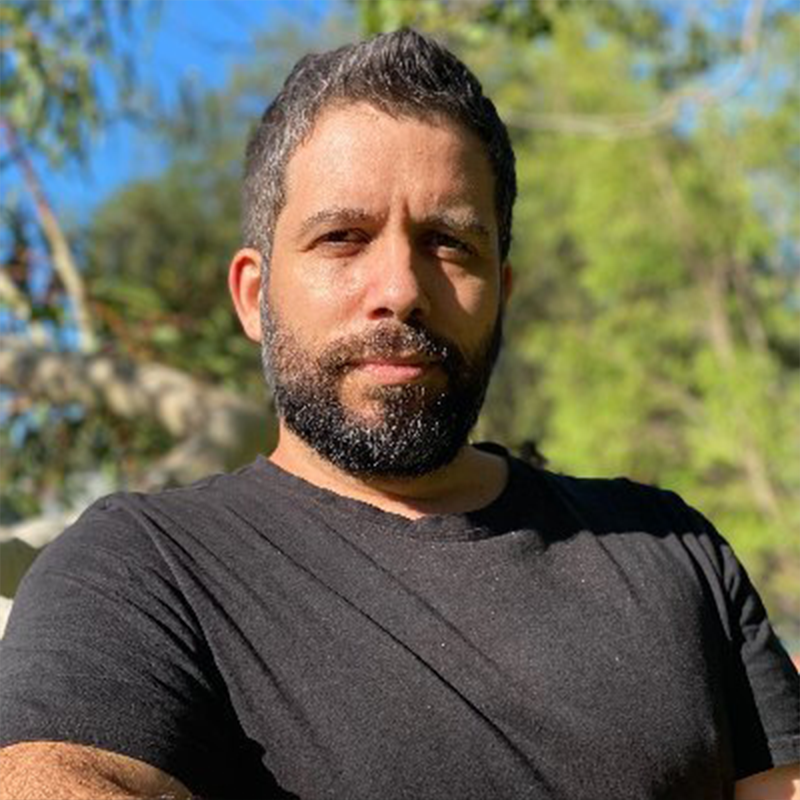
Dr Hannah McGlade, a law academic and member of the UN Permanent Forum on Indigenous Issues, told National Indigenous Times assaults on staff at Banksia "is a serious issue that deserves an appropriate response."
"Safety of workers, as well as safety of children, is paramount. Unfortunately, there are several contributing factors that haven't been addressed by the state," she said.
"We're still incarcerating more Aboriginal children than any other state or territory and that is unacceptable and contributing to tensions.
"The therapeutic model is in its early stages and the children incarcerated have high needs. Many again should not be there. Incarceration is only supposed to be a measure of last resort."
While the WA government has claimed order has returned to Banksia Hill Detention Centre, WA's main youth prison, statistics table in state parliament last week revealed 152 assaults, including four classified as serious, were recorded at Banksia Hill alone between January and October 31, when 46 youths were in custody.
During the same period, 58 assaults were recorded at Casuarina, where 1,569 adults are incarcerated.
Inside Unit 18, a stand-alone youth unit on Casuarina's grounds, only a small number of children are held – 11 on the night of 31 October, for example – but 146 assaults were recorded in just ten months.
The West Australian reports that Corrective Services Minister Paul Papalia said youth detention centres "house the State's most challenging, and often violent, young offenders".
"That is why we've introduced new high-tech body-worn cameras that can livestream direct to the WA Police State Operations Command Centre," he said.
The WA Prison Officers Union says the number of staff across both facilities is not enough.
Union Secretary Andy Smith told The West they have been sounding the alarm about staff shortages for four years.
"The government and Department of Justice have driven the Corrective Services to rock bottom. No staff, no beds, no safety. Not for prison officers, not for prisoners and not for the community," he said.
Mr Papalia said recruitment and retention had improved and staff-assault statistics were lower than previous years.
"It is absolute garbage . . . why would you go into a career when you're going to get bashed?" Mr Smith said.
"The youth custodial officers are the first victims . . . the second thing, of course, is the youths themselves are not rehabilitated so they go back into the community and they reoffend."
While WA premier Roger Cook has set a 2026 target date to build a replacement facility and close Unit 18, the mid-year budget review released in December included only $11.5m extra for a new youth detention facility and $7.9 million in 2025/26 for a crisis care unit at Banksia Hill. A new facility would cost an estimated $100 million.
WA shadow minister for corrective services Peter Collier told National Indigenous Times youth justice in Western Australia "is an absolute disgrace".
"It is a sinister beast - and the responsibility rests with the Labor government," he said.
"As a former educator, and a former minister for education and Aboriginal Affairs, I can't believe the Labor government is doing this. On this issue, we are an international disgrace.
"Day after day there are new stories of despair from our juvenile justice system, and the government wears it like a badge of honour.
"Labor is meant to be about compassion, egalitarianism and the underprivileged, yet are dealing with the most marginalised people in such a sinister way.
"We have had two young men (in youth detention) who felt the only solution was to take their own lives. How did we get this this point?
"I have been saying this for about four years, since they (the government) started on this campaign to politicise juvenile justice – they are using these children as pawns."
Mr Collier noted that: "The vast majority of those in juvenile justice are extremely marginalised, a great many of them are Indigenous children who they take off-Country and stick in a 9m by 9m cell for up to 24 hours a day, then expect them to go home rehabilitated."
"When did we get to the point in the 21st century where we decided this was acceptable? If you treat people like animals they will respond in this way," he said.
"These kids are born into a life of despair in a lot of instances."
Mr Collier said it was "the biggest disappointment" of his political career that he had been to date unable to convince the government to change their approach to youth justice.
"It is disgraceful," he said.
Dr McGlade told National Indigenous Times Unit 18 is unsafe, and traumatic for children.
"We need to remember that violence begets violence, healing begets healing," she said.
"Youth justice needs to be transferred from the department of corrections back to the department of communities where it was originally. Social workers and not corrections officers need to be working closely with children to address underlying issues.
"Invest in children and youth, the current approach is still punitive and harmful to Aboriginal children who are actually very vulnerable and need investment and opportunity. The children need investment, opportunity and most of all, healing."



