



A decision by a regional New South Wales council to display only the Australian flag in its chambers, weeks after launching a Reconciliation Action Plan (RAP), has been labelled "shameful and insulting to First Nations people".
Last month, a Gunnedah Shire Council meeting overturned a draft policy recommending four flags — the Australian, Aboriginal, Torres Strait Islander and NSW state flags — be flown, with the mayor given the deciding vote.
In proposing the amendment, Deputy Mayor Rob Hooke claimed, in comments reported by the New England Times, that "we can go too far in our reconciliation to the point we actually start to form segregation".
"I would hate to see a reverse type of apartheid take place in this community," he said, arguing the community was "starting to fracture along the lines of race".
"I hate feeling uncomfortable in this community, and in places, I do feel uncomfortable that I am actually not welcome here, in certain areas, and it disturbs me greatly."
The decision has prompted Aboriginal community members to launch a petition calling for the Aboriginal flag to be flown in the chambers.
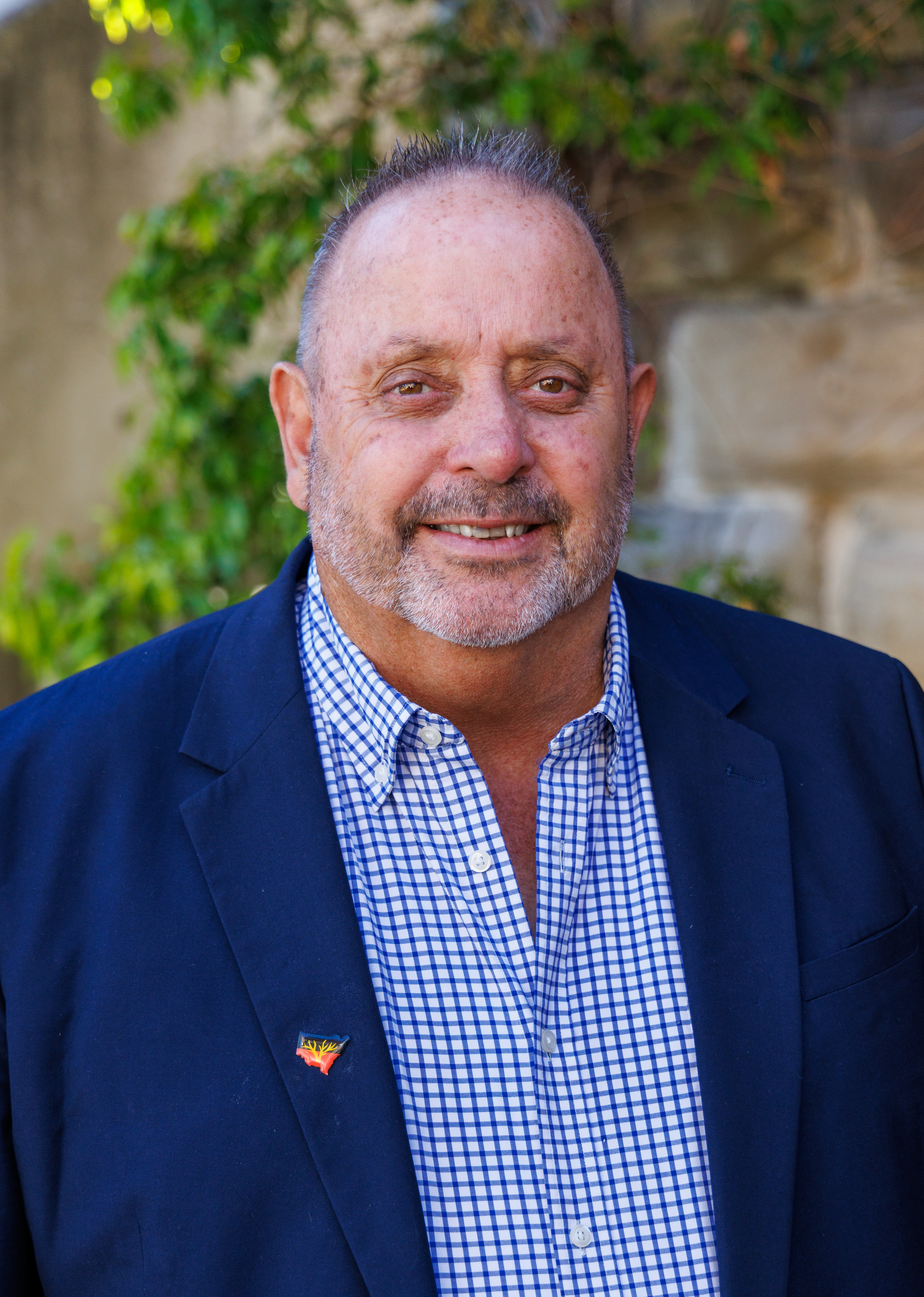
New South Wales Aboriginal Land Council (NSWALC) Councillor for the Northern Region, Charles Lynch, said flying the flag did nothing to divide the community, while actively excluding it "sends a clear message about whose history deserves recognition".
"For Gunnedah Council to launch a Reconciliation Action Plan, then propose excluding the Aboriginal flag weeks later is shameful and insulting to First Nations people," he said.
"Council is undermining its own commitments. True reconciliation requires respect, accountability and action. Council should be bringing people together. This proposal divides the community and damages trust."
The amendment will see only the Australian flag hang in the chamber, with the policy now on public exhibition for 28 days.
Mr Lynch said he stood in solidarity with Gunnedah's Aboriginal community and supported its petition, which is available online.
"We are one country, with a history stretching long before 1788. Respecting First Nations people acknowledges our history and strengthens our shared future," he said.
"I call on Gunnedah Shire Council to listen to the Aboriginal community, overturn this proposal and honour its reconciliation commitments."
The use of the Aboriginal flag has become a point of contention among some conservative commentators and politicians across the country, with former opposition leader Peter Dutton last year arguing he would not stand in front of the Aboriginal or Torres Strait Islander flags if he became leader.
The issue has also fed into the broader debate over Indigenous sovereignty and symbolism, including the long-running debate over whether Australia Day should continue to be held on January 26.
Last week, the City of Melbourne abandoned its position of advocating for the federal government to move Australia Day celebrations to another date, reversing a policy it adopted in 2022.
Lord Mayor Nicholas Reece voted for the policy U-turn, despite believing the date should be changed, arguing the decision should occur in federal parliament, "not made in the town hall chamber".
"I understand that for Aboriginal Australians, the 26th of January is seen as Invasion Day and it's a day of heartache," he told 774 ABC Melbourne.
"My view is that we should, as a nation, look to change the date and find a day that we can all get behind."
In response, former Yoorrook Justice Commission Commissioner Travis Lovett said, "To say I am disappointed is an understatement."
"I have been at events where the Lord Mayor has been very comfortable using the language of First Peoples, truth-telling and reconciliation in his speeches," Mr Lovett said.
"Truth-telling and understanding why the date needs to change cannot be shown only when it's comfortable. You cannot celebrate and parade our culture when it benefits tourism and the economy, or use the language of a culture that has existed for more than 65,000 years when it makes you look respectful."



