


The second day of the AIATSIS Summit 2025 opened gently yet powerfully on Larrakia Country with a moving morning performance—rhythmically calm, visually elegant, and spiritually grounding. It set the tone for a day that would honour the legacy of Eddie Koiki Mabo and ignite discussions about justice, education, and identity in ways that were heartfelt, layered, and transformative.
June 3 marked Mabo Day, and it was no coincidence that three powerful keynote speakers took the stage, each offering their own reflections on the meaning of this historic day.
Kaleb Mabo, grandson of Eddie, shared a deeply personal story about the Black Community School in Far North Queensland—one that reclaimed education through culture and community control.
"Storytelling is our weapon," he said. "It's how we ensure truth travels forward."
Kaleb's words were followed by a preview of Mer Island: VR Odyssey, an interactive documentary blending CGI and virtual reality to bring Koiki's legacy to life in new, immersive ways.
Following Mr Mabo was George Nona, who spoke with passion, strength, and deep vulnerability.
He reflected on a childhood marked by poverty, domestic violence, and responsibility.
"I didn't know the young boy I saw in the mirror would become Chairperson of the Torres Strait Regional Authority," he said.
His words highlighted not just personal triumph, but the broader tensions between L A W and L O R E—between Western legal systems and the sacred cultural knowledge held by our people.
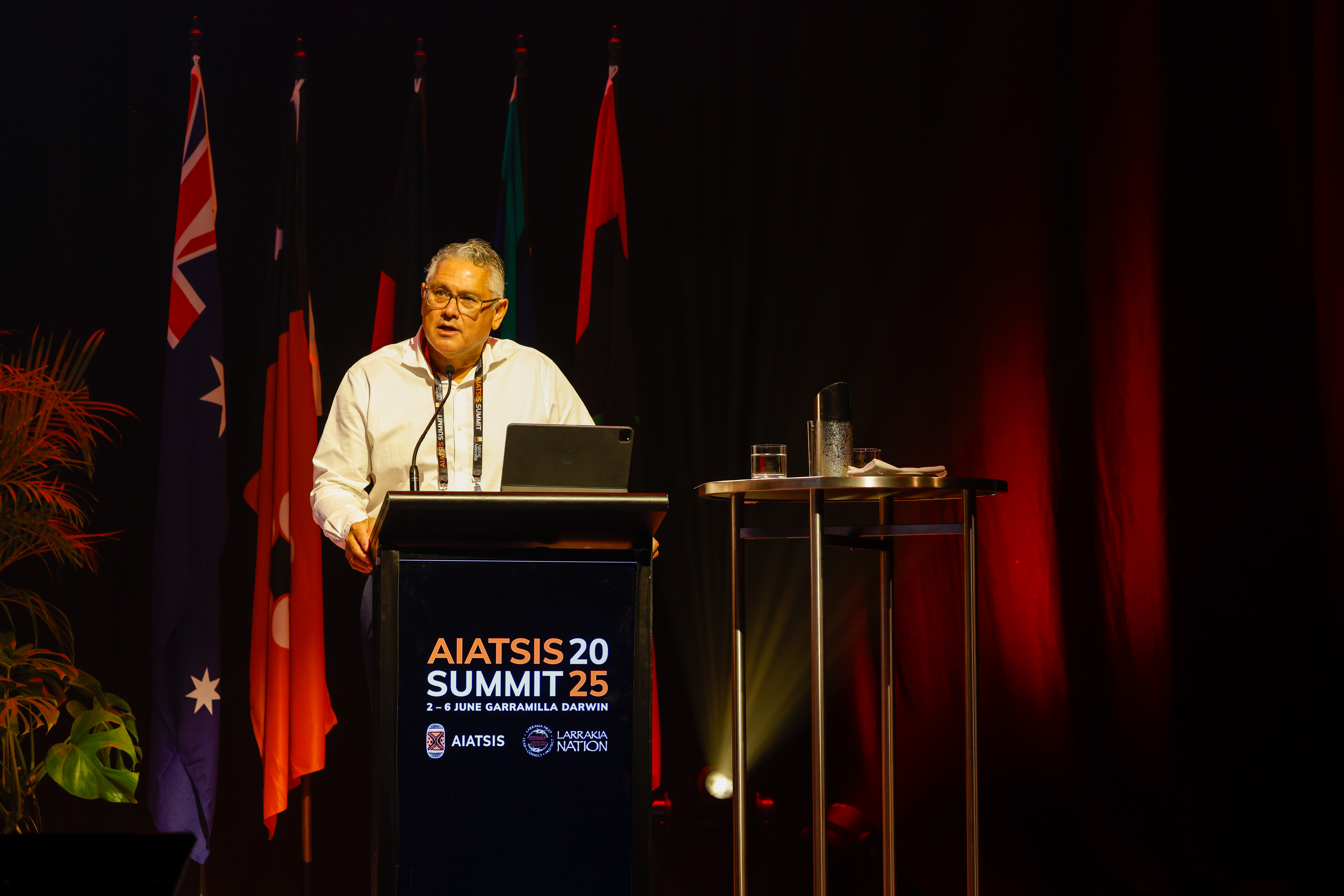
Kevin Smith, a respected expert in Native Title, brought clarity and warmth to a system many find inaccessible. His structured and humanising take on Native Title highlighted Eddie Mabo's lasting social justice impact.
"When belief and confidence are together, many things are possible," Mr Smith shared—echoing the spirit of the day. He invited participants to dive deeper into the frameworks that shape land rights, sovereignty, and belonging.
A theme that surfaced in quiet conversations and breakout rooms was the unexpected kinship between First Nations people and the Irish—two cultures profoundly shaped by British colonial rule. This shared history of dispossession and resistance, while not new, took on a deeper resonance on Larrakia Country, as stories intertwined and solidarity formed.
One of the day's standout sessions explored Gudyarra, a culturally safe education kit about the 1824 Declaration of Martial Law on Wiradjuri Country. Developed with Traditional Owners and educators, the toolkit honours the memory of resistance and survival—from the strategic alliances between Yuin, Gamilaraay, and Wonnarua peoples to the peaceful approach of warriors who walked to the Governor's feast on 14 December 1824. This resource isn't just about teaching history; it's about truth-telling as a pathway to justice.
Another profound moment came with Sharon Davis's presentation on Aboriginal English. A graduate of Oxford University, Sharon unpacked linguistic imperialism with clarity and conviction.
"The question is not whether you will let us speak. It is whether you will listen," they said.
From Pidgin and Kriol to classroom discrimination through NAPLAN, they showed how language carries deep cultural value—and how teaching our young people to "code-switch" instead of assimilate is an act of resistance and pride.
Day Two didn't just commemorate a legacy. It called on us all to walk forward with courage, grounded in truth, and uplifted by the stories we carry. On Larrakia Country, Mabo's legacy was not only remembered—it was reimagined for generations to come.



