


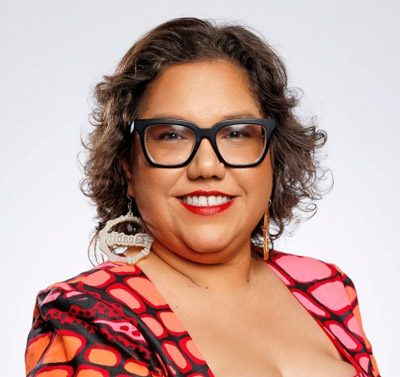

Long before national strategies and international fellowships, Kim Dyball understood one thing clearly: systems either recognise Indigenous brilliance or erase it.
A proud Kalkadoon woman, Ms Dyball now leads CSIRO's Young Indigenous Women's STEM Academy, a national program supporting hundreds of Aboriginal and Torres Strait Islander young women to pursue science, technology, engineering and maths pathways. But her leadership did not begin in a boardroom or policy unit. It began in classrooms and on Country, where community made its expectations clear.
"I remember sitting with Aunty Joanie Marshall and members of the ASSPA Committee as they shared their hopes for their children. They told me how important it was for students to see an Indigenous teacher in front of the classroom," she said.
"Their words and the way they welcomed and supported me, felt like affirmation from community that I was exactly where I needed to be. It wasn't just a job. It was my responsibility. Aunty Joanie also took me out on Country and whilst looking for sugar bags and honey ants, I remember her telling me to look at her footprints in the red dirt and saying, 'you can walk in my footsteps now'. It was such a defining moment. Aunty Joanie was trusting me to care for the young people, as she had done her whole life. Therefore, I see it as a great honour and responsibility."
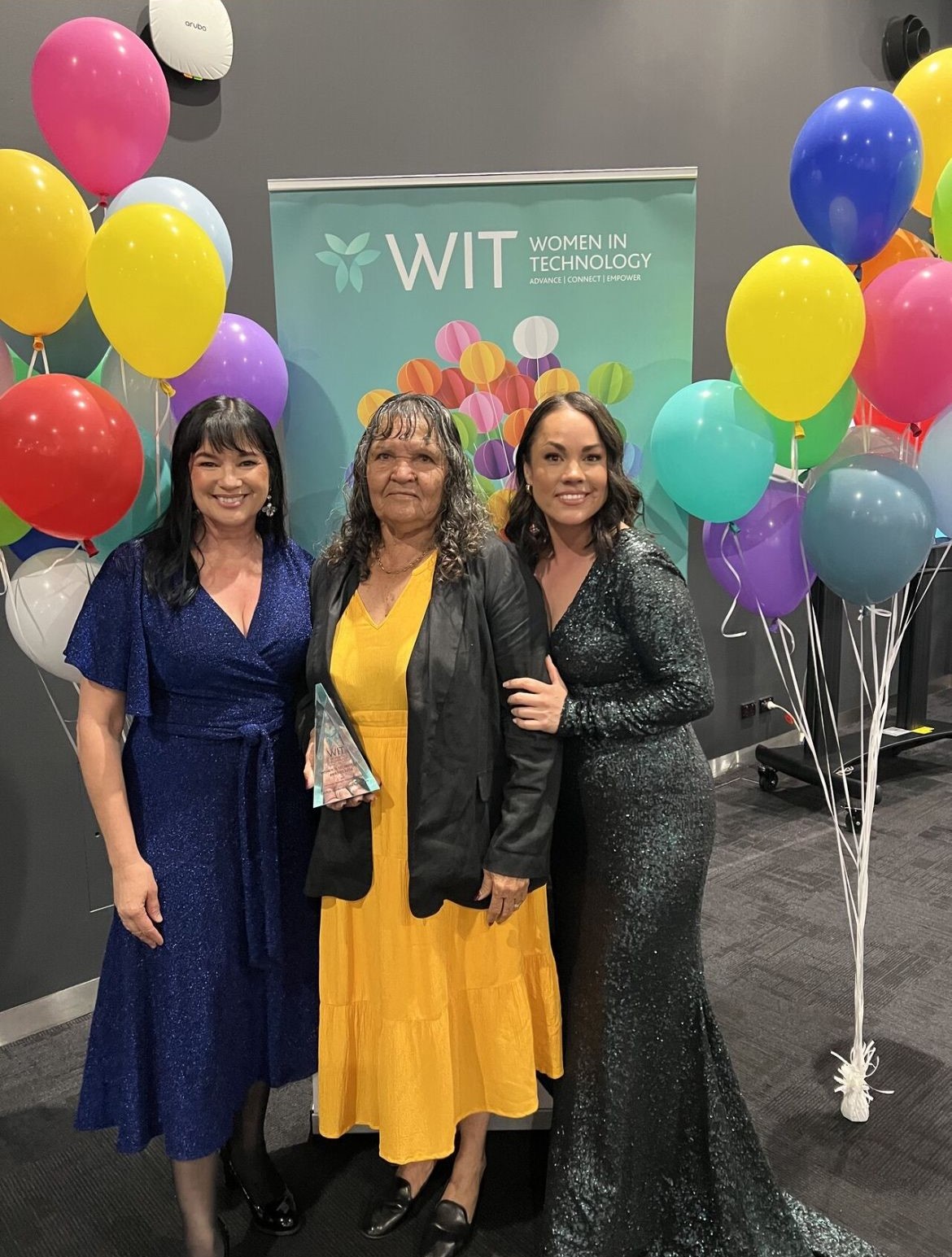
That responsibility has guided Ms Dyball through more than three decades in Indigenous education, training, employment and policy. Across that time, one pattern has remained consistent: Aboriginal and Torres Strait Islander students bring intelligence, creativity and leadership into education systems that were never designed to recognise them.
"I saw brilliant young Indigenous students who were intelligent, creative and insightful, yet the system was not structured in a way that enabled them to demonstrate that brilliance," Dyball says.
The Young Indigenous Women's STEM Academy was created to disrupt that pattern.
Rather than positioning young Indigenous women as a workforce problem to be solved, the STEM Academy operates from a strengths-based framework. Culture is not treated as an add-on to science, but as science itself.
"The STEM Academy does not position young women as needing to be 'fixed'," Ms Dyball says. "It recognises them as capable leaders whose cultural knowledges, curiosity and resilience are strengths to STEM."
This framing matters. Too often, Indigenous participation in STEM is discussed through deficit language: gaps, pipelines, underrepresentation. What that language obscures is the role of institutions in excluding Indigenous knowledge systems, leadership styles and ways of working.
"Policies, systems and workplaces must evolve to reflect Indigenous voices, strengths and ways of knowing, being and doing," Ms Dyball says. "Too often, systems have been built without Indigenous peoples."
Under Ms Dyball's leadership, the STEM Academy has become identity-affirming, wellbeing-focused and increasingly led by the young women themselves. Participants are advocating with industry leaders, engaging directly with Australian Government ministers and reshaping conversations about what leadership in STEM looks like.
"They are not emerging leaders," she says. "They already are leaders. The work is about creating the space for them to shine."
.jpg)
It was this work, and the questions it raised about system readiness, that led Ms Dyball to pursue the Frank and Helen Zobec Churchill Fellowship. The Fellowship was not about personal recognition. It was about exploring how other countries support Indigenous women to thrive in STEM without assimilation.
Through international engagement with Indigenous-led initiatives such as Pūhoro STEMM Academy and the American Indian Science and Engineering Society, Dyball observed what happens when Indigenous identity is treated as intellectual authority rather than cultural decoration.
"From a strengths-based lens, systems change is not about correcting deficits," she says. "It is about unlocking potential that already exists."
Importantly, Ms Dyball ensured the Fellowship did not centre her alone. Through the International STEM Leadership Dialogue, twelve young Indigenous women travelled alongside her, engaging directly with global leaders and returning with expanded confidence and vision.
"Watching the young women build relationships, ask bold questions and then return home with expanded confidence and vision confirmed that this is about momentum," she says. "It is about intergenerational change."
The question now is whether Australian institutions are willing to shift fast enough.
Ms Dyball is clear about what success looks like.
"That young Aboriginal and/or Torres Strait Islander women can enter STEM spaces already expecting to belong."
Not as guests. Not as exceptions. But as knowledge holders and leaders whose authority has always been there.
The system is finally being asked to catch up.



