




Indigenous people with disability appear significantly more likely to be unemployed than Indigenous people without disability, according to new research.
The data — to be fully released next year by the Centre for Indigenous People and Work at the University of Technology Sydney (UTS) — emerges as the federal government announces it will triple the number of Indigenous employment service providers under the reformed Inclusive Employment Australia program.
The forthcoming Gari Yala (Speak the Truth) 2025 report highlights troubling disparities, including showing Indigenous employees with disability are far more likely to experience harmful racism at work than Indigenous employees without disability.
Only 32 per cent of First Nations employees with disability said it felt safe to disclose their Indigenous identity at work, compared with 40 per cent of Indigenous employees without disability. They were also twice as likely to report their workplace only rarely, if ever, operates in a culturally safe way.
A quarter of Indigenous people have a disability, according to ABS data, with only 40 per cent of those aged 15-64 employed, compared with 75 per cent of Indigenous people without disability.
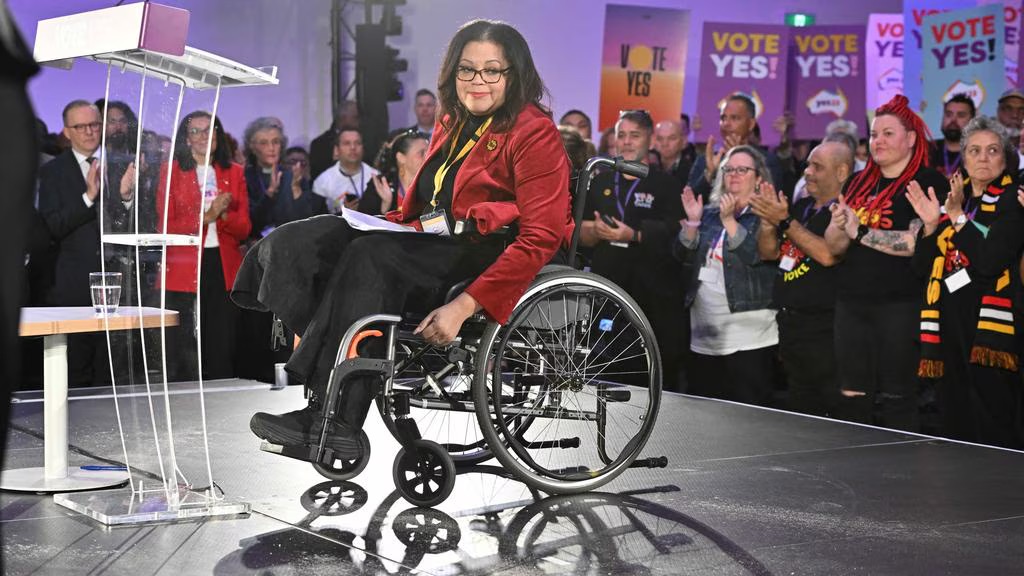
Tanya Hosch, Chair of the Centre for Indigenous People and Work's Indigenous Advisory Council, said the findings illustrate how overlapping forms of discrimination compound harm for First Nations people with disability. She noted many people already face negative stereotypes, with additional disability discrimination pushing them to the "margins of workplace culture", which has a "severe impact on cultural safety and career outcomes".
"When disability intersects, harmful, inaccurate assumptions intensify, amplifying workplace exclusion and discrimination," Ms Hosch said. "As a result, it's not enough to tackle racism or ableism in isolation because for many, these challenges don't come one at a time."
The Centre argues the results demonstrate the need for the Racial Discrimination Act to require employers to take "reasonable and proportionate measures" to proactively prevent racism rather than only respond after harm occurs.
"Employers need to avoid taking a 'silo' approach to diversity and inclusion where they focus on Indigenous employment first and then separately consider disability employment," Ms Hosch said.
"Instead, they can take positive steps like ensuring their Indigenous employment initiatives engage with a diversity of Aboriginal and/or Torres Strait Islander people, including those who experience greatest levels of exclusion and discrimination such as Indigenous employees with disability."
Expansion of Indigenous disability employment services
The findings coincide with the federal government's announcement that it will triple the number of Indigenous employment service providers to support First Nations people with disability into meaningful work on Wednesday. The government says this will give more participants access to culturally safe support across their employment journey.
"This is just one part of our reforms to disability employment services, with more diverse services, more training for providers and more support for people with disability to get and keep a job they love," Social Services Minister Tanya Plibersek said.
An additional $1.25 million has been allocated to the National Indigenous Employment and Training Alliance (The Alliance) to support non-Indigenous providers working with First Nations jobseekers.
"The Alliance will help strengthen cultural sensitivity and ensure all participants experience inclusive, respectful, and culturally grounded support throughout their employment journey," Ms Plibersek said.

Alliance CEO Kylie Penehoe said the program is not only about expanding services, but ensuring Indigenous people with disability receive culturally safe, strengths-based support. She argued the Alliance is "uniquely placed to guide this work".
"We combine First Nations leadership, cultural expertise, and sector knowledge to build capability across both Indigenous and non-Indigenous providers," she said.
"Our approach strengthens First Nations-led providers to excel while equipping all providers with the skills and confidence to deliver culturally safe services, ultimately improving outcomes for participants and communities."



