


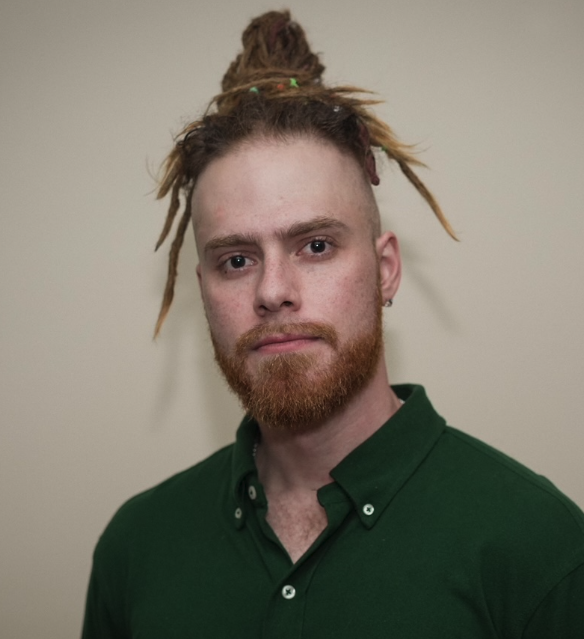

Wakka Wakka and Kemer Kemer Meriam Nation woman Llewellyn Saltner has completed CQUniversity Australia's Graduate Certificate in Research, building on a career dedicated to strengthening First Nations voices and community leadership.
Ms Saltner works as a Research Officer at CQUniversity's Jawun Research Institute in Gimuy (Cairns).
She contributes to the Shared Power for Advocating for Reform Collectively (SPARC) project, which works with community coalitions and government partners on Indigenous self-determination, shared decision-making and Closing the Gap reforms across Queensland.
Ms Saltner described the value of community-led research.
"What I value most is being part of work that centres community-led research and supports Indigenous knowledges and leadership, enabling communities to shape their own futures," she said.
Her career began as a business trainee with the Aboriginal and Islander Co-Op in Gladstone before progressing into Aboriginal health, social and emotional wellbeing, Indigenous affairs, leadership development and corporate governance.
She was recently appointed a Director of the Eidsvold Wakka Wakka Corporation.
"This role is deeply meaningful to me because it provides an opportunity to contribute to the future of our people while continuing to honour my connection to Wakka Wakka Country, community and culture," Ms Saltner said.
Years spent learning from family members and Elders, documenting family histories and supporting native title journeys helped inspire her postgraduate studies.
"These experiences taught me that stories are not just memories. They carry knowledge, identity, belonging and connection across generations," Ms Saltner said.
"The Graduate Certificate in Research gave me the opportunity to develop the skills to explore questions that matter deeply to me and contribute to research that honours First Nations knowledges, stories and lived experiences."
During the course, she developed skills in research design, methodology and academic writing, alongside a deeper understanding of cultural responsibility and accountability in Indigenous research.
Her studies coincided with significant personal loss.
Shortly after starting the course, Ms Saltner lost her mother, followed by her cousin-brother and other close family members within 12 months.
"It was an incredibly difficult time and there were moments when grief felt overwhelming," she said.
"Balancing work, study and personal loss was challenging, but what carried me through was the support of my husband and a deep sense of purpose."
She received confirmation of her qualification on the first anniversary of her mother's passing.
"Receiving my eQuals on the 12-month anniversary of my mum's passing was a deeply emotional moment," Ms Saltner said.
"For me, it was a reminder that her love, guidance and influence continue to be part of my life. It was a bittersweet moment, but it was also one of gratitude, pride and reflection."
Her mother, a Wakka Wakka woman and businesswoman, remained a source of inspiration throughout her studies.
"I am so glad I kept going," Ms Saltner said.
"There were many reasons why it would have been understandable to stop, pause or walk away, but I kept going because my mum's life showed me what was possible.
"Mum was a proud Wakka Wakka woman who overcame adversity to become a successful businesswoman while never losing her deep commitment to our Wakka Wakka Country, our people and our family. Her strength, resilience and leadership continue to inspire me every day."
Ms Saltner is now considering doctoral studies focused on Country, culture, Indigenous knowledges, belonging and wellbeing, particularly for First Nations women living away from their ancestral Countries.
She believes greater First Nations representation in research is essential to recognising knowledge passed through families and communities.
"First Nations representation in research is important because our communities hold knowledge that comes from lived experience, culture, family, Country and generations of learning," Ms Saltner said.
"I often reflect on the fact that First Nations peoples have always been researchers. Long before universities existed, our ancestors were observing, learning, innovating, adapting and passing knowledge from one generation to the next for tens of thousands of years."
She encouraged First Nations people considering postgraduate study to value their own knowledge and experiences.
"Back yourself. Your knowledge, experiences and perspective matter," Ms Saltner said.
"You do not have to have all the answers before you begin. Research is enriched by First Nations knowledges, and there is value in the knowledge we carry through our families, communities, cultures and lived experiences."
First Nations students undertaking the Graduate Certificate in Research can access support through CQUniversity's Jilbay First Nations Higher Degree by Research Academy
Original reporting by Katelyn Dunn, CQUniversity.



