



Unfolding, a major exhibition of First Nations works on paper featuring prints, drawings and paintings on paper works from the Mornington Peninsula Regional Gallery collection, will open on November 29.
First Nations artists have used paper as a material to demonstrate a particular kind of strength and permanence; one that "holds, carries and expresses identity, body and self, language, connection to Country, history and community", the Gallery said.
Curated in collaboration with Gulumerridjin (Larrakia), Wardaman, and KarraJarri artist and curator Jenna (Mayilema) Lee, Unfolding recognises the significance of paper as a powerful tool for the transfer of knowledge, stories, and contemporary artistic expression.
The exhibition features more than 100 works by over 80 artists including Queenie McKenzie, Gloria Petyarre, Robert Fielding, Brian Robinson, Brian Martin, Fiona Foley, Nici Cumpston, d harding, Danie Mellor, Teho Ropeyarn, Lisa Waup, Dominic White, Sally Morgan, and many more.
Ms Lee said paper is "alluring because it holds contradictions".
"It is the material of colonial paperwork, the bureaucratic pages that catalogued, restricted, and attempted to define us. Yet in the hands of First Nations artists, paper becomes something else entirely: a surface for resistance, renewal and possibility," she said.
"Each work on paper unfolds to reveal a new facet, a reminder that this most everyday of materials can bear the weight of history while opening space for newer, truer tellings."
%201997,%20synthetic%20polymer%20paint%20on%20Indian%20cotton%20paper.jpg)
Over the course of its 55-year history, the collection policies that have shaped the development of MPRG's Permanent Collection have focused on a core collecting priority: the acquisition of works on paper by Australian artists of national significance.
The Gallery said this priority has enabled its directors and curators to develop "a focussed First Nations works on paper collection that encapsulates drawings, prints, paintings on paper and sculptural works".
Through the Gallery's diverse acquisition streams, nearly 170 contemporary First Nations artists from across Australia are represented in the Collection.
The first work by a First Nations artist entered the Collection in 1997: Swamphen at Lake Joondalup, a vibrant screenprint by Sally Morgan gifted to the collection by Ms Ingrid McGaughey.
This was shortly followed by purchases from the Gallery's acquisitive prize exhibitions Spring Festival of Drawing (1997) and the National Works on Paper (1998): Watiya Tjuta (Many Trees) by Mitjili Napurrula and Untitled (Awelye) by Gloria Petyarre respectively. The acquisition of these three powerful works, all notably by women artists from across the continent, marked the beginning of the Gallery's commitment to supporting First Nations contemporary art through its collecting practices.
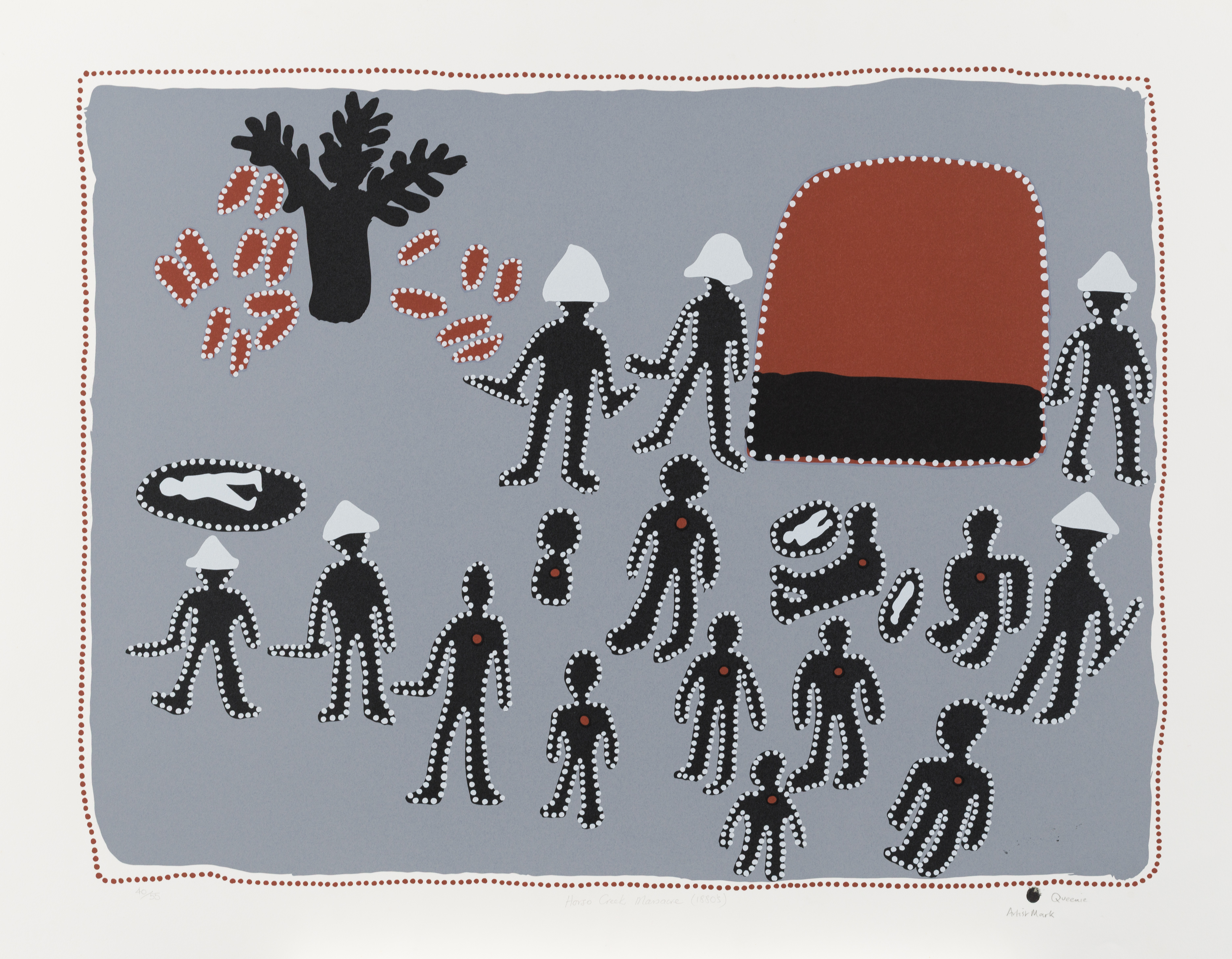
Co-curator Stephanie Sacco said that out of a collection of approximately 2,500 works, more than 400 works are by First Nations artists.
"What makes this collection special is that every single First Nations work in the Collection is a work on paper: this is a collection that tells the story of the significance of this medium to First Nations artists," she said.
The exhibition is supported by an activity space featuring the work of multidisciplinary artist Sammy Trist, a proud and passionate Taungurung woman of the Kulin Nation. Sammy will launch the activity space with an insect ochre painting workshop on Sunday 30 November. There'll also be artist and curator talks, a long table discussion.
On Friday 23 January, First Nations DJs Fosters and Pvrtal take over the decks with an electric mix of melodic afro, shuffling house, disco and techno, layered with First Nations sounds and vocal samples. This high-energy night is all about rhythm, culture and coming together.
Unfolding closed on February 15, 2026.



