




The government must reform electricity prepayment arrangements to keep Aboriginal communities connected to power, according to one of the Northern Territory's most influential land councils.
The Central Land Council (CLC) made the call following the release of The Right to Power, a report by Aboriginal organisation Original Power, funded by Energy Consumers Australia (ECA). The report found Indigenous families and communities relying on electricity prepayment systems lack essential consumer protections, financial hardship assistance, and relief from debt and disconnection.
Surveying more than 300 prepayment households, the report revealed widespread concern that disconnections could lead to food spoilage and unsafe living conditions due to inadequate heating or cooling - with many households already paying far more for groceries than urban families.
The CLC says many Australians enjoy the flexibility of post-pay arrangements and can access hardship protections when needed, while remote communities are left with prepay systems. Although disconnections are "rare" nationwide, the council says they are common in remote parts of the Northern Territory.
CLC General Manager, Dr Josie Douglas, said the report shows the level of energy insecurity in remote NT communities is "worse than anywhere in the country".
.jpeg)
Prepayment systems are standard - either voluntary or the default option - in many regions with large First Nations populations, including the Northern Territory, Western Australia, Far North Queensland, and parts of South Australia. In some places, they are mandatory.
Tasmania, which once had a similar system, banned prepayment in 2022.
Under these systems, households pay upfront for electricity, with meters that automatically "de-energise" once credit runs out - often without warning. The report found disconnections can occur between 14 and 59 times per customer per year, with the NT recording the highest rate in Australia.
"We get cut off a lot," said Santa Teresa resident Ingrid Williams, who described power as her highest living cost. "We pay a lot for rent and for power. We have to cut back on money for food so we can have enough money for the power."
The CLC said tariffs in South Australia are a third of those in the NT, where automatic concession payments and other supports are also available.
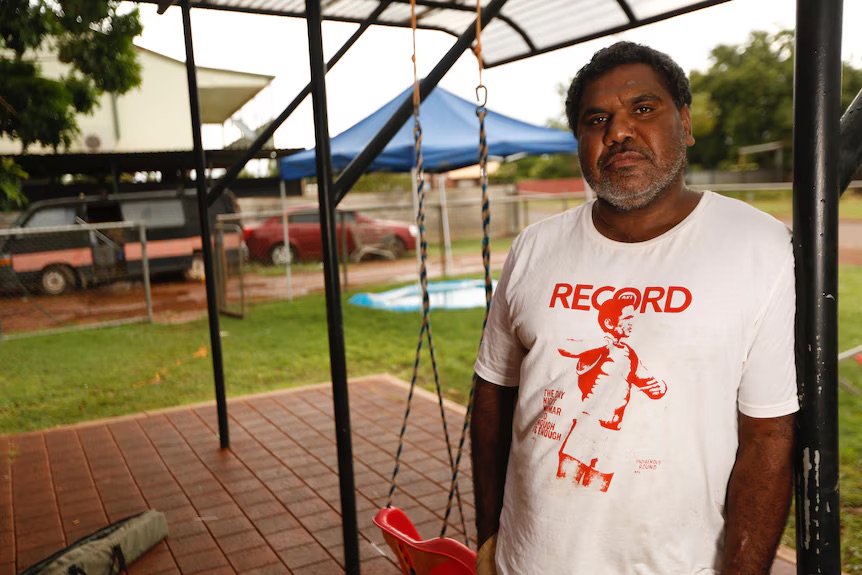
Warumungu leader and Tennant Creek resident Jimmy Frank Jupurrurla questioned the disparity.
"I would like to know why we don't have the same power arrangements in the NT as they do in remote South Australia," he says. "We are remote too."
Council members said disconnections spike when temperatures exceed 40 degrees, with many homes poorly designed for extreme heat or cold.
"When it's hot, people stay inside and use more power, and most new houses only have one room with air conditioning," Mr Jupurrurla said.
"If the power gets cut off, we all go to a relative's house where the power is on. This puts further stress on families. It creates overcrowding, and you get issues with scabies and rheumatic heart disease."
A person surveyed in the report was more direct: "The houses themselves are pretty ******, so if you built better, [if they] had insulation, that's also going to be really helpful.
"A lot of these homes are owned by the Department and they're not energy-efficient homes; they haven't been maintained appropriately to support energy efficiency. It's challenging for us, [we are] trying to support [residents, but] they're quite often at the mercy of the challenges that come around getting homes maintained and repaired."
At a meeting in Yulara last week, CLC delegates endorsed the report's recommendations for stronger national protections for vulnerable energy customers, including better reporting and accountability from retailers.
It called for performance-based monitoring to reduce disconnections, clearer hardship metrics to identify struggling customers, and the removal of barriers preventing prepayment households from accessing rooftop solar, energy efficiency upgrades, and community microgrids.
Other recommendations include more assistance during extreme weather events, a national Priority Services Register to coordinate support for vulnerable customers, and the removal of mandated prepayment systems so all Australians have equal protections and service options.
"Closing the Gap target 9B commits governments to ensuring that by 2031, all First Nations households receive the same level of essential services and consumer protections as all Australians, regardless of where they live," Dr Douglas said.
"To achieve this target, prepayment reform is critically needed."



