


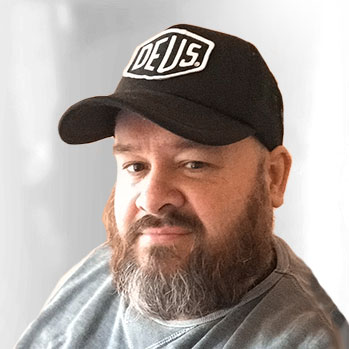

Years before Malcolm Turnbull handed a Prime Minister's XI cap to a promising trundler named Brendan Doggett - one of eight Indigenous men given the honour from the highest office in the land - an unassuming allrounder from Cairns took guard in the middle of Manuka Oval.
Barry Weare was a selection of John Howard, and the Gimuy Walubarra, Yidinji and Gunggandji man was something of a trailblazer thrown under the national spotlight for the annual 2005 touring match.
"I can remember meeting the Prime Minister the night before at Government House because he was not able to be there on the day," Weare told National Indigenous Times.
The annals of PM's game lists in order of Indigenous appearances: Matt Bradley first, then Barry Weare, before Dan Christian, D'Arcy Short, Brendan Doggett, Scott Boland, Djali Bloomfield and Charlie Anderson followed.
While Doggett and Boland went on to represent Australia in tests, Weare's own story saw the him slip into relative obscurity of playing matches back in the suburbs. However, nothing will diminish the lustre of that shining moment in the nation's capital on January 25, 21 seasons ago.
"I was playing first grade in Brisbane at the time when we played against Pakistan," he said.
"It was a great day, but it was cool, and I remember it also being quite wet...but it was a massive crowd back when it was a one-dayer, and I think I got about 15 not out from memory.
"I came in late in the inning and we were trying to get a score up, so I was just trying to give the strike to Michael Bevan, really. I also had a bowl, had a couple of dropped catches off me, but I still had a really good time."
While also playing three one-day fixtures for the Queensland Academy XI against Papua New Guinea in 2007 and countless appearances for Queensland Country at national championships, it is what Weare has achieved on the other side of the picket fence that has been his biggest contribution to the game.
Weare had as good an eye for spotting First Nations talent as he does for a cover drive long before cricket authorities began to put Indigenous Reconciliation Actions Plans and Aboriginal talent identification programs in place.
That was around the time Doggett, a young fast-bowling carpenter, was happy enough to steam in and roll the arm over in Toowoomba grade cricket every Saturday.
Within the next decade, the 31-year-old was the recipient of Baggy Green cap #472 following the traditional footsteps of #370 Jason Gillespie and standing beside #463 Scott Boland for the Perth Test against England in November, the Worimi man also becoming the fifth Aboriginal person to achieve the historic feat that includes Faith Thomas and Ash Gardner.
"To be the third Indigenous man from 470-odd caps is pretty cool, I think," Weare said.
"I can't remember what year we took him away to the Imparja Cup, but yeah, he played for the same club as me at Wests in Brissie.
"I reckon he just started in grade cricket where the following year they picked him at the QAS (Queensland Academy of Sport). Then it took just another season down the track before he was playing first-class cricket."
While crediting former Test quick Andy Bichel for working on Doggett's action, Weare was rapt to watch the rookie absorb the words of wisdom at Imparja's national Indigenous carnival.
"I was just helping out from a perspective of when we took him away and they already have their club coaches that we are managing him as a human being and just always being around for him to ask questions," Weare said.
"Funny enough though, his brother was working away in New South Wales, and he was playing for the opposition at the Imparja Cap, so it was pretty funny watching two brothers go at it."
Weare played a significant role in guiding D'Arcy Short, whose path to fortune and fame was unique - and vastly different to Doggett's steady rise through the ranks.
The Migunberri man has built up his reputation almost solely from Twenty20's Big Bash League and has gone on to represent Australia no less than 31 times, including on eight occasions in one-day internationals.
Short's emergence first came about via fleeting appearances for the national Indigenous set-up back home in the Top End.
"I remember having a long conversation with him once," Weare said.
"We took a group up to the Arafura Games, and he was a part of that group.
"He was a very young man, he was only 18 or 19... he went to hook into the gym a bit and it has been unbelievable."
Weare, now also an Indigenous tour operator, these days mentors via his state's First Nations Cricket Advisory Committee - including a role in the selection process of the annual Indigenous North Queensland versus South Queensland white-ball trials ahead of every Imparja Cup.
Indigenous cricket in Queensland, unlike other states, has been forced to split its geography in half out of necessity to cast the net out wide and unearth talent to its long-term benefit.
"We've always had this philosophy in Queensland, which has always been different and unique to everyone else, which is that we've wanted to utilise this as a pathway to push players up into (Brisbane) grade cricket," Weare said.
"We don't want this to be the be-all and end-all because some of them are just getting in touch with their own culture, as they have only just found that they're Indigenous.
"We are trying to help them realise that, but also to push them into cricket pathways, so they've got an opportunity to go as far as they can or want to go."
That is quite reflective of Weare's overall attitude to the game that has included opportunities and memories that were beyond his wildest dreams.
Weare has captained internationally, toured with an Indigenous side to England in 2001 in addition to the level 3 coach leading another Indigenous squad in 2012 for an Indian tour.
"I remember one of the years we had both D'Arcy Short and Josh Lalor on tour when I first coached the (Australian Indigenous) side to India for about a month," Weare said.
"I love this sport and how it has taken me places."



