




Aboriginal and Torres Strait Islander people remain twice as likely to be left offline, according to a new report; with experts warning digital exclusion continues to be deeply entrenched across remote Indigenous communities.
The Mapping the Digital Gap: 2025 Outcomes Report, released by RMIT University and Swinburne University of Technology, draws on three years of on-Country fieldwork in 12 remote First Nations communities between 2022 and 2024.
Researchers collaborated with local Indigenous organisations and community co-researchers to ensure cultural authority over data, with community leadership and co-design central to the project's approach.
"All data collected is given back to the community through annual outcomes reports, with digital inclusion plans to support community-led and place-based solutions," said RMIT Professor Lyndon Ormond-Parker, co-investigator and proud Alyawarr man.

The report compares digital inclusion levels for First Nations people with nationwide Australian Digital Inclusion Index (ADII) scores across remoteness, age and location. It tracks progress towards Closing the Gap Target 17, which aims to equalise digital inclusion by 2026.
Using an expanded dataset, the researchers found a 10.5-point national digital gap between First Nations and non-Indigenous Australians. In the very remote communities surveyed, that gap more than doubled, driven by limited infrastructure, strained services and low household connectivity.
"Connectivity is an essential service nowadays, especially in remote communities," said co-investigator and RMIT Associate Professor Daniel Featherstone.
"But there is a range of barriers to having affordable and reliable internet access in these communities - largely due to limited or strained infrastructure, low household connectivity and high reliance on prepaid mobile services."
.jpeg)
Access remains the largest contributor to the divide, sitting 42.4 points below the national score for non-First Nations Australians. The access gap is almost four times larger than the affordability gap (11 points) and more than double the gap in digital ability (19.3 points). Elders, low-income households, people living with disability and community members with limited English continue to face the highest barriers.
But there are signs of progress, says the research team, noting a rise in digital participation in remote First Nations communities.
The research recorded a significant 8.7 point improvement in digital ability for First Nations people in very remote areas, rising from 45.8 in 2023 to 54.5 in 2025.
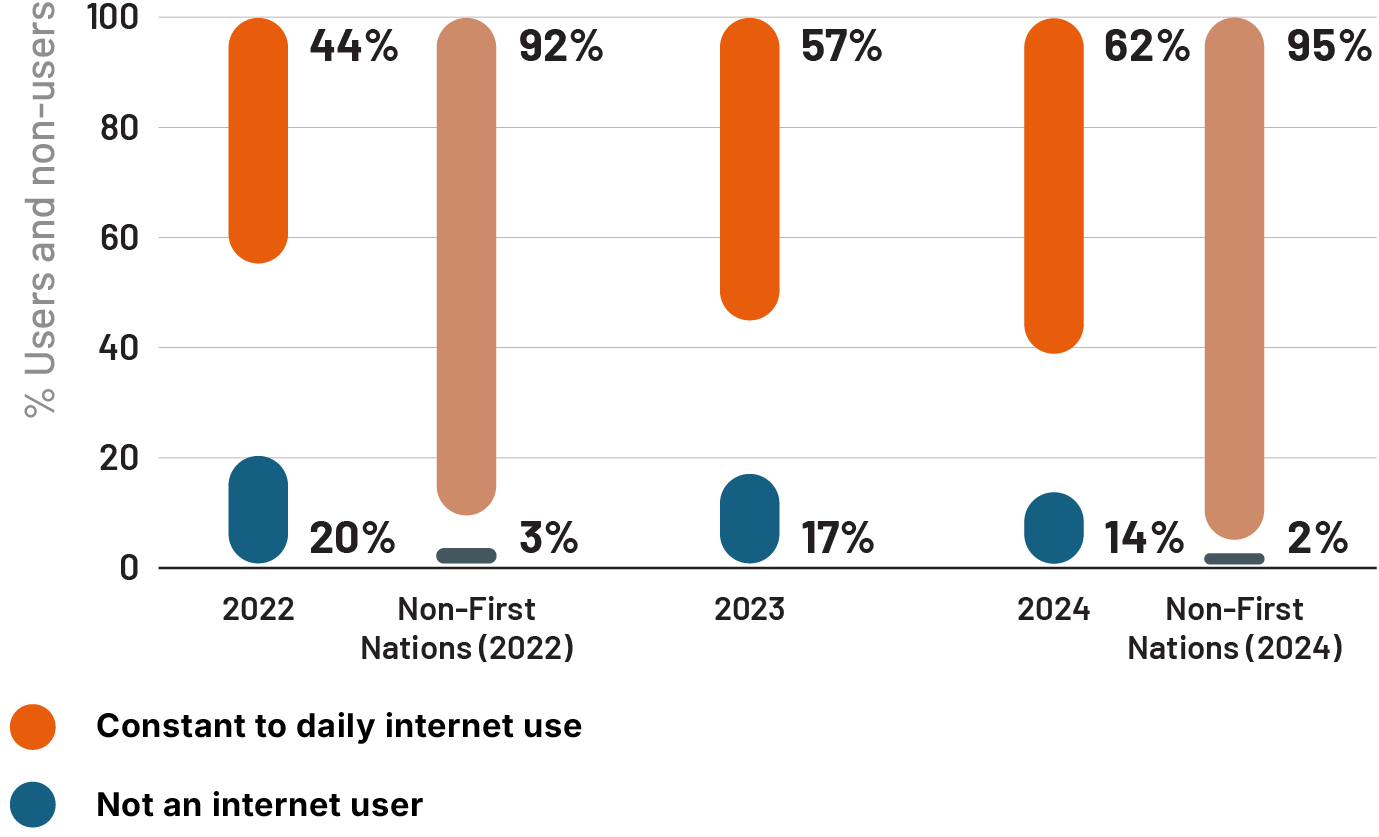
Similarly, the research team found that daily internet usage by First Nations people in the study's participating remote communities climbed to 62 per cent in 2024 - an 18 per cent jump from on-site surveys in 2022.
Lauren Ganley, proud Kamillaroi woman and Head of Telstra's First Nations Strategy & Engagement, said reliable connectivity was vital in improving digital inclusion for remote First Nations communities.
"Quality connectivity can be life-changing for remote First Nations communities, unlocking access to opportunities and growth," Ms Ganley said.
Over the course of the study, Telstra had provided mobile, fixed-line phone and broadband services in remote First Nations communities - improving their connectivity and digital accessibility.
"Telstra is proud to partner in this important work and help bridge the digital gap, so communities can connect, learn and thrive."

Looking to the future, First Nations organisations will be better equipped to shape their own digital futures as new tools and data become available - putting Australia on track for Closing the Gap Target 17.
Under an expanded national project with support from the Australian Government, the ADII team last month launched the First Nations Digital Inclusion Dashboard - empowering local organisations and communities to access up-to-date data to inform local decision-making.
As Australia's first interactive, national data set tracking First Nations digital inclusion, this will give First Nations communities the tools to effectively track their progress and advocate for further improvements, ahead of the next Mapping the Digital Gap Report, published on December 3, 2026.



