




Aboriginal businesses added $3.4 billion to the Northern Territory economy in 2024-25, a contribution nearly the size of the Territory's entire Public Administration and Safety industry, according to a landmark report launched in Darwin on Thursday.
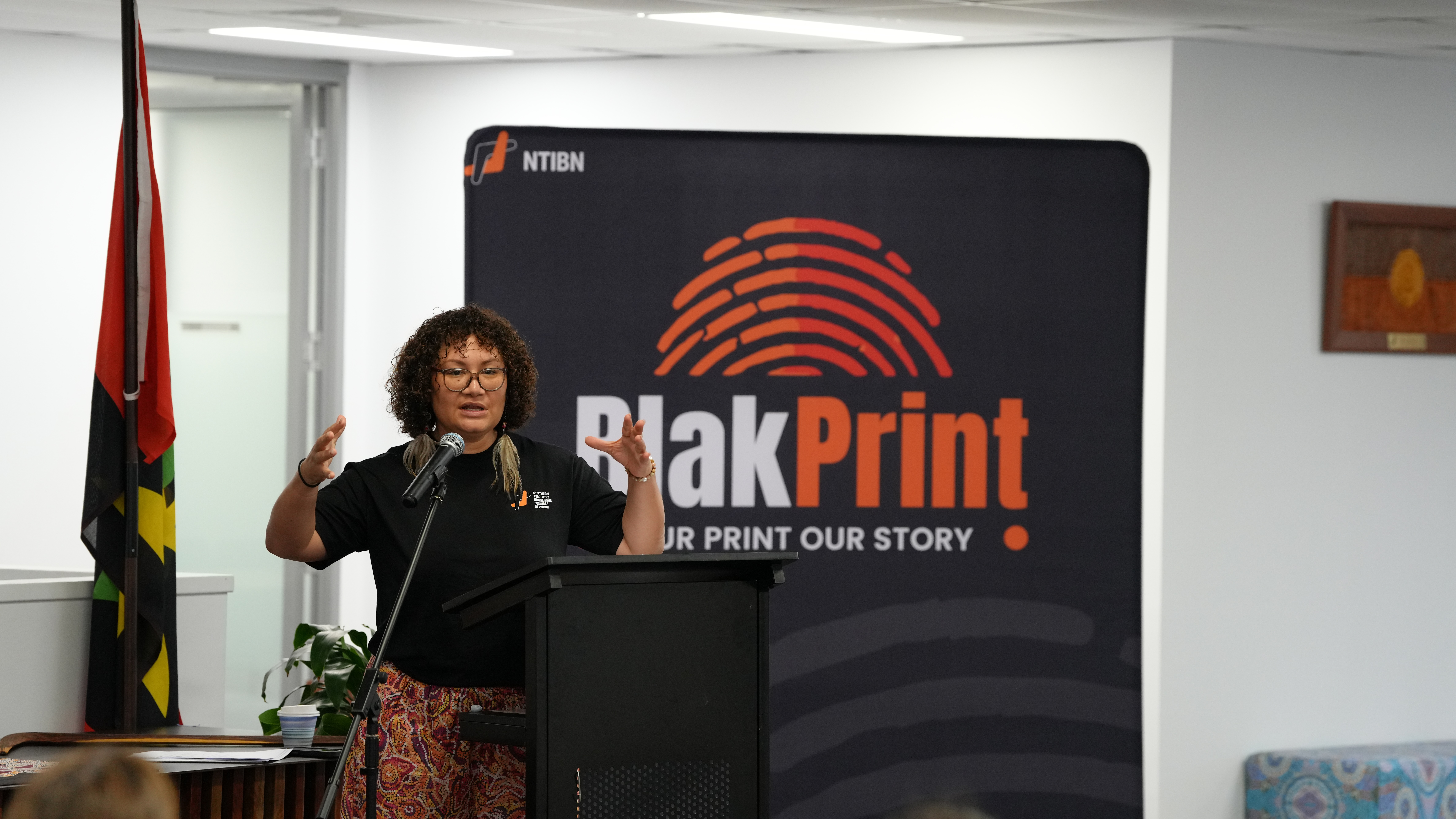
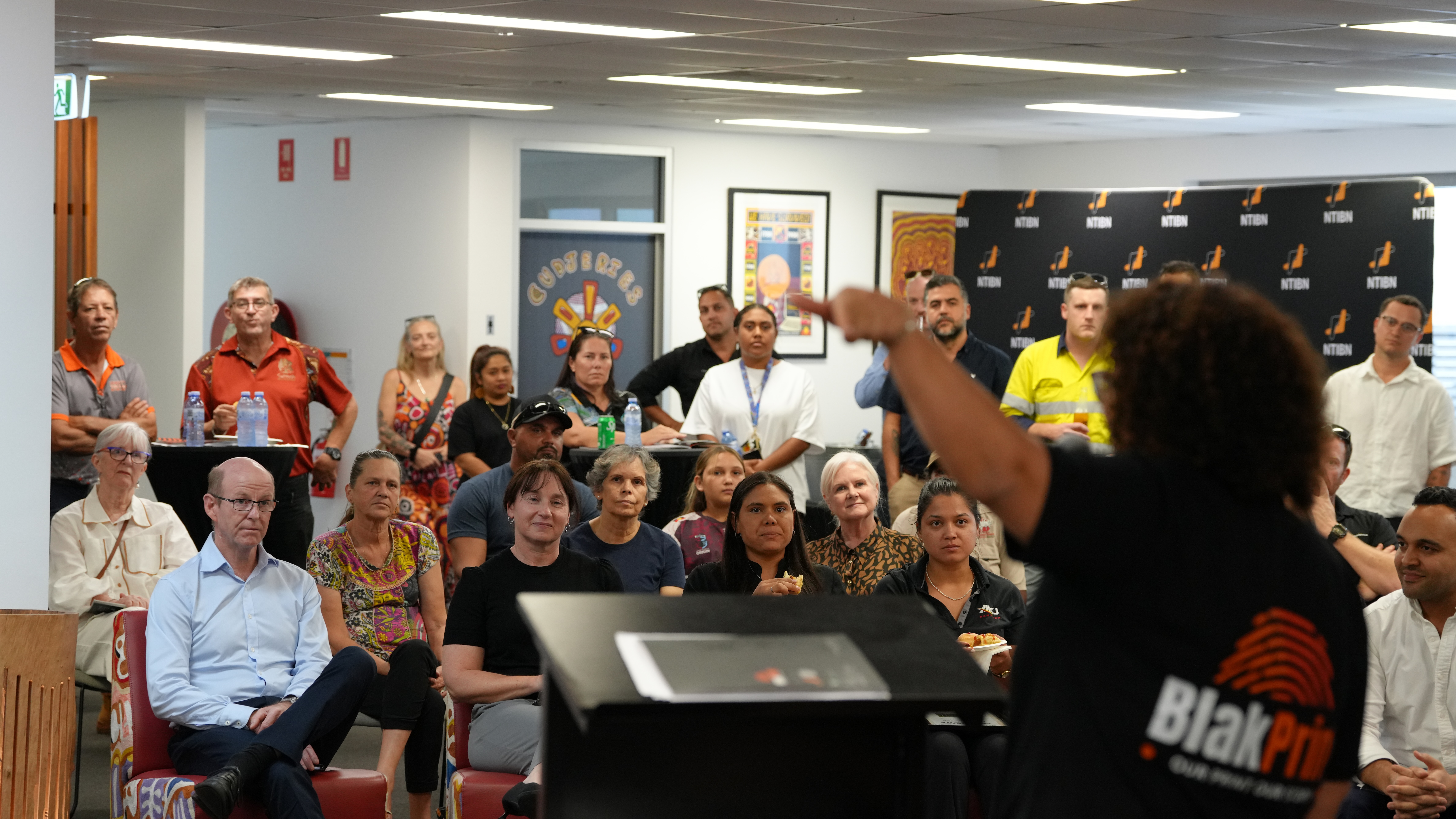
The BlakPrint Report, released by the Northern Territory Indigenous Business Network (NTIBN) at the opening of its new Darwin Business and Employment Hub in Winellie, is the first comprehensive measurement of the economic footprint of Aboriginal business in the Territory. Its headline finding is stark: Blak businesses generated 10.1 per cent of Gross Territory Product last financial year, employed 11,600 full-time equivalent workers, and contributed an estimated $843 million in tax revenue across all levels of government.
"Blak Businesses are not operating on the margins of the economy - we are a $3.4B economic asset and a growth engine for the Territory," said Naomi Anstess, NTIBN Chief Executive Officer.
The economic activity added by Blak businesses in 2024-25 came within $75 million of the gross value added of the Public Admin industry, the second-largest sector in the Territory behind Mining. On employment, the comparison is more striking again. The 11,600 FTEs employed by Blak businesses exceeds the 11,200 FTEs of the Construction industry, the largest market sector employer in the NT.
"The question is no longer whether Blak businesses contribute to the economy," Anstess writes in the report's foreword. "The evidence is now clear."
The report takes direct aim at the way Aboriginal economic participation has been discussed for decades. "For too long, Aboriginal economic participation has been framed through deficit language, disadvantage, dependency and gaps to be closed," Anstess writes. The Productivity Commission's 2025 Closing the Gap data found the NT was the worst-performing jurisdiction in the country, and Anstess warned in January that weak audit independence lets governments push the blame for those failures onto Aboriginal organisations. BlakPrint supplies the counter-evidence at scale.
A first for Australian economics
Behind the findings sits a piece of economic infrastructure that did not exist before this project: the Blak Economy Model (BEM), Australia's first computable general equilibrium model built to represent an Indigenous economy.
CGE modelling is the framework used by Treasury and governments across the country to assess major policies and projects. Traditionally these models contain one representative household and one representative firm. The BEM, developed by Deloitte Access Economics with Yamagigu Consulting over four years of work with NTIBN, introduces a second household and a second firm, both Indigenous, into the model. For the first time, the distinct behaviours of Blak businesses, their hiring patterns, their supply chains and their cost structures can be traced through the entire Territory economy.
The model was built on data contributed by Aboriginal businesses through NTIBN member surveys, one of the largest Blak business data samples ever compiled in the NT. The definition applied was deliberately strict: a Blak business must be at least 51 per cent Indigenous owned, managed and controlled, and based in the Territory. On that definition, Deloitte Access Economics estimates 854 Blak businesses were operating in the NT in 2024-25.
Anstess, an Erubam Le and Gomeroi woman born and raised on Larrakia Country, was confirmed as NTIBN chief executive in January after leading the organisation on an interim basis. She said the project represents Indigenous data sovereignty in action.
"For generations, Aboriginal businesses and communities have understood the value we create. BlakPrint is the first time we have been able to measure it at this scale and with this level of economic rigour."
Jay Edmondson, Partner at Yamagigu Consulting, said the report establishes an entirely new evidence base for Aboriginal economic development.
"The BlakPrint Report is a groundbreaking piece of Aboriginal-led research that transforms how we understand the Aboriginal economy in the Northern Territory. Grounded in extensive engagement with Aboriginal business owners and Aboriginal data sovereignty principles, it provides an unprecedented evidence base for Aboriginal economic development policy and investment."
The ownership premium
The report's most consequential finding may be its second scenario, which isolates the value of Indigenous ownership itself. The modelling asked what would happen if the Territory's Blak businesses were instead owned by non-Indigenous operators, hiring at NT-average rates.
The answer: the Territory economy would be $542 million worse off, and 8,701 Indigenous people would lose employment.
"Blak ownership is not symbolic. It materially changes economic outcomes," the report states.
The mechanism is straightforward. NTIBN member survey respondents reported an average Indigenous headcount of 56 per cent, against a Territory-wide average of 6 per cent. Some 91.4 per cent of respondents said they were more likely to hire Indigenous people, and 48.4 per cent sold most of their goods and services to other Blak businesses. That combination of hiring preference and tight procurement links draws thousands of workers into the economy who would otherwise remain outside the labour market, where the Indigenous unemployment rate sits at 21 per cent against a Territory average of 6 per cent.
The wage effects flow directly to households. The modelling found Indigenous ownership delivered an additional $24 million in income to Indigenous households in 2024-25, equivalent to a 15 per cent uplift in real wages per Indigenous FTE across the economy.
Just over half of the ownership premium, $291.5 million, comes from industries that would simply cease to exist without Indigenous ownership: Aboriginal Tourism, Indigenous Consulting, Care for Country and the Creative Industries. Aboriginal Tourism and Indigenous Consulting alone account for 97 per cent of that figure.
One survey respondent put the philosophy plainly: "Being able to set our mob up for success is paramount! Building an Indigenous empire where our mob can lead and look after our mob. Uniting our brothers and sisters in business and rising together to be fully self-sufficient!"
Evidence for the integrity debate
The ownership findings land in the middle of a national reckoning over who benefits from Indigenous procurement. The report is blunt about the implication: Indigenous ownership influences economic outcomes, which "emphasises the importance of Indigenous ownership verification and certification processes to ensure procurement policies are implemented as designed and opportunities are genuinely flowing through the Indigenous economy."
The timing is pointed. The report launched on the first day of the new financial year, the same day that the federal government's strengthened Indigenous Procurement Policy took effect, lifting the eligibility threshold to 51 per cent First Nations ownership and control, the same test BlakPrint applies. Those reforms followed sustained pressure over integrity, including ANU research published in December showing half of the IPP's contract value, around $7 billion, had flowed to just 18 companies, and industry moves in late 2025 to tighten Supply Nation verification.
Anstess, who also chairs the National Indigenous Business Chamber of Australia, told this publication in December that the concentration findings were "not a success story but a structural red flag". BlakPrint now gives that argument an economic foundation: if ownership itself generates $542 million and 8,701 Indigenous jobs in one jurisdiction, contracts flowing to businesses that meet the definition on paper only represent measurable economic loss.
From four employees to fifty
The report grounds its modelling in the businesses driving the numbers.
Stedman's Construction, based in Maningrida and operating since 1989, has grown from four employees to 50 under the ownership of Chris Stedman, a Warumungu man. The company prioritises local Indigenous employment in a remote community where opportunity is often limited, retaining construction and civil skills on Country and turning first jobs into sustained workforce participation.
AKJ Services, founded by Larrakia woman Jessie Risk in 2018, has grown into a major civil construction company while supporting Risk's brothers, father and mother to become business owners in their own right through employment, training, subcontracting and direct investment. The company maintains at least 30 per cent Indigenous employment across all levels, funds engineering scholarships, and brings hundreds of Aboriginal students onto its sites each year through self-funded industry days.
Rusca Bros, the Darwin earthmoving, construction and environmental enterprise founded by Sid Rusca and his wife Jenny in the 1970s, now employs 200 people under the leadership of the next generation, with nearly half its workforce Indigenous. Of its 14 apprentices, 12 are Aboriginal. The intergenerational transfer is already visible: Sid Rusca's grandson has established his own fencing business, Bulmeka, servicing Darwin, Palmerston and the rural area.
The $6 billion question
The report's third scenario models what happens if the Indigenous economy reaches parity with the Indigenous share of the Territory's population, growing from 10.1 per cent to 30 per cent of GTP by 2035.
The modelling puts the prize at an additional $6 billion each year for the NT economy, equivalent in scale to the entire Mining sector today, and $43 billion in net present value terms. Reaching the target would create 17,200 additional FTE jobs across the Territory by 2035, 13,000 of them Indigenous positions.
The gains would then compound across generations. Drawing on research linking parental employment to children's schooling and future earnings, the modelling estimates an intergenerational dividend of $2.2 billion to 2035 and a further $6.1 billion between 2035 and 2050, as the children of newly employed workers enter the labour market at higher rates.
"If we are serious about rebuilding the Territory economy, growing the private sector and creating prosperity that reaches every part of the Territory, then growing the Blak economy must be part of that future," Anstess said.
The reform agenda
The report is blunt that the growth scenario will not materialise on current settings. It sets out five recommendations to the NT and Australian governments.
First, strengthen the NT Government's Aboriginal Procurement Policy and the federal IPP, tightening exceptions on major projects, introducing enforceable compliance mechanisms and public reporting, and setting minimum Indigenous workforce benchmarks. The report calls for federal IPP targets to keep expanding in line with growth in the Indigenous economy, going beyond the trajectory to 4 per cent by 2030 announced this week.
Second, re-establish the NT Government's Aboriginal Business Development Program as a dedicated, Aboriginal-controlled grant and capability program, including quarantining 30 per cent of mainstream business grant programs for Blak businesses.
Third, require all NT government-funded major projects to include set-asides or provisional sums reserving specific opportunities for Blak business procurement.
Fourth, develop a Northern Territory Indigenous Economic Development Strategy with legislated targets, formally embedding private Blak businesses as a central pillar of economic development policy and mandating Indigenous Data Sovereignty principles.
Fifth, provide long-term, indexed funding to NTIBN and the National Indigenous Business Chamber of Australia to grow the sector in the Territory and nationally.
The findings carry weight beyond the Territory. The BEM creates a replicable framework that can be applied to Indigenous economies in other jurisdictions, and NTIBN has signalled the modelling will improve as data collection deepens over time.
The project was funded by the Department of the Chief Minister and Cabinet, Shell Australia and the National Indigenous Australians Agency, with governance oversight from the NTIBN Board and delivery led by Anstess, General Manager Deb Anstess-Vallejo and Lead Strategic Growth and Projects Sharna Petherick, alongside Cedric Hodges of Deloitte Access Economics and Shivaan Bardolia of Yamagigu Consulting.
Edmondson said the conclusion is unavoidable: "The report shows that growing the Blak economy is fundamental to growing the Territory economy."
Anstess closes the report with a line that doubles as its thesis. "Every economy leaves a footprint. This is the BlakPrint of the Northern Territory."



