


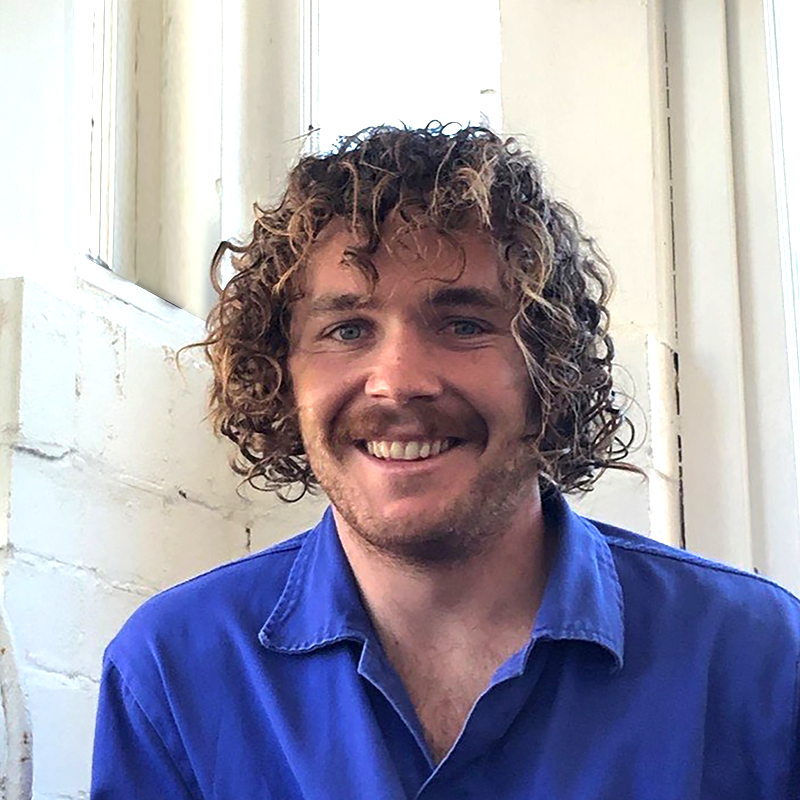

Throughout his career, Professor Braden Hill has worked to empower Indigenous students and staff to drive the change in structures around them.
The core of this year's NAIDOC Week theme, 'The Next Generation: Strength, Vision & Legacy', nods to the work already achieved by many, Professor Hill says; work that doesn't need "permission" to go further.
Professor Hill is one of a list of guest speakers at Friday's National NAIDOC Forum in Boorloo.
"This year's theme speaks to the work many of us have been doing for a long time, backing the next generation. Throughout my career, and at Edith Cowan University, I've focused on creating Indigenous-led support systems where Aboriginal and Torres Strait Islander students and staff are encouraged to lead, not just participate," Professor Hill told National Indigenous Times.
"That means challenging structures that weren't made with us in mind, and making sure our communities aren't navigating higher education alone or in survival mode.
"Leadership is already in our communities."
His role is to "ensure our institution listens, invests, and gets out of the way when it's not needed", he said.
"Academia should be a space where leaders and professionals come to learn, grow, and take back diverse skills to strengthen their own lives, their families, and their communities," Professor Hill said.
Professor Hill is Deputy Vice-Chancellor of Students, Equity and Indigenous at Edith Cowan University.
He had previously held a similar position with Murdoch University, where he also led its Kulbardi Aboriginal Centre, Health Service and Equity, and Social Inclusion Office as well as previously heading ECU's Kurongkurl Katitjin Centre for Indigenous Australian Education and Research.
In November, Professor Hill was presented with the Distinguished Alumni Award by Murdoch University for his work.
Last month, he was named as a finalist for the National NAIDOC Education Award, with winners set to be named on Saturday.
It's a field he's spent the bulk of his career and research, alongside identity politics, queer identities in education and transformative learning, also being chief to a project investigating lived experience of Indigenous LGBTQI people tasked to help community health organisations to better service delivery with queer-identifying mob.
"We know that for Indigenous and/or queer kids, education systems can be some of the most harmful spaces they'll move through. So, if we're serious about change, we can't treat identity like it exists in silos. Inclusive education has to reflect real people in all their complexity or it's not really inclusive at all," Professor Hill said.
He added "if we're serious about addressing the socioemotional wellbeing challenges our peoples face", saying there are communities still unpacking the influence of religion and colonialism on attitudes regarding sexuality and gender diversity, "we need to be honest about these legacies and the impact they continue to have".
While there's been some progress in education spaces, for Indigenous people within education broadly, Professor Hill said deeper, structural change is still needed.
"That means more than scholarships, artwork and welcome signs. It means having Indigenous knowledges, leadership, and perspectives across the institution, and not just when it's convenient," he said.
"It also means shifting the default settings of universities, so that Aboriginal and Torres Strait Islander students don't have to work twice as hard just to feel like they belong. Cultural safety, anti-racism strategies and practice, accountability mechanisms, and Indigenous governance are still too often optional. That has to change."
Online, Professor Hill has grown an audience to over 50,0000 followers, both addressing and tackling racism, mental health, points of - often divisive and discriminatory - social conversations, among other broad topics.
The way he sees it, the digital space is a platform to be utililised for direct communication, connecting and growing as a place for challenging ideas. In regards to his content, it's an extension of his work.
It also "cuts through noise" and brings those who mightn't otherwise engage with academia, journal articles and panel discussions.
For him, it's also about visibility - "showing that there are different ways to lead, and many ways to be Blak in the world. For me, it's just an extension of the work, it's about showing up, being accountable, and using whatever platforms we have to make change," Professor Hill said.
Ahead of speaking at the NAIDOC Forum, he has an idea for what attendees, particulalry those who are younger, might take away from it.
"You don't have to wait to be asked. You don't need permission to lead. If you're standing up for your community, speaking your truth, or making space for others, you're already doing the work," Professor Hill said.
"The systems around us can be tough, but you're not alone. Find people who'll back you, challenge you, and walk with you. And when you get into rooms where decisions are made, remember why you're there and hold the door open for the next person. Don't waste time trying to build a career identity "brand", it's nonsense. Your real "brand" is the impact of your work.
"When that speaks for itself, people will walk with you because they trust your intent, not your image. They'll see you're in it for the right reasons, not for ego, but for something bigger than yourself."
National Indigenous Times is an official media partner of Perth's National NAIDOC Forum. Tickets can be purchased on Humantix.



