


For decades, the warmth and generosity of 60,000 years of Indigenous culture has been shared to sell the Australian story to the world. Now, Tourism Australia is calling on the next generation of First Nations talent to step up and shape that narrative from the inside.
The national agency has launched its First Nations Graduate Program, an immersive 12-month, full-time paid initiative designed to place Indigenous excellence at the heart of the nation's visitor economy.
This isn't just a standard entry-level job. Graduates will undertake at least two rotational placements across key departments, including Marketing & Events, Communications & PR, and Business & Strategy. It is a rare opportunity to gain lifelong skills while directly engaging with industry stakeholders and taking true ownership of the work.
Tourism Australia is publicly committing to a workplace that is both accessible and culturally safe. Driven by their Reconciliation Action Plan, they are actively building an environment where First Nations individuality is celebrated and voices are genuinely heard. Whether you hail from the city, the coast, or the bush, the agency recognises that your unique perspective is exactly what the industry is currently missing.
The program offers highly flexible work practices, a robust learning and development platform, and above-minimum superannuation. For recent graduates, or those completing their studies in 2026, this is a tangible chance to build a career in a space that values Country and Community just as much as you do.
Applications for the post-July 2026 intake close on 30 April 2026. Candidates must submit a CV and a cover letter outlining their career aspirations and collaborative experience online.
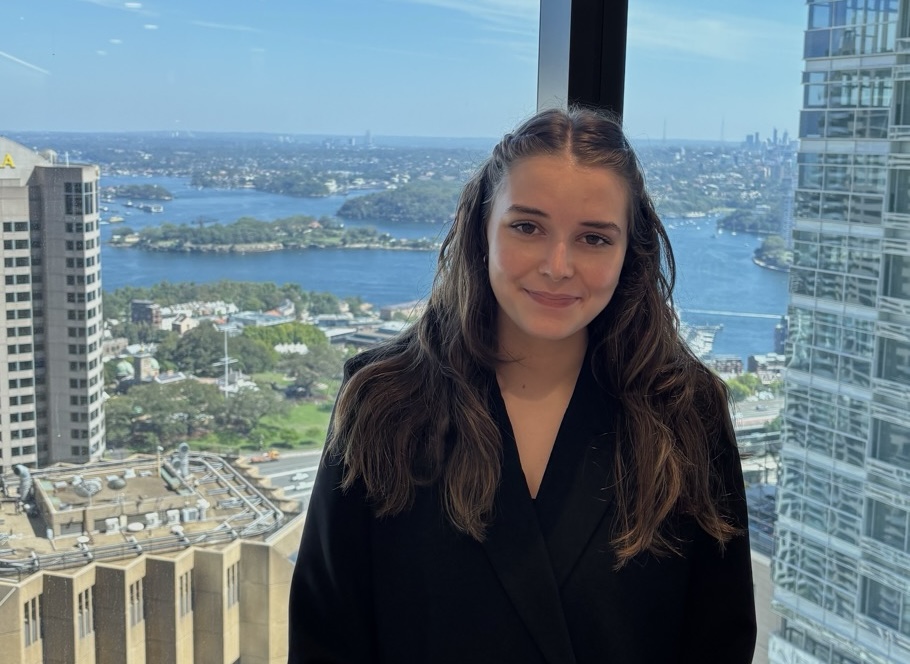
Molly Cicak (Wiradjuri/Central NSW), a second-year student studying a Bachelor of Science and Social Sciences at UNSW, recently completed a 10-week internship with Tourism Australia. She spoke with National Indigenous Times about the experience.
What was your highlight of doing a placement with Tourism Australia?
"My main two highlights were getting to be a part of the new RAP; seeing all the processes and people that make it happen. Attending senate estimates; getting to see all the behind the scenes and getting to be at parliament house while it all happened. But I'd say an overarching highlight was having the flexibility and trust in the workplace to apply my skills, ask questions, and join in on anything I was interested in."
What are the three things you learned during your placement?
"There was a lot for me to learn in the world of corporate communications.
It was another level of emailing and talking to people in the office, liaising with my team and managers to get the job done.
I learnt a lot about public speaking, in a more applicable sense than university. I was given a lot of experience within presenting data and information and was able to grow my skills in public speaking and really learn how to present point of views effectively and for different audiences.
I would also say I learnt a lot about adapting to new environments and asking questions to get where you need to be, this experience was very different to university with opportunities I didn't expect this early on in my career and so it took a bit to get used to.
But at the end of the day, it allowed me to change my mindset and be open to learn all that I could and learning the importance of simply asking questions."
How has your placement changed your perception of working life or working in tourism? Has it given you any clarity about your own goals and aspirations, and if yes, how so?
"My placement really made me see that working life, full-time corporate work, isn't so scary.
My time at tourism Australia allowed me to talk to so many people and hear so many ways of approaching a career; how they got here, things they struggled with, which made it all seem much less daunting. In fact, being in this space, and doing work that aligned with my values and with my skills, and having people that were genuinely interested in where I was going, allowed me to really indulge myself on what I can bring to my work, what my strengths are, but also what I can work on.
It gave me a sense of what companies I could work for, what I would need to do to get there, and what it might look like being there.
It is in this way that in going back to university my mind is open to the possibilities after I graduate, where I can see a clearer picture of what I want to pursue and how I can get there, and really it is not as scary as it seems."



