On my recent visit to the United Kingdom the last thing I expected to be doing was following in the footsteps of my ancestors, the first peoples of Scotland and Ireland, the Picts and Gaels, collecting bush tucker.
Wild food foraging in the UK is having a renaissance and more of the countries' wild larder is appearing in home cooked meals and restaurants. In a nation that has lost over 95 percent of its native vegetation this may seem a difficult task however it was surprising how productive strips of native vegetation along water courses and laneways could be.
It helps too that Great Britain and the rest of Europe are undergoing a rewilding revolution. And even if the cynic in me questions whether it is just big business trying to buy public relationship kudos and gain carbon credits for polluting industries, more public land is being returned to the wild which equates to more opportunities to go foraging.
So, we did. Our first stop was Google, where after a quick search we were able to find a Visit Scotland site called "Guide to Wild Food Foraging in Scotland" which provided ethical advice on wild foraging. It also highlighted courses and events taking place around the country. Another excellent publication I downloaded which was developed as part of the Gaelic Foraging Project was "Foraging for Wild Plants" by Roddy Maclean. This publication explores the link between nature and the language and culture of the Gaels whilst providing information on edible native plants.
Now that I'd done the research, it was time to indulge in some foraging and find something edible. In the end it was a simple case of wandering along a path in our local neighbourhood and finding brambles. Something I had confidence in identifying.
Brambles Rubus fruticosus (or blackberry as it is known in Australia) is found throughout the UK and Ireland. Known in Gaelic folklore as "an dris bheannaichte" - the blessed briar, we encountered it wherever we travelled, from the Scottish Highlands across to coastal Donegal and into the suburbs of London. A thorny scrambler it produces juicy plum red fruit that need to be carefully plucked from the bush, so your skin remains intact.
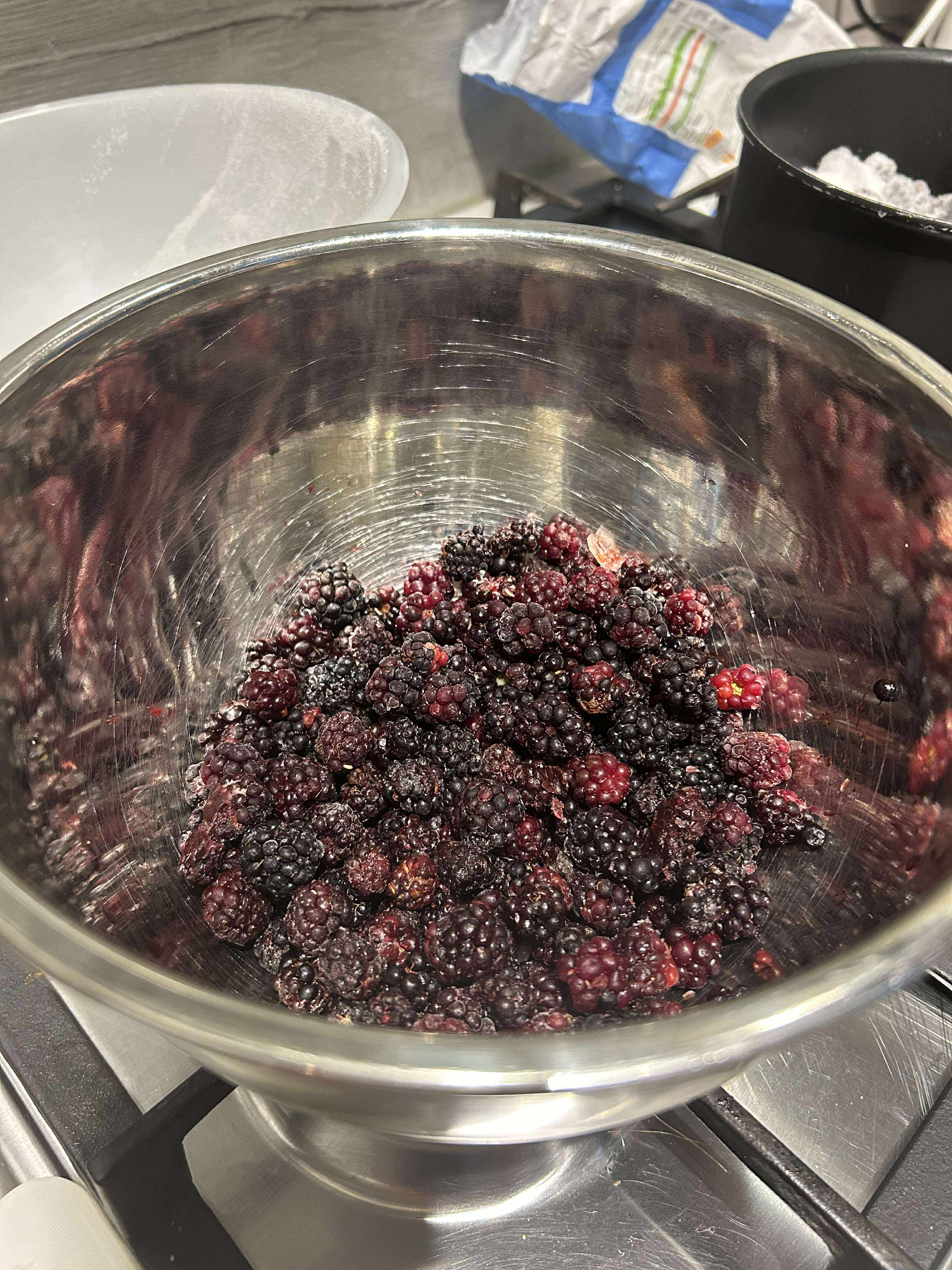
After a half hour wandering we'd filled a two-litre ice cream container. Being quite tart we planned to make some bramble jam which we did by combining two cups of brambles and a cup of sugar and reducing to an even consistency. Brambles can also be added to cakes and puddings, whilst tea can be made from the leaves.
Blackberry is an invasive weed in many parts of temperate Australia and if you are unlucky enough to have it on your property or in your neighbourhood why don't you make use of it before you pull it out. Till next time "Sla'n go fo'ill".