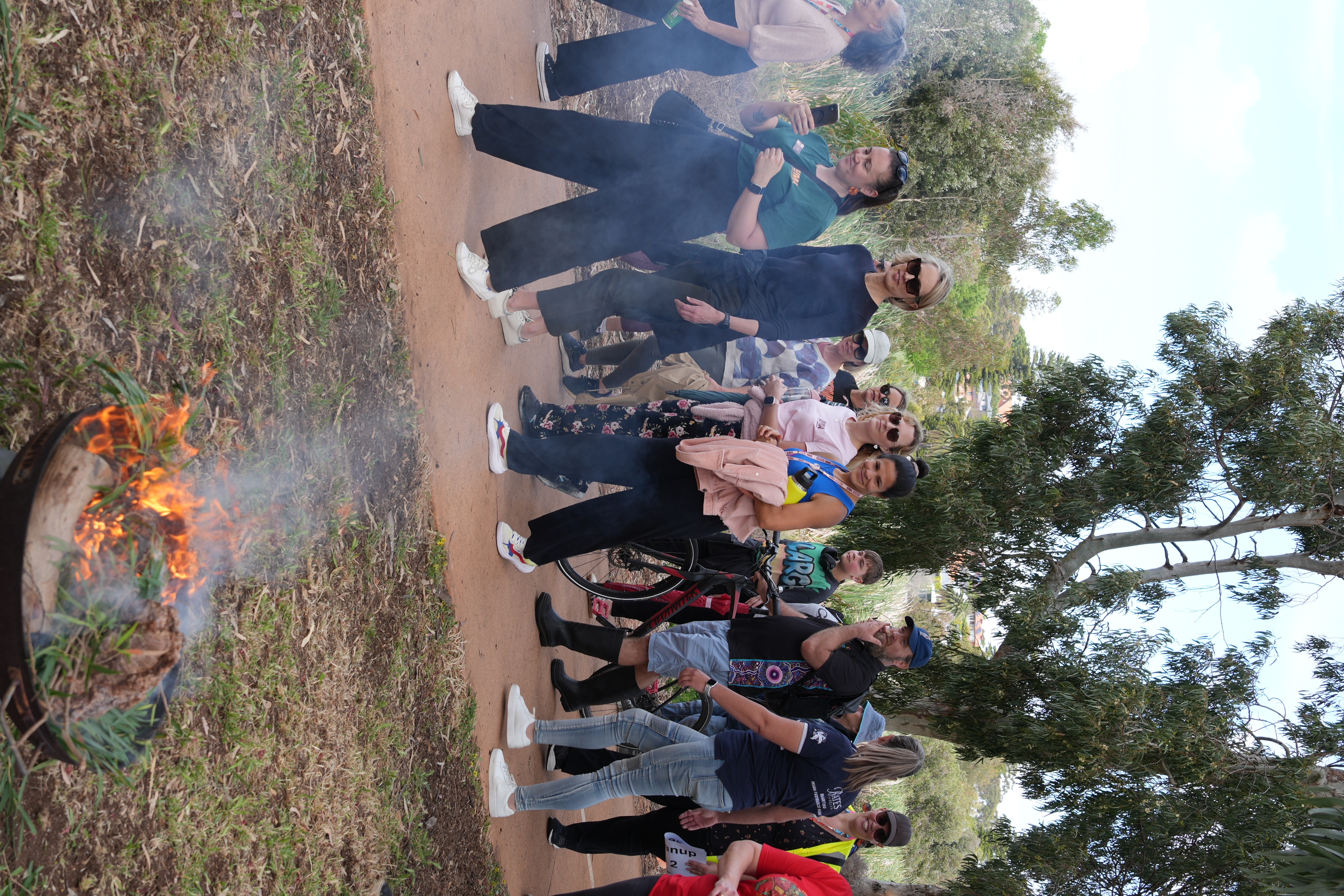
The Walk for Reconciliation, Karni Walbirniny Koorliny / Walk of Truth and Healing, at Galup on Thursday saw hundreds of people come together.
Organisers described the Walk as "a powerful moment of truth-telling, reflection, and solidarity at the culturally significant Galup (Lake Monger)".
"This walk honours the storytelling passed down to Doolann-Leisha Eatts (Garlett) by her grandmother, Yurleen Bennell (Garlett), and acknowledges all Carriers of the Galup massacre story," Reconciliation WA said in a statement.
Galup is a place of deep cultural and historical significance for the Whadjuk Noongar people.
Aunty Glenda Kickett said on Thursday: "This is an important day for us and Galup is a very important place for our Noongar people, our Whadjuk Noongar people, and the massacre that occurred here for our people... and to commemorate that which was a settler's name being changed to the original Noongar name which is Galup, place of fire."
"Through the Arts Project we have been advocating for the Whadjuk Noongar name of this place to be restored and for a memorial to be built here. We are really happy to say that the community and Town of Cambridge supported this and the original name has now been restored."
Aunty Glenda shared a message from her mother which featured in the Virtual Reality Galup project.
"She said if you come here take some sand and throw it in the water. It is an old Noongar tradition to show respects to the spirits and the people who have passed, when you come here next this is something you can all do," she said.
Noongar artist and curator Ian Wilkes, who played a critical leadership role in the Galup Arts Project and Galup VR Experience, said "we're allowing people to kind of come in and listen to our yarn about what it means to look into and feel the energy of Galup".
"Galup means place of fire for Noongar people and it's always been a place of family and connecting and it's also got one horrible history about a colonial massacre that happened here at this lake in 1830," he told National Indigenous Times.
"So, we want people to come in here and learn these histories but with good faith, good peace and good harmony, and come together to walk for reconciliation and the future of this place.
"You can still come here, you can still enjoy the beautiful boodja - the Country, you can have your run around this lake... bring your family here, bring your koolanga here, walk your dog. It's a beautiful lake. We don't want people to come here feeling any forms of negative impacts or guilt or shame. We want people to come here with a reverence and a respect, and a deeper knowledge for this place."