



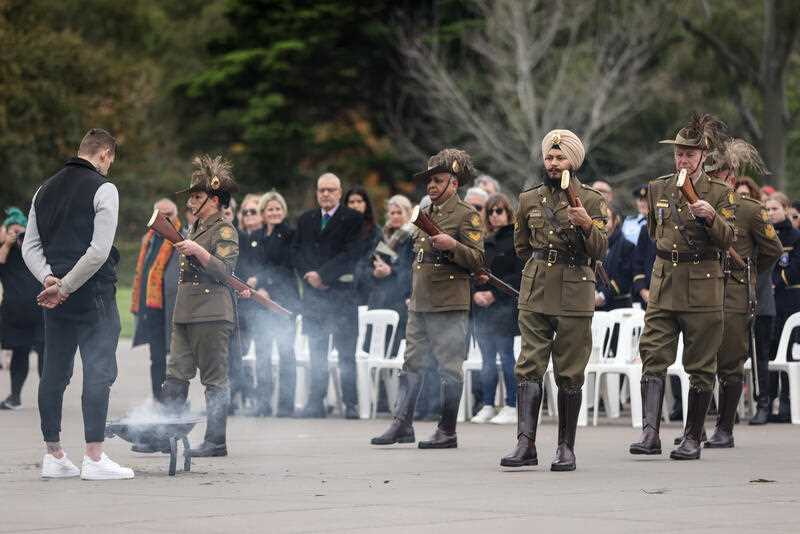
First Nations people who served on behalf of Australia have been honoured at the Victorian Aboriginal Remembrance Service held on Wednesday.
The commemorative service is held each year during Reconciliation Week, recognising the the sacrifice and courage of First Nations Victorians and acknowledges that for far too long their contribution was not adequately commemorated.
Wednesday's service at Melbourne's Shrine of Remembrance included the story of Charles Melbourne Johnston, an Aboriginal man who served in the Australian Imperial Force during the First World War.
A brave and natural leader, Charles Johnston was awarded the Distinguished Service Order and mentioned three times in dispatches. Despite this, his Aboriginal heritage was hidden due to discriminatory enlistment standards.
His name now proudly appears on the Australian War Memorial's First World War Indigenous service list.
"The bravery and resilience shown by First Nations people who served our country is a testament to the strength of their culture," Victorian Deputy Premier Jacinta Allan said.
"The treatment they endured in the aftermath must never be repeated and may this service and the indigenous service list always stand as powerful reminders of their sacrifice."
Deputy Premier Allen alongside Minister for Treaty and First Peoples Gabrielle Williams and Minister for Veterans Natalie Suleyman joined the Victorian Aboriginal Remembrance Committee at Wednesday's service.
Victorian Aboriginal Remembrance Committee member Andrew Peters reiterated Ms Allan's words, saying that remembering Indigenous veterans was in the spirit of reconciliation.
"The Victorian Aboriginal Remembrance Service is a wonderful and important opportunity to remember and honour the lives and contributions of Aboriginal and Torres Strait Islander people who have served and ensure their legacy lives on for future generations in the spirit of reconciliation," Mr Peters said.
Minister Williams said the recognition of Indigenous service men and women is a stark reminder of the importance of implementing the Uluru Statement from the Heart's core principles.
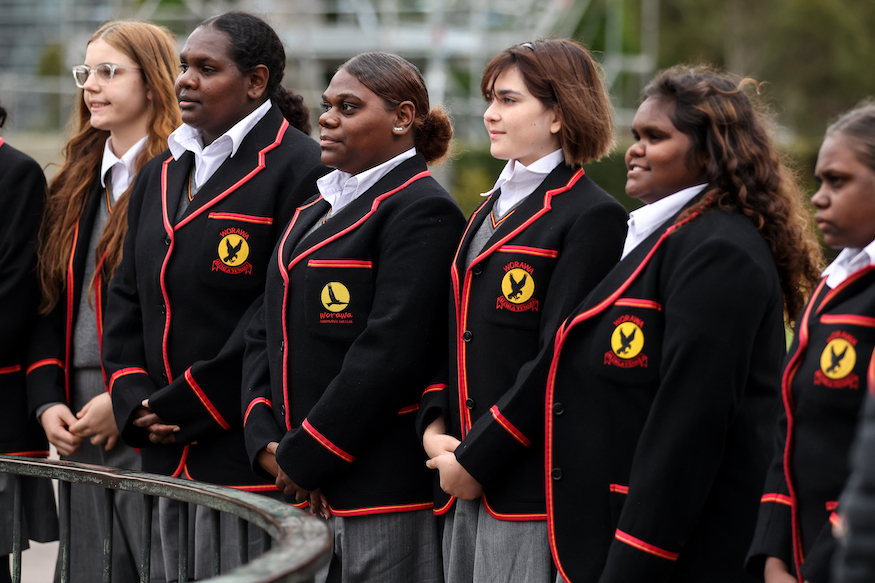
"The contributions and bravery of First Nations people who have served is vital to the history of our country and for far too long they were not appropriately recognised – their sacrifices are a reminder of the importance of the work towards Voice, Treaty and Truth."
More than 5,000 Aboriginal and Torres Strait Islander people served in World Was I and II, with more than 300 serving in the Vietnam War.
Victorian Minister for Veterans Natalie Suleyman said it was critical to continue recognising Australia's Indigenous service personnel.
"First Nations people have served in conflicts and peacekeeping missions for Australia for more than a century," Ms Sueyman said.
"It's so important that their service and sacrifice is acknowledged at memorial services such as these."



