



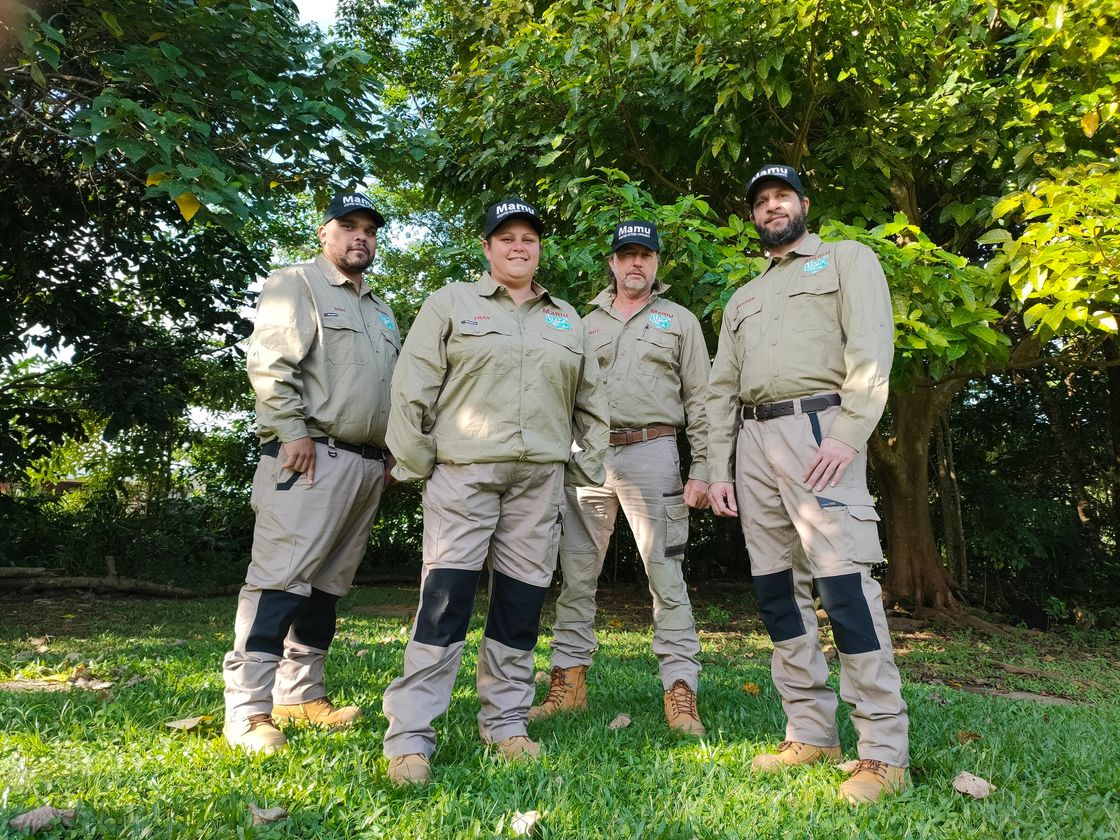
The first Mamu rangers in Northern Queensland are making waterway health a priority for the people of the Innisfail region.
In the time sine the rangers began in July, they've been setting up cultural indicators and monitoring species within bodies of water in that area.
The ranger program was launched through funding by the Queensland Government's Indigenous Land and Sea Rangers Program.
Their water program has been conducted in conjuction with Terrain NRM.
The rangers are also looking after cultural heritage sites, monitoring biodiversity and helping pest plant control.
Senior Mamu ranger Francis Joyce said the establishment of rangers has meant the Mamu people are able to play a bigger role in the management of land and sea.
"We'll also be monitoring impacts on the rainforest and ecosystems and looking at cultural indicators that came about through consultation with our Mamu people," she said.
"The information will give everyone a snapshot of waterway health and a better understanding to move towards solutions.
"By working together and building partnerships we can create a more sustainable future."
The waterways project employs cultural indicators in the Mamu area of the Johnstone River, together with Western science in the hopes of implementng more cultural knowledge throughout.
The rangers complete monthly routine sampling across the Johnstone catchment to test for nutrients, pesticides and suspended solids.
Ms Joyce said through their waterways project they've been able to establish a pilot project working with CSIRO to conduct DNA sampling within the water.
"It's where you put this thing in the water and it can tell you what DNA is in the water," she said.
"For us our cultural indicators will show us if species of fish are still in that area.
"Maybe there's a decline or something and they're not there anymore...we probably have to try and look at doing some breeding."
For the Mamu rangers, they hope their growth means more involvement from the Mamu people on Country.
"Hopefully we can grow it and start looking after wetlands, creek stablizations and weed management along the riverbanks," Ms Joyce said.
"We collate all our results and then present it to the Mamu people.
"And get their feedback and on what steps to go there next."



