




WARNING: Aboriginal and Torres Strait Islander readers are advised that this article contains the names of Indigenous people who have died.
The final stretch of an often horrific coronial inquest into the deaths of four Aboriginal women at the hands of their partners resumes for a further two weeks of scheduled hearings today in the Northern Territory.
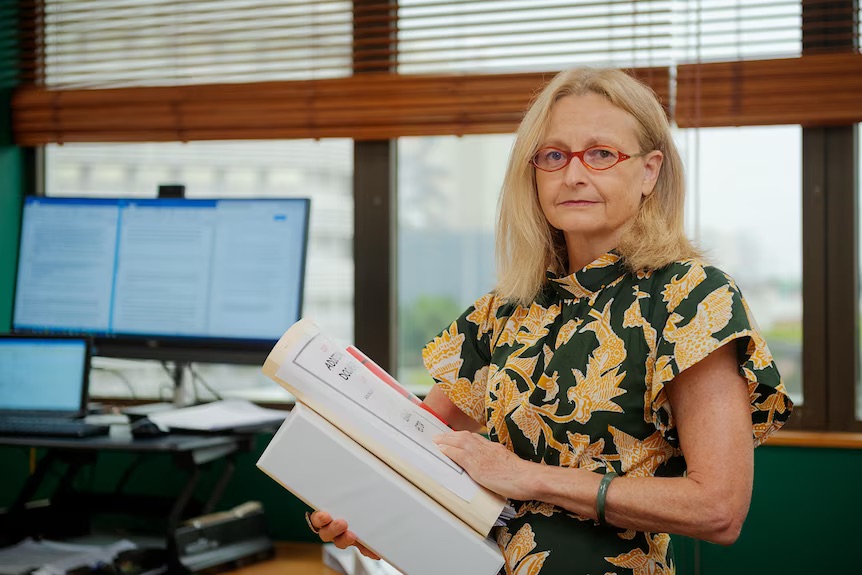
The inquiry, which began in June in the Alice Springs with five weeks of hearings - will hear from experts, including Marcia Langton and national domestic, family, and sexual violence (DFSV) Commissioner Micaela Cronin, along with the NT Police, corrections, and health departments, with the aim of understanding where the system failed and where it can be improved.
It has laid bare some of the shocking and horrifying statistics around domestic violence in the NT.
Indigenous women are eight times more likely to be assaulted than anywhere else in the country.
More than half the assaults committed in the NT are domestic violence related, with 63 per cent of all prisoners serving time for DFSV offences.
The court heard that police had seen a 117 per cent increase in domestic and family violence reports in the last decade.
"This is not somebody else's horror. This is our horror. And as a society and as a community we are together responsible for finding a better way," Coroner Elisabeth Armitage said as she opened the inquiry in June, the ABC reported.
"For the past 23 years, on average more than three Aboriginal women have been killed each year in the Northern Territory by domestic partners."
Guardian Australia noted her investigation revealed the death of 81 women in the NT - 93 per cent of them Aboriginal - since 2000.
Domestic violence researcher and advocate Dr Chay Brown told National Indigenous Times: "Women are killed seven times more often in the NT than anywhere than anywhere else in Australia."
In a submission to the court, Dr Brown said research named the impact of colonisation on Indigenous people, the impact of colonisation on non-Indigenous people and gender, as three defining factors of domestic violence.
The landmark inquiry has combined the deaths of Kumanjayi Haywood, Ngeygo Ragurrk, Miss Yunupingu and Kumarn Rubuntja to examine the systemic failings of every fact of the justice system, along with the sexual, domestic and family violence sectors.
All four women had experienced violence at the hands of their partners, and the court heard they had all feared for their lives in the time preceding their death.
All four of the women suffered horrific fates at the hands of their partners.
Kumanjayi Haywood
Ms Haywood, 34, died in 2021 when an alleged domestic violence altercation with her 36-year-old partner in the Hidden Valley Town Camp led to a deliberately lit fire. Guardian Australia reported she died in "agony," with burns ot 90 per cent of her body. Her partner Kumanjayi Dixon succumbed to his burns the following week. No charges were laid before his death.
She suffered over a decade of domestic violence at the hands of Mr Dixon.
Miss Yunupingu
Yunupingu, 29, was killed in Darwin in 2018 by Neil Marika. He had consistently abused her for 12 years, and at the time had a full non-contact domestic violence order against him. He was sentenced to nine years in prison.
Over 13 years, she endured multiple beatings, including being stabbed pair of scissors.
She had been on a family safety framework, which was designed to prevent ham and death for high-risk victims, but was removed when she no longer qualified as a risk.
Police told the inquiry her death was one of their hardest days.
Kumarn Rubuntja
Ms Rubuntja was a prominent Central Australian anti-violence campaigner who visited Canberra in 2017 to speak on the subject to federal politicians. She died in 2021 in Alice Springs after being repeatedly and deliberately rammed by her partner Malcolm Abbott in his vehicle.
Abbott, who had a history of violence towards women and multiple domestic violence charges, was sentenced to 25 years in prison. He was the only one of the four perpertrators to be convicted of murder.
Counsel assisting the coroner, Dr Peggy Dwyer, told the court Mr Abbot reversed over Ms Rubuntja before hitting her again, Guardian Australia reported.
Ngeygo Ragurrk
Ms Ragurrk was stabbed on Darwin's Mindil beach in 2019 by Garsek Nawirridj, who the judge described as "abominable". Ragurrk, a West Arnhem woman, was killed by blunt trauma to the head and possible drowning. Nawirridj dragged Ragurrk's unconscious body 70 meters along the beach and dumped her in shallow water.
The Gunbalanya man had an extensive history of violence, incarceration – based in part due to childhood trauma – and was deemed to have little to no chance of rehabilitation. In sentencing him to 13 years, NT Supreme Court Judge Jenny Blokland said to Nawirridj, "You showed her no mercy."

Throughout the inquiry, Judge Armitage has heard that despite the women dying in separate circumstances, there was a significant system of common errors and failings in the system that led to their deaths.
All the women had been victim-survivors of violence for years and all had tried to escape the abuse. All their partners were known to authorities and had a history of violence and custodial sentences.
Dr Brown said research showed the period of leaving a violent relationship was one of the most dangerous for women. She said the impetuous should not be on victims - who already suffer a power imbalance due to their gender and cultural backgrounds - do be the one to leave.
The testimony from family of the victims, as well as frontline staff, has painted a pained picture of a sector that is vastly under-resourced and overwhelmed. Police have inadequate training and lack the resources to properly handle the complexities around DV in communities.
Witnesses have consistently outlined a lack of funding in the sector, especially against 'big-ticket items' such as infrastructure.
In June, the head of the Women's Safety Services of Central Australia, Larissa Ellis, said her 31 bed facility was always full and had to prioritise who would be allowed to spend the night and who wouldn't.
Dr Dwyer said the NT government committed $20 million over two years to address domestic, family and sexual violence. This despite a report - commissioned by the government - calling for at least $180 million over five years.
She labelled it "woeful.".
"It's extraordinary and ludicrous to see the amount of under-funding that we see," the ABC reported.
The corner has outlined a far-more in-depth analysis of the NT and the cycles that permeate the Territory than any previous inquest.
Poverty impacts more of the population than any other Australia jurisdiction, where 26.3 per cent identify as Aboriginal and/or Torres Strait Islander.
The ABC reported the court heard evidence for some of the reasons why family and domestic violence is so prevalent in the NT, and why Aboriginal women are more likely to be victims.
"It is no coincidence that Aboriginal men and women are also more likely to be the victims of trauma, homelessness, disability, poorer schooling, poorer health and lower life expectancy," Dr Dwyer said.
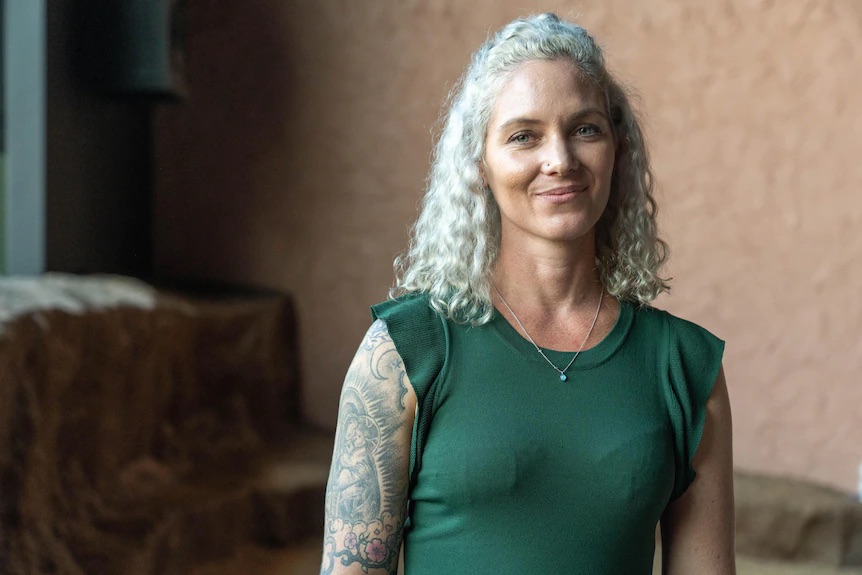
Dr Brown worked alongside Ms Rubuntja. She has criticised the lack of funding by by the federal government towards domestic violence in the NT.
"Minister Amanda Rishworth [families and social services minister] has been invited repeatedly to see the level of need in the Northern Territory and has refused to come," she told National Indigenous Times.
"Its a cop out; if she came and saw she'd see the funding is nowhere near enough."
Dr Brown argues the lack of care and funding is deliberate.
"It's an intentional and concerted effort to ignore the needs of the Northern Territory," she said.
"These things are not unknown. The NT has by far the highest rates of violence in the country, but we we have to do the same work as other jurisdictions but with far few services and funding.
"Women are hospitalised at 24 times in these isolated areas than in urban areas. Despite this we are only receiving 1.8 per cent of federal funding for domestic violence."
The inquest will continue for two weeks in Darwin, before Judge Armitage adjourns to finalise her findings.



