




Murujuga Aboriginal Corporation (MAC) Rangers are pioneering the development of a series of university-level micro-credentials for rock art monitoring in Murujuga.
Two of their MAC Rock Art Monitoring Rangers and one of their Senior Heritage Advisors have recently achieved a significant milestone in their academic journey.
Glen Aubrey and Kasziem Bin Sali completed a university-level micro-credential in Introduction to Ambient Air Quality and Monitoring in July, excelling in both online and practical assessments.
Since 2022, the Rangers have accumulated extensive experience and skills in air quality and rock art monitoring through hands-on training. Completing this micro-credential not only validates their expertise but also allows them to formalise and expand their knowledge.
They are currently pursuing a second micro-credential in Introduction to Workplace Health and Safety. Following that, they plan to undertake three additional micro-credentials: Real-time Air Quality Monitoring, Geochemical Field Monitoring, and Field Spectrophotometry.
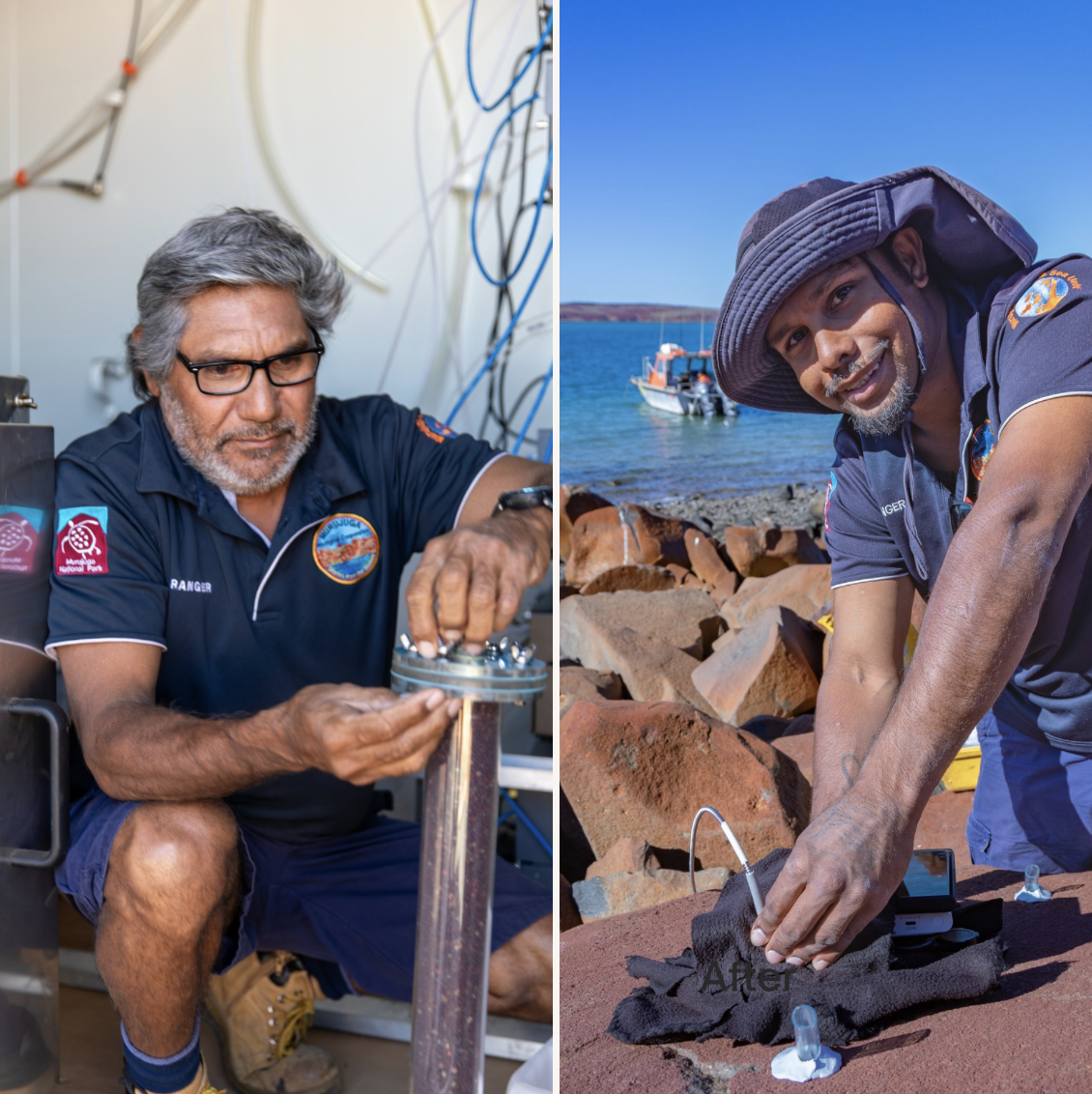
These subjects align with their existing experience, as demonstrated in the photos below. Each micro-credential carries five university-level points.
Mr Aubrey said he loves his job, even though it comes with its challenges.
"The elements of my job that I enjoy are working on country to protect heritage and learning about the science," he said.
"Some of the micro-credentials are technical and challenging, but it is good to have them for training other Rangers in the future."
In total, the five micro-credentials will amount to one university unit and could potentially be combined with other coursework to contribute towards a tertiary degree.
MAC Senior Heritage Advisor, Vic Wade has earned her PhD from the University of Western Australia.
Her thesis, titled "Environmental Revolution and Cultural Resilience: The Holocene Rock Art Record at Murujuga, Western Australia," explored the various styles, subjects, and compositions of Murujuga rock art over the past 10,000 years to understand how the landscape has been utilised over time.
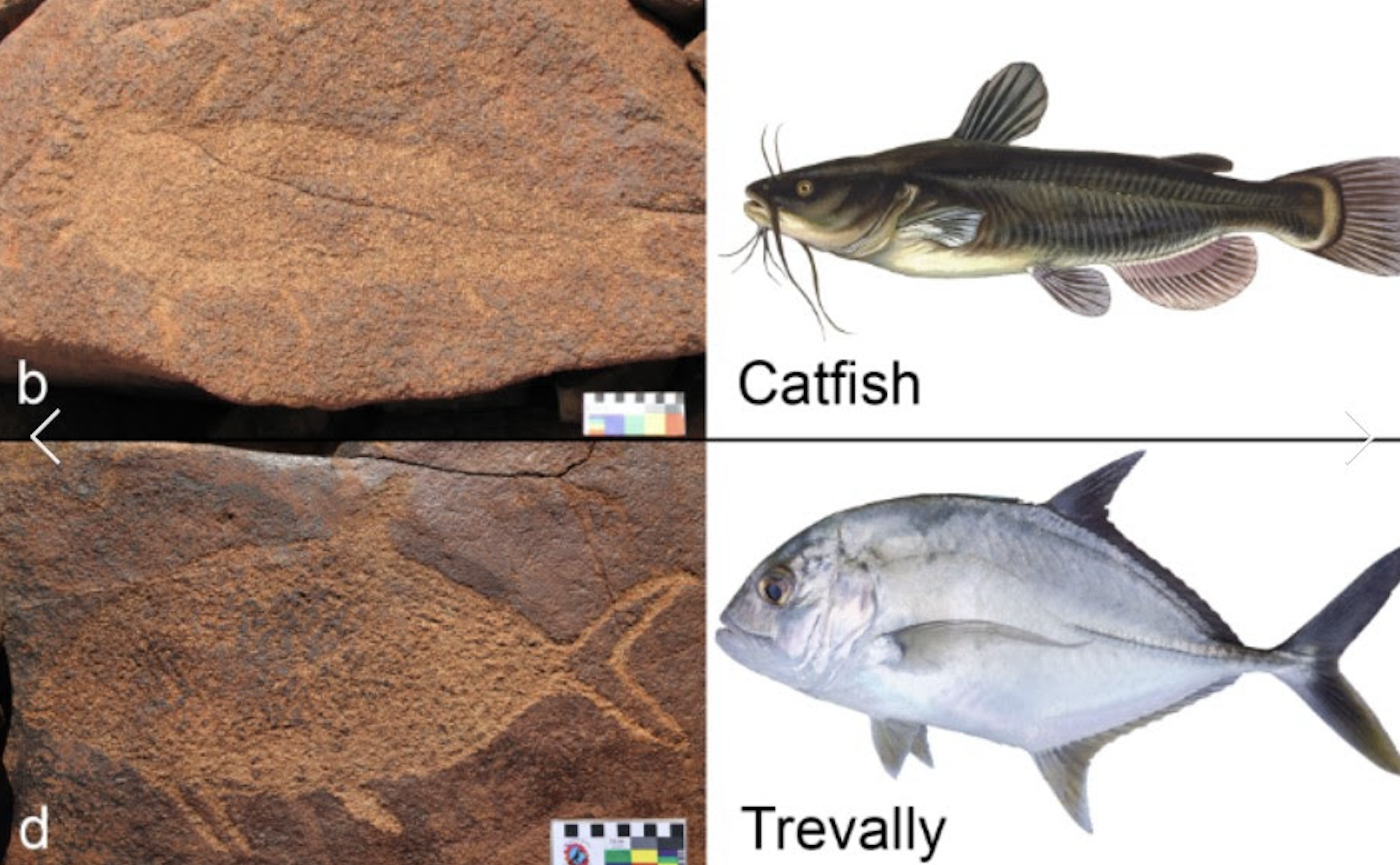
Ms Wade highlighted a crucial aspect of Murujuga's environmental and cultural history is its transformation from an inland range during the last ice age to the sea country and islands present today.
With the endorsement of Murujuga Elders, she analysed rock art depicting diverse practices, such as marine hunting and fishing, and conducted an in-depth study of detailed fish species representations.
Her research reveals the enduring persistence and adaptability of the Murujuga people across millennia.
"The rock art evidence shows that even as the landscape transformed, and they faced new and evolving challenges, the people constantly adapted," Ms Wade said.
"Even as parts of the landscape became submerged, these areas continued to be used as new seascapes. People continued living across all islands and sea country."



