




Talk surrounding Closing the Gap inevitably begins in Canberra, where politicians propose various solutions to the stark discrepancy in key metrics for Aboriginal people in Australia.
Many argue this talk is often no more than hot air, so often providing little to no tangible impact on Indigenous communities.
But two hours north of the nation's capital, on Wiradjuri country, a school has been helping First Nations children maintain a connection to their culture and language for over 30 years.
The Yalbillinga Boori Day Care Centre in Cowra, New South Wales, has been helping children on the same site since 1987, as both an early childhood learning facility, and a multi-functional Aboriginal Corporation.
Centre Manager Caroline Bamblett said getting the building on the current site took over 20 years of lobbying by Elders, before being built by Aboriginal apprentice carpenters.
It is this foundation of First Nations community spirit that encapsulates the work the centre has done to help the the entire community, which includes local language programs.
Ms Bamblett notes the continuation of culture through language is vitally important, with the best time for that to begin being at a young age.
"This is the age group where they are little sponges and everything sinks in," she said. "So, this is the best age to try and get them learning the language, because …it hasn't been taught - even in the schools - until recently."
With most staff Indigenous, and a high number of early childhood enrolments - spanning ages zero to six - the centre forms a trusted place for the Wiradjuri people, as well as the broader Aboriginal community.
Secured funding allows a language teacher to come twice a week, and Ms Bamblett said many of the children converse in their local Wiradjuri language.
"It's important for identity and culture to keep it going forward," she said.
"Down the track, If the teacher was available, we would like to put it as part of our curriculum and make it an everyday thing."
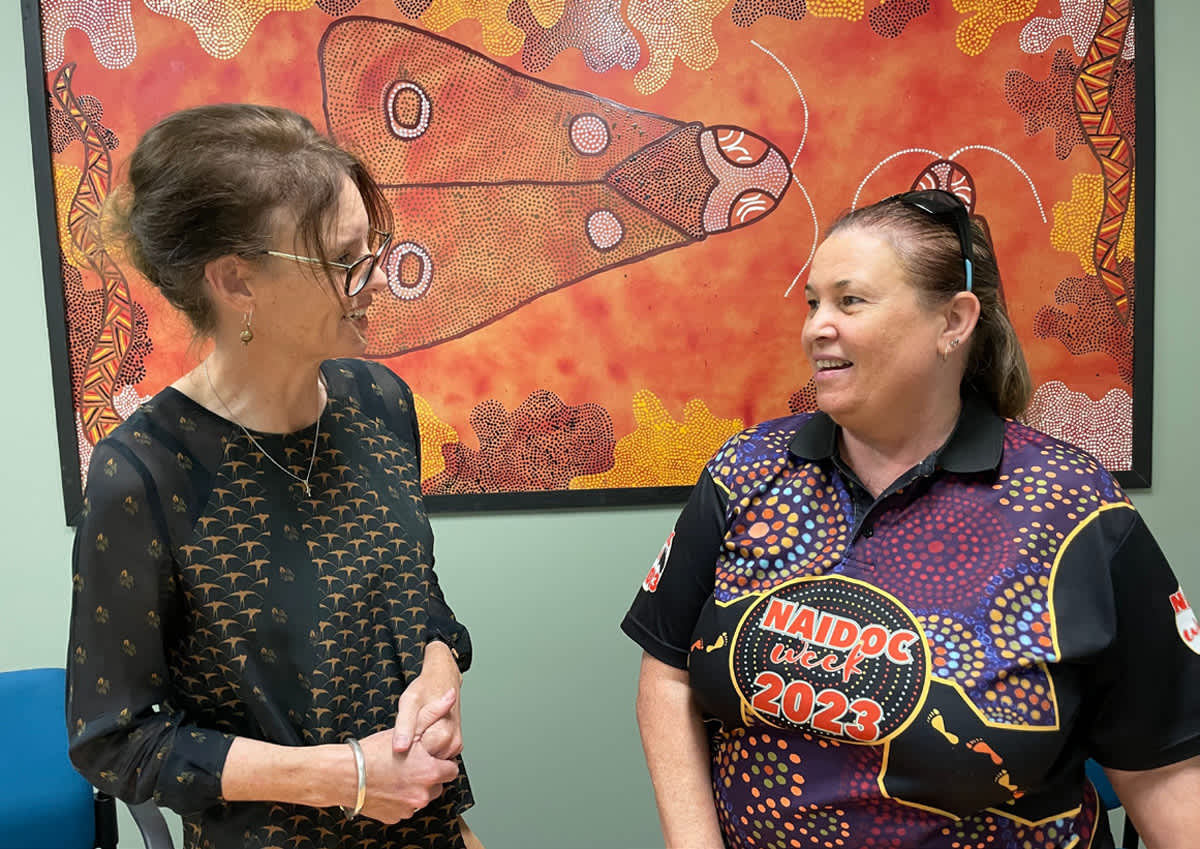
Wiradjuri language teacher and board member Beatrice Murray said language at Yalbillinga was "core" business.
"Wiradjuri language is used every day at Yalbillinga to reaffirm the Koori kids that go to [to the centre] of their cultural identity," she said.
"But also with the non-Aboriginal kids, it's just a way of sharing culture…we're all living on Wiradjuri country."
Disconnection from culture, language and family is regularly cited as one of the main drivers behind the gaps in health, education, employment and life expectancy. Whether it be through the removal of children, incarceration, or other disconnection with family, all can cause significant harm.
By starting young, and teaching children the importance of the land they live on, as well as the language of the country, there is hope the next generation will be given more opportunities to strengthen their relationship with where they come from.
Ms Murray noted that children have always been the "focal point to bring community together," and explained they had done reading programs not just at Yalbillinga, but at all the local Primary and High Schools, as part of a wide range of educational support for children.
"We've done men's programs, where the men come in and teach the kids football skills," Ms Murray said.
"It's been involved in developing the Aboriginal dance groups through the schools — the Wagambirra Dance Group at Cowra High School has been going for nearly 15 years now."
In a town that has experienced its fair share of difficulties, from perceptions of youth crime to poverty and unemployment, it is this maintaining of a connection to culture which is so vital a component of the teaching process.
Ms Murray noted: "From my experience, the more Aboriginal [and] Wiradjuri kids, are connected to their culture, the stronger they are in their identity, and the more confident they are to go on and do wonderful things with their lives; with their careers.
"The amount of Koori kids from Cowra - a small country town - that go on to do uni and have these really good careers, or full-time employment, it's, really remarkable. That's what our families [do]; we work together to ensure that that's what happens for our kids' futures."
She highlighted the story of a young girl in year two, who had gone to Yalbillinga, and was now at a local primary school where Ms Murray also teaches language and culture.
She hadn't spoken since kindergarten.
"I've gone in there not knowing the background. I've just planned to do my language and culture," Ms Murray said.
"This little girl that doesn't talk, hasn't spoken to anybody at school for the last three years, came up to me and asked me what a word was in Wiradjuri."
Ms Murray said she told the shocked teachers, "'She wants to speak her language.' That's who she is…so in order to do that, she spoke English to me to get the answers that she needed".
"How cool is that?" Ms Murray said.
It is these interactions that show the tangible difference the language programs at Yalbillinga have for Koori kids.
Real-life support for children; helping them to navigate their way through the already fraught difficulties of early schooling, coupled with the issues surrounding cultural survival, in a small country town, there is a standard bearer.
In the words of Ms Murray: "That's what Yalbillinga does."



