



Ever since she was a kid, lawyer and human rights advocate Tekan Cochrane wanted to make a difference for her mob and other disadvantaged people and communities; and concluded it is best done at policy level, for systemic change.
Today, Ms Cochrane is a finalist for the Australian Human Rights Commission's 2025 Law award.
Executive officer of Tarwirri Indigenous Law Association of Victoria as well as founder and director of law reform and policy advisory service with a First Nations lens, TC Law and Consulting, it's been a journey from her youth on a farm in regional central Queensland.
TC was born out of a recognised need for qualified legal experts and human rights advoates to help others navigate a space with systemic challenges, Ms Cochrane said.
Prior to law, she spent time in odd-jobs, as a receptionist and disability support worker.
"From a young age I realised to be able to make real and lasting changes, I needed to be in spaces where laws and policies are made and shaped," she told National Indigenous Times.
"I knew that I had to educate myself further. It's one thing to have passion, but another to truly understand how the law works, how decisions are made, and how to be part of influencing and changing those systems for the better.
"That's when I decided that I wanted to become a lawyer."
For the Kooma and Yuwaalaraay woman, with Torres Strait Islander heritage, university was a foreign, daunting and challenging leap.
"I'm the first person in my family to go to university, and I don't think I really knew anyone who had been to university," she said.
Ms Cochrane also mentors First Nations law students and early-career professionals.
Entering the space, often in a path that without experience in your tight circle, can be a challenge.
"I remember being in similar positions," Ms Cochrane said.
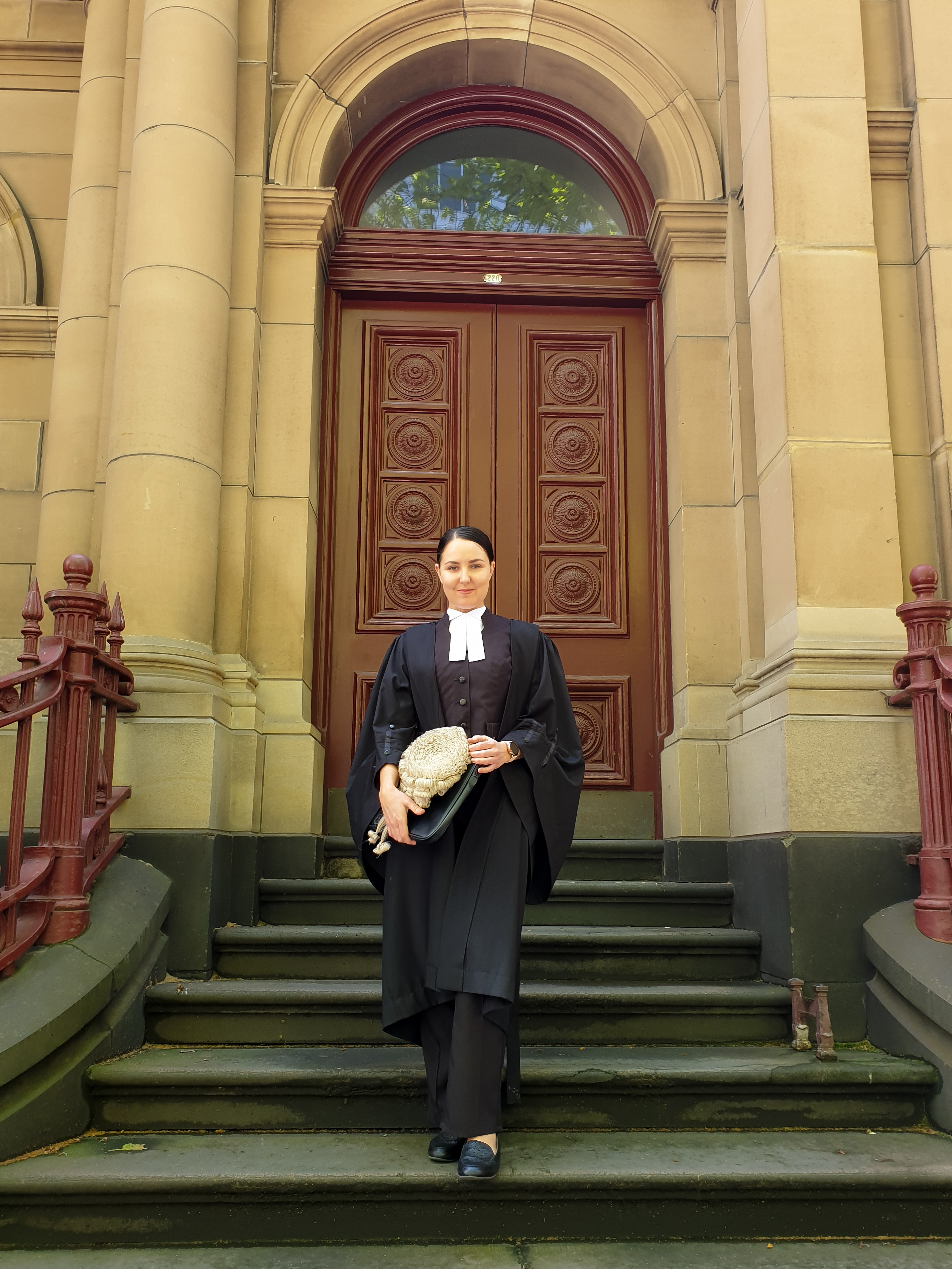
Nationally, 0.8 per cent of solicitors identify as Aboriginal and/or Torres Strait Islander, per a 2024 Law Society of NSW report.
"First Nations peoples, we need more in law and also in other spaces. I just want others to know that they can do great things," Ms Cochrane said.
Tawirri is a not-for-profit association aiming to increase this representation in the legal sector.
"I focus on supporting and enhancing First Nations peoples' representation, professional profile and excellence within the legal landscape and broader communities through advocacy, governance, mentoring, and cultural leadership," Ms Cochrane said.
Ms Cochrane's first professional legal role was with the Office of Public Prosecutions Victoria as a solicitor, a role she says informed a deep understanding of both justice systems strengths and limitations.
As Senior Legal Policy officer with the Department of Justice & Community Safety, she contributed to the creation and implementation of Victoria's Stolen Generations Reparations Scheme.
She volunteers on Law Council of Australia's Indigenous Legal Issues Committee, Law Institute of Victoria's Reconciliation Action Plan Working Group as a member and chair of its Reconciliation and Advancement Committee.
It was her time during the OPP which really formed her approach to her work, and a commitment to working with "empathy, accountability and a focus on reform", she outlined.
"It gave me a deep understanding of how the justice system really does operate in practice, both its strengths and also pointing out its limitations," Ms Cochrane explained.
"It was rewarding. I was able to contribute to ensuring that matters were handled with fairness, professionalism and compassion, particularly with supporting victims through those challenging proceedings. But at the same time, I just couldn't ignore the systemic issues that I saw how certain groups, especially First Nations people, continue to be disproportionately affected.
"For me as a First Nations woman as well, it was very confronting. But it also reaffirmed my commitment to use law as a tool for justice and positive change.
"It was really at the OPP that I saw the need to go into policy and law reform so I could make or try to help make changes at a higher level."
The Department of Justice brought her over, first working on the Victoria's spent convictions legislations before pivoting to being the sole senior legal policy officer when a unit was created for the Stolen Generations Reparations scheme.
It was there Ms Cochrane heard from survivors, including stories of her own families pain.
"There's nothing that's ever going to take away any of the pain and suffering. And you know, the loss of language, the loss of kinship and culture...this is something which needs to be taught at schools," she said.
"I'd say the average Australian does not know much about these past policies and laws.
It was a small team which worked on and saw the related bill pass in Parliament.
"It was a lot of hard work, very challenging, very emotional. But for me that was, it's a role that I feel very, very proud about."

The Human Rights Awards are set to be presented in a fortnight's time on Friday, December 12, in line with International Human Rights Day earlier in the week.
Across five categories, 20 finalists have been selected from more than 300 entries.
As one, Ms Cochrane is recognised 'For her work for safer systems through law reform and community, especially for First Peoples, migrants and others facing injustice'.
Deputy Chair and Yoorook Justice Commissioner Travis Lovett and First Nations reform non-profit Children's Ground founding chair William Tilmouth are up for the Human Rights Medal.
For their documentary 'Genocide in the wildflower state', Yokai: Healing Our Spirit (West Australian Stolen Generations Aboriginal Corporation) is up for the media award.
"I am extremely humbled...I could not believe it (when she learned of her nomination)," Ms Cochrane said.
"I'm basically doing what I can, because I have the passion to help others, particularly First Nations peoples, our mob.
"To be recognized, it means a lot. It's not just for me, but for the communities I represent as well. I feel like it's a collective effort of so many people, for the community leaders, the Stolen Generations, Elders, mentors and my colleagues. And everyone who supports me, my family as well.
"And everyone who also pushes for justice and human rights in their own ways, I'm always thankful for others for their work."



