


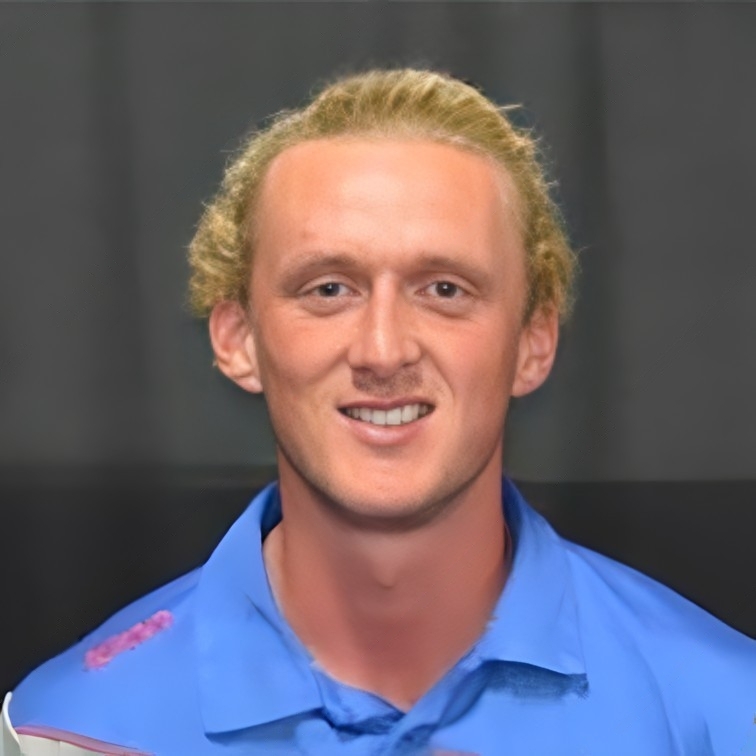

The Tasmanian Aboriginal Legal Service has supported Richard Connock's calls for the state's government to commit to effective independent monitoring and oversight to protect hundreds of vulnerable people.
Mr Connock, Tasmania's Ombudsman and Health Complaints Commissioner, said on Wednesday by providing funding to the Tasmanian National Preventive Mechanism, the state government has the opportunity to "continue leading the nation" by implementing measures to protect the human rights of the most vulnerable people in the community.
Tasmanian Aboriginal Legal Service (TALS) chief executive, Jake Smith, supported Mr Connock's calls, saying it is critical Tasmania's National Preventative Mechanism is "adequately and fully funded" to maintain the human rights of vulnerable Tasmanians.
"Basic human rights should be upheld, no matter who you are or where you are," Mr Smith said.
The Palawa man said Aboriginal people in Tasmania are often disproportionally vulnerable.
"Within justice settings, Aboriginal people are significantly over-represented," he said.
"Aboriginal people in Tasmania are incredibly vulnerable in settings such as prisons, while being held on remand at police stations or in detention settings."
The supplementary report into the establishment of the Office of the National Preventive Mechanism (the Office) in Tasmania, which looks at preventing torture and ill-treatment in community-based residential health and social care settings - including disability support accommodation and aged residential care - was tabled in state parliament on Tuesday.
It follows the Preventing torture and ill-treatment in Tasmania report released in December 2023, which provided eight recommendations related to the implementation of the Office, and provides a further four recommendations.
The supplementary report identifies 69 aged care and 369 disability services organisations that the office has recommended should be visited, which are in nearly equal distribution across the south (52.7 percent) and north/north-west (47.3 per cent).
Mr Smith says that across Tasmania, people are being denied their basic rights and are at risk of poor-quality treatment.
"Proper oversight is needed to ensure accountability and action to protect Tasmania's most vulnerable," he said.
"This includes people receiving aged care or disability support services, in secure mental health settings, and people in police custody."
Mr Connock said while the Office had received funding in the current state budget to continue its work, it was a fraction of what was required for the Office to perform its functions and protect vulnerable people in the community.
"The initial budget request based on the 2023 report was about $2.8 million per annum, but subsequent findings in the supplementary report now estimate that about $4.2 million per annum will be needed to enable the Office to fully perform its functions, taking in additional places of deprivation of liberty not covered in the initial report," Mr Connock said.
"In the current budget and over the forward estimates the Tasmanian NPM is provided $300,000 per annum."
Mr Smith said the NPM has been given a fraction of the funding requested.
"Despite being legally empowered to examine the treatment of people in these places, Mr Connock says the funding needed to establish his office and prevent potential abuse has not been forthcoming," Mr Smith said.
"This means Richard Connock has little capacity to help keep vulnerable Tasmanians safe from harm."
The supplementary report includes draft Expectations on the treatment of people deprived of their liberty in health and social care: aged residential care, disability support and related environments in line with Disability Royal Commission recommendation 11.11.
Mr Connock highlighted the report recommendations include working with the Commission for Children and Young People and the Disability Commissioner to ensure best use of resources in the protection of some of the state's most vulnerable people.
"I am aware of the overlap of my duties with the forthcoming Commission for Children and Young People and have proposed a co-located and consolidated model of independent oversight, whereby the Tasmanian NPM works side by side with the Commission for Children and Young People, and the Disability Commissioner, to coordinate and lead comprehensive inspections of all places in the state where people may be deprived of their liberty," he said.
"I have also proposed that the person appointed as Tasmanian NPM - upon my retirement next year - concurrently serve as the state's Custodial Inspector, and that these roles be separated from that of Ombudsman and Health Complaints Commissioner to better define the proactive and reactive differences between the jurisdictions."
On Tuesday, Attorney-General and Minister for Justice, Guy Barnett, said the Tasmanian Government is committed to showing leadership regarding the NPM.
"In the Budget, $1.2 million in ongoing funding was invested specifically to implement the Tasmanian National Preventative Mechanism, improve custodial oversight and monitoring of non custodial settings and to give effect to related Commission of Inquiry recommendations," Mr Barnett said.
Mr Barnett said Tasmania has established itself as a leader among Australian jurisdictions on Optional Protocol to the Convention Against Torture (OPCAT) and the prevention of torture and ill-treatment.
"I would like to thank our Tasmanian NPM, Mr Connock, and his team for their work in preparing their first report, Preventing torture and ill-treatment in Tasmania and the more recent supplementary report," he said.
"Our Government will consider this latest report and take the appropriate action, just as we did when we were the first state to legislate for a comprehensive OPCAT framework."



