




Over a decade ago, a program harnessing the world game as a vehicle to empower and educate Indigenous children began with 120 participants in remote Northern Territory.
John Moriarty Football, named after co-founder and the first Indigenous man selected for the national football team, now engages with more than 5,000 Aboriginal and Torres Strait Islander kids each year.
New data has shown the impact it's having in disadvantaged communities, including boosting school attendance rates, while also providing an opportunity for football to seriously change their lives, like it did for Moriarty.
That initial pilot program in 2012 was delivered in the community he was born - the small community of Borroloola inland from the Gulf of Carpentaria.
"Just like football changed the trajectory of my life, we designed JMF to positively influence the education, health and wellbeing of Indigenous children and now we have independent proof that it's working and making a lasting impact," Mr Moriarty said.
"JMF has the capacity to transform lives by creating ripples of change that start with 'a child, a football, a dream', and flow outwards to impact families, communities and the nation, creating opportunity and unlocking potential."
Moriarty co-founded JMF with his son James.
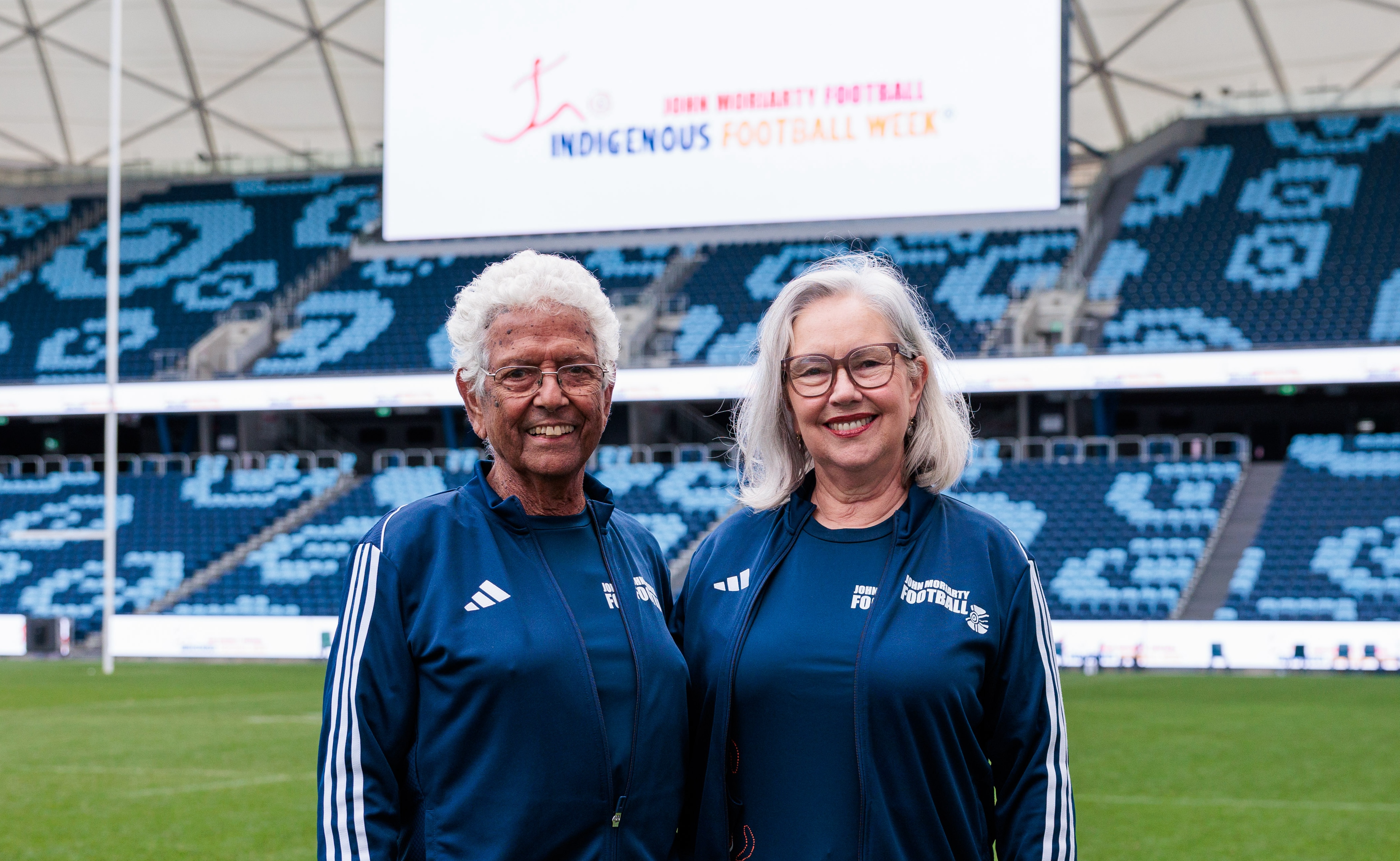
2025 marks the 10th year of Indigenous Football Week initiative, started in 2016.
From September 22-28, it's theme this year is transformation.
Aligned with the week, Deloitte Access Economics released new research into the impact JMF is having.
Primarily through public schools, JMF delivers football programs out of hubs in Borroloola and Tennant Creek in the NT, outside of Cairns in Kuranda and central-west NSW town Dubbo into 17 remote and regional communities.
Building capability for physical, mental and emotional wellbeing through football is the focus, with community priorities centred into a flexible approach.
In addition to school sessions, weekly skills programs and holiday program sessions are also hosted.
According to Deloitte's report, 72 per cent of students surveyed "felt excited or happy when asked whether having JMF on that day made them want to go to school".
Educators indicated students attending one-to-two more days of school per week as a result.
60 per cent of participants are girls, with 43 of coaching staff being women.
Deloitte also reported 74 per cent of JMF staff are local First Nations community members.
A third are under the age of 25 - "meaning that young adults have opportunities through JMF employment, to develop valuable skills and experiences early into their career", Deloitte's report states.
Wiradjuri woman Tiffany Stanley, a Dubbo-based Coach and mentor with JMF, joined in 2019.
"I was going down a different path in life, then I found JMF… Because of this job, I know how I want to raise my children," she said; quoted in the report.
Former A-Leagues player, Kanolu-Gangulu woman and JMF ambassador Allira Toby said the programs are creating safe spaces for women and girls in football, with even broader impacts.
"Being a holistic program, JMF is positively impacting 10 of the Closing the Gap targets, at a time when national progress towards these targets is going backwards. We are making vital impacts in areas like education, health, employment, digital inclusion, mental health and youth justice," she said.
"An impact the Deloitte Access Economics research highlights, that I'm very proud of, is how JMF inspires girls and women to engage with football, especially those in remote communities who typically have low engagement with sport.
"JMF creates safe spaces for girls and women to participate in football and we are proactive about gender equality. The results speak for themselves as 60 per cent of our participants are girls and 43 per cent of our coaches are women.
"In the disadvantaged communities we deliver in, the social impacts for this can be far reaching, for instance, positively impacting family violence prevention as JMF creates a culture of respect."
JMF also offers scholarships to highly-skilled footballers aged 12-18 looking to succeed in the sport.
In 2024, there were eight Community Scholarship holders, with another six supported to attend school in Sydney with additional access to academic tutoring and intensive football training.
Two of those Sydney-based students also upped their school attendance - 7.5 and 8.4 percentage point increases respectively.
"JMF has been highly effective in engaging young people in some of the most complex communities in Australia where disengagement is typically high," Deloitte partner Lachlan Smirl said.
"It's elevating student pathways for academic success, creating employment and training opportunities for local Aboriginal and Torres Strait Islander coaches, and it's helping to create more long-term stability in communities."
Ngarrindjeri, Narrrunga and Kaurna man, former Socceroo and Indigenous Football Australia Council member Travis Dodd is the 2025 Indigenous Football Week patron.
"I know first hand how sport can transform the lives of kids and give them something positive to focus on, teaching them important life skills like teamwork, respect and leadership," he said, via JMF.
"JMF does this and so much more, delivering in remote and regional communities where Indigenous children are most at risk."
John Moriarty Football and Indigenous Football Week are delivered by the Moriarty Foundation.



