




The federal Attorney-General has written to the Northern Territory government expressing concern that the CLP's "tough on crime" policies are not being matched with investment in legal agencies.
Last week, it was reported that dozens of people charged with serious crimes in the NT were applying to halt their cases because they were unable to access a lawyer due to funding issues at Legal Aid NT (LANT).
People have been forced to represent themselves after LANT's total funding shrank by more than $3.2 million this financial year, despite NT Attorney-General Marie-Clare Boothby repeatedly arguing funding had not been cut.
However, a leaked letter from LANT director Catherine Voumard, first obtained by the ABC, confirmed millions of dollars had been stripped from the service.
Legal funding not keeping pace with NT Government policies
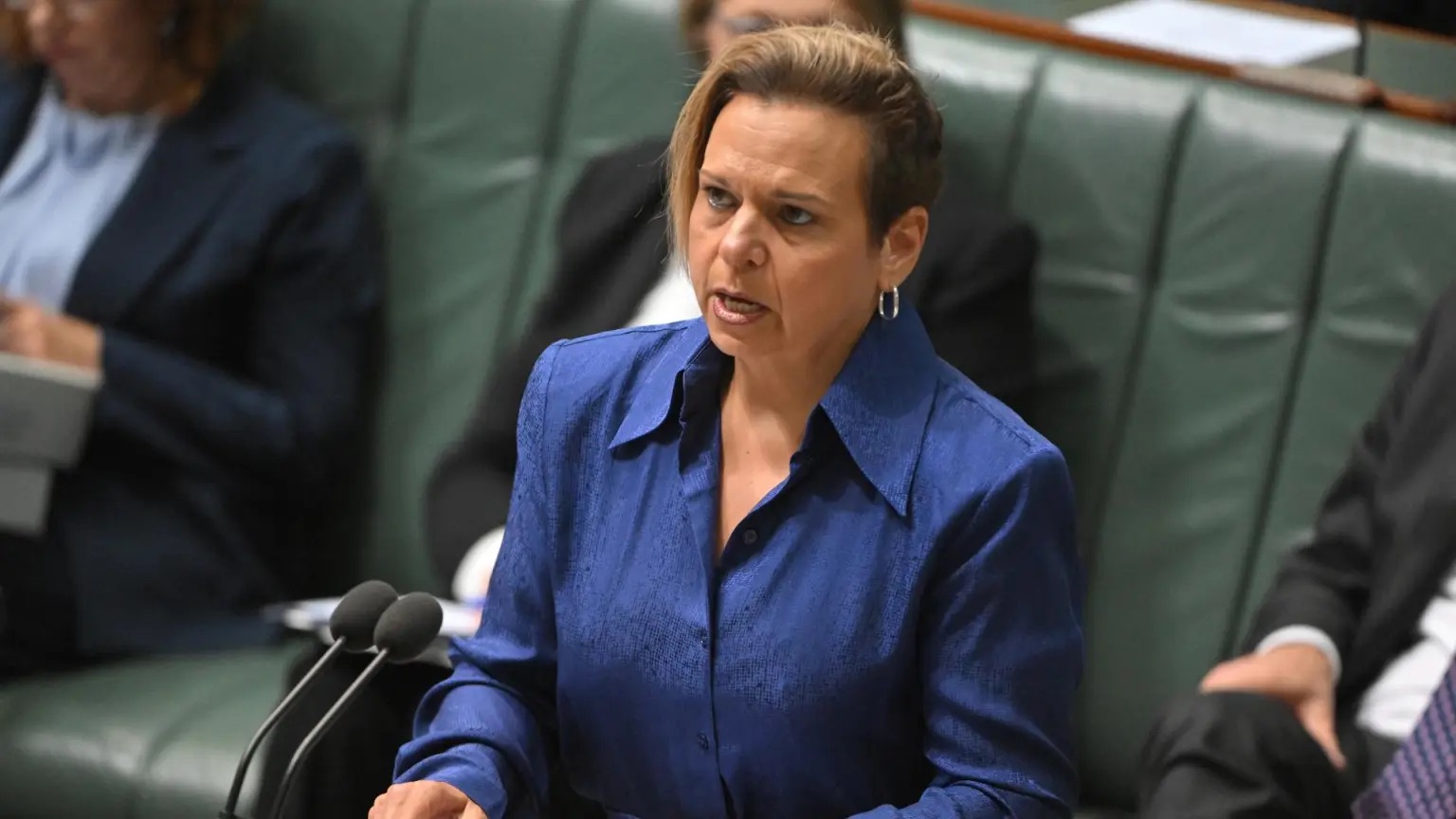
In a letter tabled on Monday, Attorney-General Michelle Rowland outlined to her Northern Territory counterpart the federal government's concern that funding for legal services in the NT is not keeping pace with demand.
It comes in the wake of the CLP government's "tough on crime" agenda, which has seen prisoner numbers surge.
Ms Rowland said both LANT and the North Australian Aboriginal Justice Agency (NAAJA) had advised the department that the CLP's reforms — including stricter bail laws and lowering the age of criminal responsibility to 10 — had "immediate operational impacts, including reduced capacity to meet demand, increased delays, and growing risks for the effective functioning of courts and corrections".
"The impacts are being felt most acutely by priority cohorts under the NAJP [National Access to Justice Partnership], including First Nations peoples and children," Ms Rowland wrote.
She argued some legal assistance providers had also advised the controversial changes to child protection legislation — which has been slammed by human rights and Indigenous groups — "will likely increase their workloads even further".
Incarceration rates in the NT have surged since the CLP was elected in 2024. More than one per cent of Territorians are now imprisoned on any given day, with almost 90 per cent of detainees identifying as Aboriginal.
Ms Rowland said the federal government had made "a substantial investment in legal assistance services" via the NAJP, including a 13.1 per cent increase for LANT and a 33.5 per cent increase for NAAJA in 2025-26, which is "intended to strengthen access to justice outcomes and support priority cohort".
"It is not, however, intended to replace or offset the Northern Territory's investment in the legal assistance sector, which has not increased in real terms," she said.
Under the NAJP, the NT Government is expected to "maintain its level of effort and investment in legal assistance services," Ms Rowland wrote, and administer Commonwealth funding in a way that ensures "integrated, efficient and accessible legal assistance — particularly for priority cohorts".
"In that context, I am concerned that reforms generating additional demand for legal services do not appear to have been accompanied by commensurate resourcing for legal assistance providers," she said.
"Where service capacity is constrained, the consequences are system-wide: more matters delayed, greater reliance on remand, increased pressure on courts and corrections, and heightened risks to fairness and access to justice.
"These outcomes also risk undermining the objectives of the NAJP and the effectiveness of the Commonwealth's significant funding uplift."
View this post on Instagram
Last year, NT Chief Minister Lia Finocchiaro argued LANT's financial pressures were the result of an increased client load due to referrals from NAAJA, often because of conflicts of interest. The claim was rejected by the Indigenous legal body, which said her comments were based on "inaccurate information".
Ms Finocchiaro's comments "risk creating division amongst legal services who have a long and proud history of working collaboratively," NAAJA said at the time.
It came as LANT admitted at the time they would no longer provide free legal representation to people charged with a crime unless they are in custody.
The NT Government has pushed back against criticism from human rights and legal bodies, arguing its policies have made the Territory safer.
In response, advocacy groups have argued the Commonwealth — which accounts for 80 per cent of the NT's funding — should consider tying some of its financial investment in the Territory to Closing the Gap outcomes.
Ms Rowland wrote that, given the pressures being reported by legal groups, she had called on the NT Government to "actively consider what additional measures are required...to ensure baseline criminal legal assistance capacity remains sustainable in the face of increased demand".
"I am concerned that capacity constraints may leave vulnerable individuals, including children, unrepresented in criminal proceedings," she wrote.
"This is inconsistent with Australia's international obligations, including under the Convention on the Rights of the Child 1989 — no child should face charges or court processes without legal representation."



