


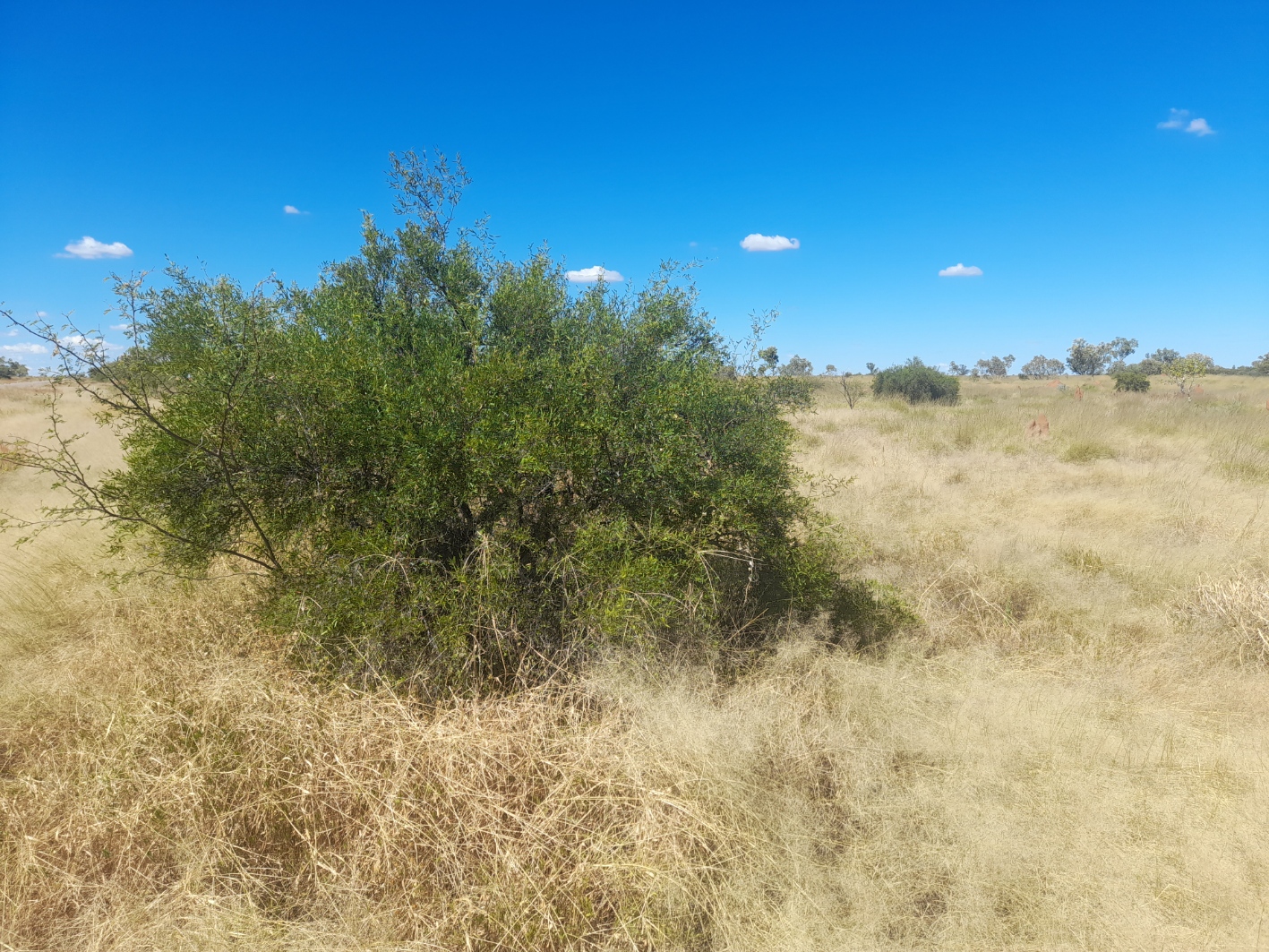
For many people the name Wolfe Creek conjurs up images of horror and fear. Personally, I've never seen the movie or its sequel. Wolfe Creek for me is its numerous creek flats (south of Halls Creek on the Tanami Road), and some of the best specimens of conkerberry or Carissa lanceolata, I've seen. It thrives in the rich loamy soils found on the flood plains of northern rivers and creeks where it can tolerate seasonal inundation and water logging. Here Jaru people call it burnungarna.
Marnukuji, as it's called by Walmajarri people, provides excellent habitat for agile and spectacled hare wallabies who shelter beneath its dense prickly vegetation, not only getting the benefit of its shade but protection from roving predators. Their close cousin the mala or rufous hare wallaby now extinct on the Australian mainland was reputed to do the same before it was wiped out by a combination of fire and feral foxes and cats.
Around Fitzroy Crossing where it's called biriyali by Gooniyandi and Bunuba people, the sweetly scented smoke from the burning wood is used as an insect repellent, especially against seasonal mosquito plagues.
In Broome I've watched as the smoke has been used to "christen" a young child, allowing them to grow up healthy and strong. A good friend of mine has used his IP to use the wood shavings to form sticks that he markets as "Jimawood - Gungarra incense", the title a mix of the language names from Nyangamartu and Yawuru people.
Conkerberry has other uses too, the beautiful hard wood with its shades of orange and yellow can be turned into beautiful artefacts and pieces of modern art. Central desert people soak the inner bark of the roots to make a medicinal wash for skin and eye complaints. Other Carissa species are used for arrow poisons in Africa.
After rain, the plant puts on a display of delicate, white, fragrant flowers. Three to six weeks later small purply black fruit are produced, providing a delicious treat for those game enough to pluck them from amongst the spiny vegetation.
Carissa lanceolata makes a wonderful garden specimen on many fronts. It's compact form, growing twice as wide as high lends itself to hedging or even topiary. The prickly dense foliage forms a haven for smaller bird species like wrens and finches. Its fragrant scent attracts beneficial insects adding greater biodiversity to your garden. And should you plant it, the delicious fruit will soon become a favourite of children.
Conkerberry can be grown from seed, but I've found root cuttings are more reliable. If you look beneath a bush, you'll often find small branches that have contacted the soil and produced roots. With a sharp pair of secateurs these can be easily removed from the mother tree, gently dislodge the roots from the soil carefully using a trowel or dibbler and transfer to a pot. Water in and keep damp whilst it gets established after the transfer shock. The best time to transplant is during the wetter months.
Why not try this delightful hardy shrub in your garden? I promise it won't disappoint.



