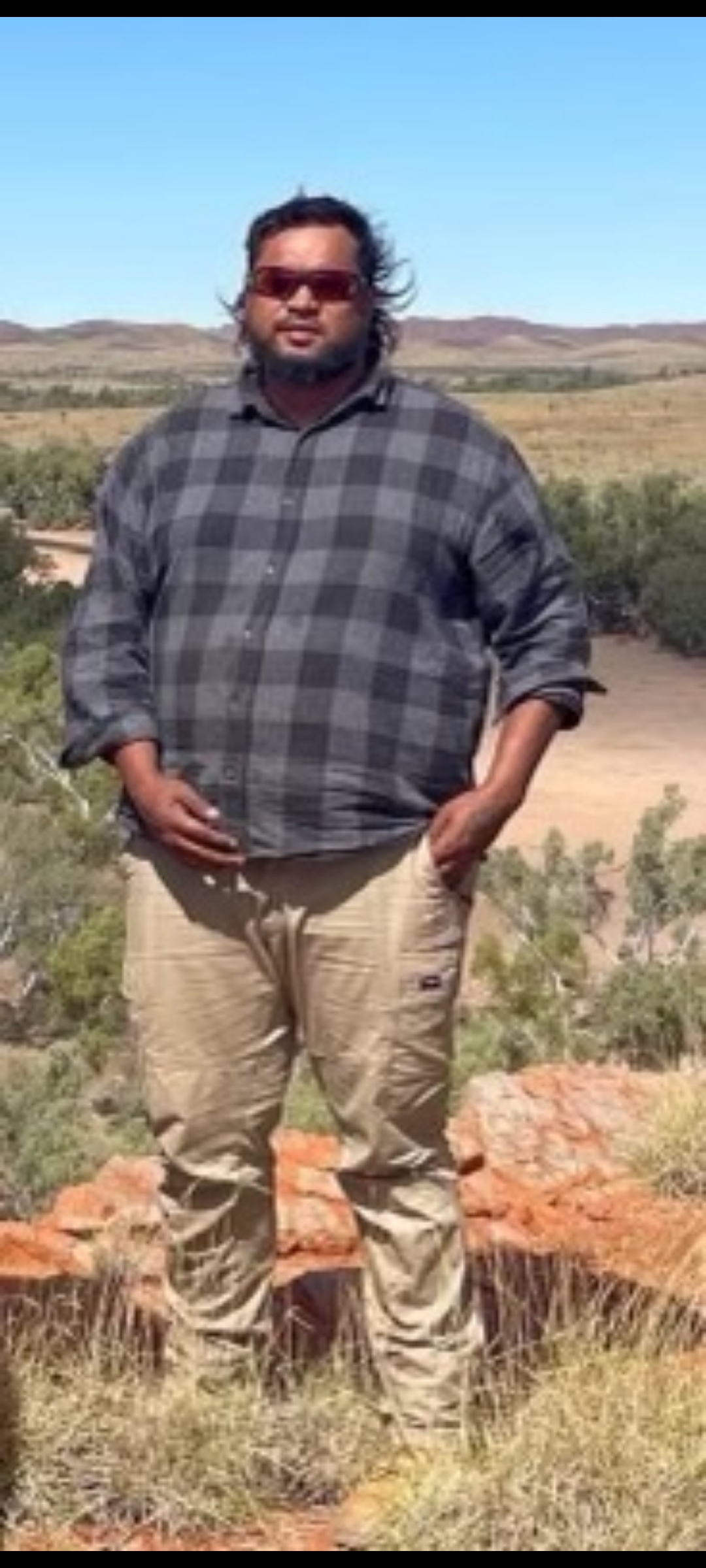
For most people, the idea of a loved one vanishing or being murdered is beyond comprehension, but it is a scenario that is all too familiar for many First Nations communities.
When a Non-Indigenous person is murdered, it's a front page. When a black woman or man dies, or is murdered, you don't hear about it.
This also applies to young Indigenous men that have gone missing in Western Australia's State's north.
Despite calls for a senate inquiry in January 2023 into murdered and missing First Nations people and in particular women, and with a petition formally tabled in Western Australia's Parliament, there has been no change. First Nations people can't help but feel some lives may matter more than others.
In October 2022 there were a total 68 Indigenous women, and 124 Indigenous men, believed to be missing or murdered. 23 of the 192 total are under the age of 18. This number has since risen.
My nephew Wesley Lockyer went missing from our Jinparinya community located 20 kilometers north of Pilbara town Port Hedland, in October 2022. Wesley was last seen there on 24th October 2022.
Wesley was reported missing to the police one week later by the family, as he tends to travel throughout the Pilbara visiting family. Concerns were raised when Wesley left his phone / wallet at his house, as he is an active person on social media.
This also coincided with two other Indigenous males from the North-West missing on the same month of October 2022, Clinton Lockyer from Roebourne and a young aboriginal male from Fitzroy Crossing.
The WA Police in Port Hedland immediately activated and coordinated a search radius from the community and surrounding areas. Helicopters, Drones, Night Vision planes and Emergency Services were provided for the search. After the seventh day Police concluded that he had not been found, and the search would be suspended.
Whilst the family appreciated the WA Police in their efforts to conduct the searches, questions remain on should the police have done more? Police will simply pass on the matter to the Missing Persons Unit and that's where it pretty much sits.
"Do some lives may matter more than others"?
In early January 2023, some three months after Wesley went missing, representing my family, I met with the Minister for Police Paul Papalia, Deputy Premier Roger Cook, our local Member of Parliament Kevin Michel, plus senior representatives of the WA Police in Perth to request the WA Government to place a reward for those missing young Indigenous males, including my nephew, Wesley.
This was to avail. WA Police concluded:
· Rewards for information require a number of criteria to be met including the establishment of criminality.
· No criminality has been established in this matter of time.
· Investigation into their whereabouts continue.
Despite this over-representation in missing person cases, First Nations cases rarely make national, let alone international, headlines.
We have been reminded of this in the missing persons case near Carnarvon in 2021, involving Cleo Smith, after 18 days of dedicated police work and media coverage, the offering of a $1 million reward and over a thousand community calls to Crime Stoppers. The nation, including me, rejoiced when the beloved little girl was found.
Sadly, not all who are searching for their missing children will experience the same outcome.
Our family offered to pay for the reward to help find the missing young men. However, given the Missing Person process to ensure coordination, this offer was not taken up by the WA Government or the police.
Yet on 17 April 2023 the WA Police placed a Reward of $25,000 for information regarding fires that occurred north of the town of Port Hedland - potentially involving an arsonist.
It should not be the responsibility of a grieving family to seek justice and answers when the government and law enforcement fails.
It is a community and government responsibility to award the same attention, empathy and mobilisation of resources to bring home all missing children, or at the very least bring closure to their families, regardless of their cultural identity.