



Pressure is growing on some of Australia's biggest tourist drawcards to ban the sale of fake Indigenous art following a prominent Naarm (Melbourne) market's move to do so.
Naarm's Queen Victoria Markets in October revealed it would ban the sale of fake Aboriginal art by the middle of next year and comes amid the imminent release of the Productivity Commission's final report into inauthentic art.
Following QVM's decision, the National Indigenous Times asked prominent tourist markets across Australia if they would follow suit.
Waylyup (Fremantle) Markets, Western Australia's largest marketplace, no longer counts any fake art vendors among its more than 150 stallholders.
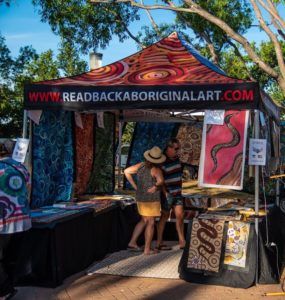
"Fremantle Markets does not support the sale of fake Aboriginal Art and will not be allowing the sale of these products inside the Fremantle Markets," a Fremantle Markets spokesperson said.
Gimuy (Cairns) Night Markets director Mark Stanley said the sale of inauthentic Indigenous art took opportunities away from genuine creators.
"If the Queensland Government can adopt... protectionist measure(s) it would help push out the Chinese copycat products that really push down the value of the authentic products," he said.
"In the night markets we have a lot of shops selling fake indigenous artwork and we would be glad to see policy in place that discouraged that.
"The Cairns Night markets has always encouraged local indigenous groups to establish shops within the night markets, sadly this hasn't happened as yet although we do have one local indigenous guy here and his business is about 20 years old."
In Garramilla (Darwin), one of Australia's most well-known tourism-focused markets claims it has never received complaints about the sale of fake art.
Mindil Beach Sunset Markets Association general manager Howard Halter said Indigenous vendors at the market held certificates of authenticity to assure patrons their work is authentic.
"There's a certificate of authenticity given with each piece of art, with a photo of the artist and everything there," he said.
"Everything has to be tied to trees or poles so there's not pegs in the ground or digging."
The Productivity Commission found in July found two-thirds of Indigenous-style souvenirs were inauthentic and has pushed for mandatory labelling of fake products.
It's final report is expected to push for legislation to allow Traditional Owners to take legal action against those who use cultural and intellectual property without consent.
Nipaluna's (Hobart) Salamanca Markets failed to respond by time of publication. NIT understands the market still has one fake art merchant.
Several major Queensland and Eora (Sydney) markets also failed to respond.



