




A joint study into thousands of artefacts has provided a unique insight into historical Indigenous occupation of Barrow Island in Western Australia's Pilbara region.
Involving Thalanyji Traditional Owners, the Sacramento State University and The University of Western Australia, the study examined thousands of artefacts, largely stone materials made from stone not found on the ancient limestone island.
Archaeologist Professor Peter Veth from UWA's School of Social Sciences said a decade-long analysis of 50 ancient habitation sites recorded across Barrow Island discovered the artefacts.
"The stone used to make the artefacts is found today on the mainland 60 to 90 kms from the island," Professor Veth said.
"These materials have been heavily used for a range of woodworking, food processing and plant processing activities."
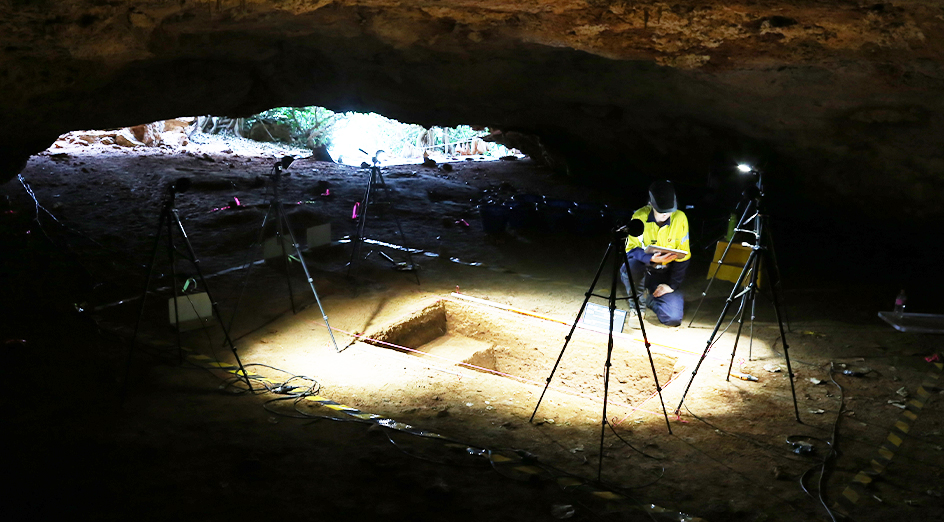
The North West Shelf is a continental shelf region of the Indian Ocean located between North West Cape and Dampier, with Barrow Island, located 60km from the nearest coastline, hosting a unique terrestrial and marine ecosystem.
Thalanyji Traditional Owners involved in the study see the artefacts as an important record of their ancestral use of, and connection to, the island and use of the now-drowned coastal plain.
Professor Veth said the Island is a "highly significant time-capsule of past Aboriginal use of the North West Shelf".
"Previous work on Barrow Island shows occupation began 50,000 years ago with evidence of people using both marine resources and animals and plants from the coastal plain," Professor Veth said.
"Barrow Island is unique in preserving an early and intact record of Aboriginal occupation over an area which functioned as a high plateau on the now-drowned coastal plain."
Researchers say the sites were occupied when the island was joined to the mainland before rising seas cut it off about 7,000 years ago.



