




Tasmania's natural environment was profoundly shaped by the island's Indigenous peoples pre-colonisation, a new study has found.
The study, led by the University of Melbourne revealed Tasmania's Palawa people's ancient land stewardship techniques - often involving fire - moulded the natural landscape, especially across the island's west.
The research, conducted by University of Melbourne PhD candidate Sarah Cooley under the guidance of Theme Leader of Healthy Country at the Indigenous Knowledge Institute, Professor Michael-Shawn Fletcher, presents palaeoecological data which indicates significant shifts in the vegetation of Tasmania's cool temperate rainforests, correlating with periods prior to and following human settlement.
Ms Cooley highlighted the research's discovery of marked contrasts in the dynamics of Tasmania's rainforests due to human activity, which was also compared to data collected in New Zealand.
"The Holocene era's impact on Tasmania's rainforests was juxtaposed with similar latitudinal landscapes in New Zealand, which experienced later human occupation and a subsequent reversion to former interglacial rainforest extent," she said.
"This contrast underscores the unique reduction in Tasmanian rainforest coverage during the Holocene, which is likely attributable to Indigenous fire management practices."
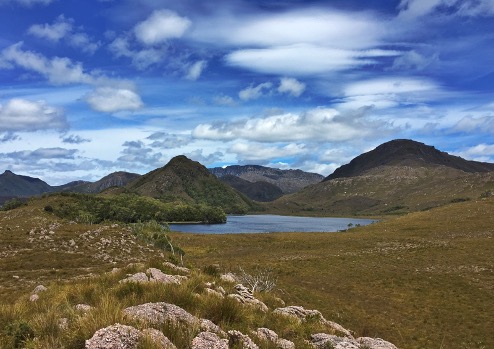
The study determined prior to Indigenous occupation, western Tasmania was dominated with lowland rainforests of celery-top pine and myrtle beech, which together comprised approximately 77 per cent of the pollen types during the previous interglacial period.
However during the transition to the current interglacial period, the rainforest trees represented only about 41 per cent of the pollen record (which reflect the natural relative vegetation composition at the time of pollen deposition), while buttongrass moorland—an indicator of human influence—expanded to cover 10-23 per cent of the landscape.
The data correlates with human arrival and Indigenous landscape management practices - particularly the use of fire - which maintained open landscapes and restricted the expansion of rainforest vegetation compared to previous interglacial values.
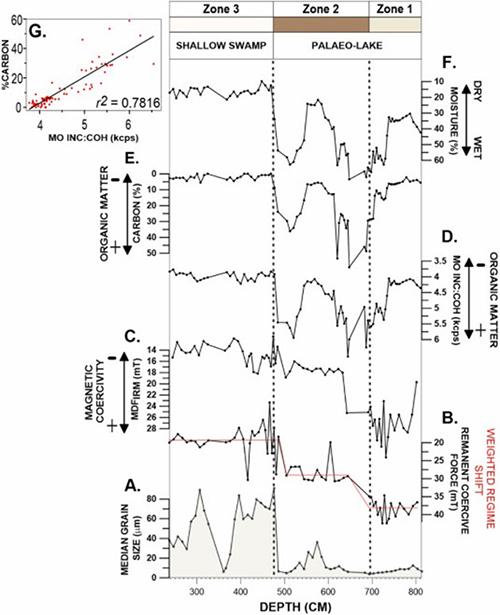
The study's conclusions were drawn after a diverse array of scientific techniques were applied to analyse sediment cores from two locations, Darwin Crater, south of Queenstown on Tasmania's west coast and Lake Selina, a natural glacial lake located in the state's West Coast Range.
They included radiometric dating, pollen analysis, examination of charcoal records, geochemical analysis, environmental magnetic data assessment, and sedimentary analysis, with the elemental content of nine sediment cores determined using Micro-X-ray Fluorescence on the Itrax core scanner at the Australian Nuclear Science and Technology Organisation (ANSTO).
The intentional use of fire by Tasmania's Indigenous peoples to sculpt ecosystems, foster open landscapes and curb the amount of rainforests has shaped vegetation patterns across numerous millennia in the state, the study suggests.
Ms Cooley, who is Tasmanian born, completed the research for her Honours thesis with the support of an Australian Institute of Nuclear Science and Engineering (AINSE) grant, and is now finalising her PhD.
The research was completed with the expressed consent and support of the Tasmanian Aboriginal community.



