


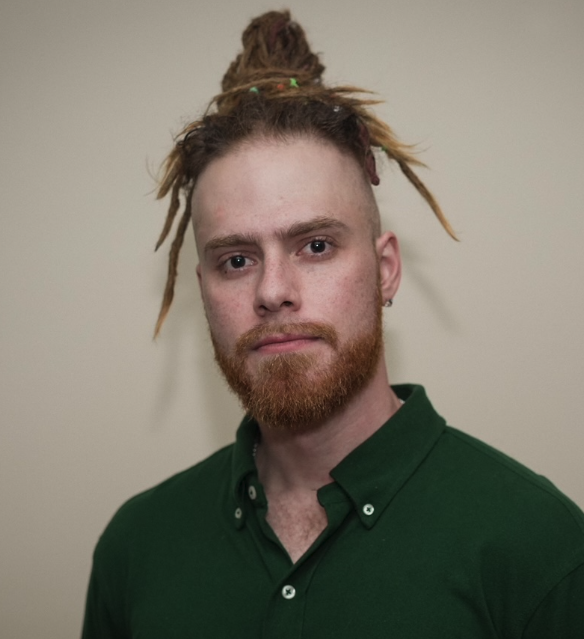

A prominent justice advocate has slammed the Queensland government's 2025 Budget for prioritising law enforcement and incarceration over social support and community-led safety strategies.
First Nations woman and abolition activist Tabitha Lean said the budget represents a continued focus on "systems of surveillance, punishment, and control," while neglecting areas such as housing, health care, and education.
The budget includes $2.387 billion over six years for the construction of the Lockyer Valley Correctional Centre, expanding the state's prison capacity.
Ms Lean argued this is being used to support a "punitive justice framework."
Circuit Breaker Sentencing programs received $80 million, though, framed as diversionary, the programs are still tied to court orders and legal supervision.
The Government committed $40 million to Youth Justice Schools and $75 million for co-responder models and crime hotspot initiatives, which involve increased police patrols.
A further $31.8 million will go towards enhancing dangerous sex offender precincts, and $147.9 million has been set aside for new police equipment including tasers, body-worn cameras, and surveillance tools.
"This budget is a grim manifesto of a government obsessed with 'law and order' over life and dignity," Ms Lean said.
"The expansion of cops, courts, and cages comes at the direct expense of what actually keeps communities safe: stable housing, culturally strong and community-led services, health care (including mental health and disability supports), education, income security, and healing."
She noted initiatives labelled as diversionary fail to address the root causes of harm and instead broaden the state's control over marginalised communities.
"The so-called 'diversion' initiatives in this budget are not investments in community care, she said.
"They are extensions of control - designed to catch people earlier in the system and entrench state surveillance under the guise of help.
"These measures do nothing to address the root causes of harm and everything to expand the reach of the carceral net."
She further criticised the lack of funding for community-led alternatives.
"The Government's refusal to fund community-led, transformative approaches speaks volumes," she said.
"What is needed is not more investment in prisons for our children, or $2 billion mega-prisons, but a radical redirection of resources toward collective care, accountability, and justice outside of state violence."
An additional $458.5 million has been allocated for victim support services, including $50 million for a new Victims Advocate Service.
Ms Lean has called for an approach to public safety that moves away from punishment and centres the voices of criminalised communities.
"We demand a Queensland that imagines safety beyond punishment," she said.
"That listens to criminalised people, especially Aboriginal and Torres Strait Islander women and children. Enough is enough. Stop funding punishment. Start funding freedom."
In response, Minister for Youth Justice and Victims Support Laura Gerber said the budget delivers on the government's commitment to both tough new youth crime laws and early intervention.
"The Crisafulli Government is delivering exactly what Queenslanders voted for – tough new youth crime laws to restore consequences for actions, alongside effective early intervention and rehabilitation programs to arrest Labor's Youth Crime Crisis and restore safety to our communities," Ms Gerber said.
"Our first budget delivers a record investment in early intervention and rehabilitation, including Circuit Breaker Sentencing, a court-sentenced alternative, and Staying on Track which is a 12-month rehabilitation program to give youths the support they need to get back on track and reintegrated back into communities."
Ms Gerber also pointed to a range of early intervention initiatives, such as Crime Prevention Schools to re-engage young people who have disengaged from mainstream education, and Regional Reset, a one-to-three-week residential program targeting high-risk behaviours like substance use, aggression, or truancy.
Detention centres will also be reformed under a "Detention With Purpose" model, which includes compulsory education, a zero-tolerance approach to violence, and structured rehabilitation efforts.
She said these investments would ensure "compulsory education, zero tolerance for violence, and clear consequences for behaviour" within the justice system.



